The Math Behind Career and Life Success

Abstract

This whitepaper presents a conceptual framework for career and life success: Success = (Desire − Fear)^Luck, where Luck = (Relationships × Timing). While individual effort and talent provide the foundation, outcomes frequently amplify through net conviction and engineered serendipity. Academic studies, including Pluchino et al. (2018) simulations showing luck’s dominance in extreme success, Mauboussin (2012) on the skill-luck continuum, and Sinatra et al. (2020) quantifying randomness in creative careers, substantiate this perspective. Case studies of Bill Gates, Jeff Bezos, and Oprah Winfrey demonstrate the equation’s components in action. Implications for professionals emphasize managing controllable factors while positioning for fortunate alignments.

Success = (Desire − Fear) ^ (Relationships × Timing)

Introduction

Career trajectories and life fulfillment are often ascribed to talent or perseverance alone, yet substantial variance remains unexplained. Prominent figures frequently acknowledge circumstantial advantages—Bill Gates, for instance, credits access to early computers and supportive networks (Gladwell, 2008). This paper articulates Success = (Desire − Fear)^Luck, with Luck = Relationships × Timing.

Desire embodies sustained drive toward meaningful goals. Fear manifests as hesitation, risk aversion, or self-doubt. A positive base sustains pursuit amid setbacks. Luck compounds this: relationships foster opportunities and mentorship; timing aligns personal readiness with external shifts. This aligns with empirical models where moderately talented individuals with favorable events outperform pure talent (Pluchino et al., 2018).

Deconstructing the Base: Desire Minus Fear

Desire fuels persistent effort: fear erodes it through doubt or loss aversion. Sustaining desire over fear creates resilience essential for long-term achievement.

Jeff Bezos exemplified this during Amazon’s founding. In 1994, secure in a Wall Street vice presidency, Bezos identified internet growth potential (2300% annual web usage increase). Despite fears of abandoning stability, his desire for entrepreneurial impact prevailed. He drove cross-country to launch an online bookstore, maintaining conviction through early losses exceeding $1 billion cumulatively by 2000 (Brandt, 2011).

Oprah Winfrey similarly overcame fear. Early career instability and personal trauma could have deterred ambition, yet desire for authentic connection propelled her. Transitioning from local news to hosting, she persisted despite initial ratings struggles, building a media empire through relentless focus on empathy-driven content.

The Exponent: Luck as Relationships × Timing

Luck elevates the base exponentially. Relationships provide access and support; timing synchronizes effort with opportunity.

Bill Gates benefited profoundly. Born 1955, he accessed computers rare for teenagers—Lakeside School’s terminal in 1968 enabled thousands of programming hours (Gladwell, 2008). Relationship with Paul Allen led to co-founding Microsoft; timing aligned with 1975 Altair microcomputer release, prompting BASIC interpreter development. IBM’s 1980 PC deal—secured partly through familial connections—catapulted Microsoft (Isaacson, 2014).

Bezos timed the 1990s internet boom perfectly, launching Amazon amid deregulation and connectivity growth. Early investor relationships sustained operations during dot-com volatility.

Winfrey’s breakthrough involved timing and relationships. Hired in television post-1970s affirmative action shifts, she met Quincy Jones, who cast her in The Color Purple (1985), earning an Oscar nomination and elevating her profile (Academy of Achievement interviews).

Empirical Insights from Research

Simulations reveal luck’s outsized role. Pluchino et al. (2018) modeled normally distributed talent with random events; luckiest moderately talented agents dominated success distributions. Mauboussin (2012) positions creative professions nearer luck than skill-dominant fields. Sinatra et al. (2020) found consistent randomness influence across careers, with timing of peak impacts unpredictable.

These cases reflect transience: Gates post-Microsoft shifted to philanthropy; Bezos stepped down as CEO in 2021; Winfrey ended her daily show in 2011, pivoting successfully.

Implications for Professionals

Individuals control desire through goal clarity and fear via exposure and reflection. Engineering luck entails deliberate networking and adaptability to trends.

Conclusion

The framework Success = (Desire − Fear)^Luck illuminates why similar talents yield divergent outcomes. Skill and effort construct the base, yet luck—through relational networks and temporal alignments—often determines magnitude. Pluchino et al. (2018) demonstrate that without fortunate events, even high talent plateaus; conversely, moderate talent amplified by luck reaches extremes.

This underscores humility: acknowledging luck tempers overconfidence in meritocracy, fostering gratitude and resilience. Gates, Bezos, and Winfrey each credit preparation meeting opportunity, yet external factors—birth era, access, connections—proved pivotal.

For professionals, implications are profound. Prioritize desire by aligning pursuits with intrinsic motivations; mitigate fear through incremental risks and support systems. Cultivate relationships broadly, as serendipitous ties often unlock doors. Monitor timing by staying informed on industry shifts, positioning for emerging waves.

Ultimately, while luck remains partially uncontrollable, maximizing return on it—through readiness and action—distinguishes sustained success. This balanced view encourages persistent effort without disillusionment, recognizing life’s compound nature where conviction, amplified by engineered fortune, yields fulfillment beyond mere achievement.

Bibliography

  • Brandt, R. L. (2011). One Click: Jeff Bezos and the Rise of Amazon.com. Portfolio/Penguin.
  • Fama, E. F., & French, K. R. (2010). Luck versus skill in the cross-section of mutual fund returns. The Journal of Finance, 65(5), 1915–1947.
  • Gladwell, M. (2008). Outliers: The Story of Success. Little, Brown and Company.
  • Isaacson, W. (2014). The Innovators: How a Group of Hackers, Geniuses, and Geeks Created the Digital Revolution. Simon & Schuster.
  • Kahneman, D., & Tversky, A. (1979). Prospect theory: An analysis of decision under risk. Econometrica, 47(2), 263–291.
  • Lewis, M. (2010). The Big Short: Inside the Doomsday Machine. W.W. Norton & Company.
  • Mauboussin, M. J. (2012). The Success Equation: Untangling Skill and Luck in Business, Sports, and Investing. Harvard Business Review Press.
  • Pluchino, A., Biondo, A. E., & Rapisarda, A. (2018). Talent versus luck: The role of randomness in success and failure. Advances in Complex Systems, 21(03n04), 1850014.
  • Schroeder, A. (2008). The Snowball: Warren Buffett and the Business of Life. Bantam Books.
  • Sinatra, R., Wang, D., Deville, P., Song, C., & Barabási, A.-L. (2020). Quantifying the evolution of individual scientific impact. Proceedings of the National Academy of Sciences, 117(45), 27856–27863. (Note: Earlier citation referenced related work on randomness in careers.)
  • Zuckerman, G. (2010). The Greatest Trade Ever: The Behind-the-Scenes Story of How John Paulson Defied Wall Street and Made Financial History. Broadway Books.
  • Zuckerman, G. (2019). The Man Who Solved the Market: How Jim Simons Launched the Quant Revolution. Portfolio/Penguin.

About the Author

Marc J. Sharpe is a global investment executive and board member with a distinguished career spanning family office management, private equity, venture capital, and investment banking. Known for his strategic insight, deep expertise in family office governance, and ability to foster innovation and value creation, Mr. Sharpe has built and led investment platforms that deliver sustainable growth while navigating complex financial and operational challenges. His leadership style emphasizes integrity, continuous improvement, and long-term partnerships that generate significant stakeholder value. Mr. Sharpe is the Founder and Chairman of The Family Office Association, a premier global peer network of single-family offices. Since 2007, he has cultivated a community of senior family office executives and principals representing some of the world’s wealthiest families, promoting education, shared-best practices, and co-investment opportunities. Under his leadership, TFOA has become a trusted forum for collaboration, market insight, and proprietary investment deal flow on a global scale. He also teaches an MBA class on “The Entrepreneurial Family Office” as an Adjunct Professor at Rice University and Southern Methodist University. Mr. Sharpe holds an M.A. from Cambridge University, an M.Phil. from Oxford University, and an MBA from Harvard Business School. Contact: marc@tfoa.me

About TFOA

The Family Office Association (“TFOA”) is a global peer network that serves as the world’s leading single family office community. Our group is for education, networking, selective co-investment, and a resource for single family offices to share ideas, deal flow and best practices. Members are not actively marketing products or services to other members, and no contact information or email lists will ever be shared. Since our founding in 2007, TFOA has led the global single family office community by delivering world-class educational content, unique networking opportunities, and exceptional thought leadership to our highly curated network of the world’s largest and wealthiest families: www.tfoa.info

Disclosures

The Family Office Association (“TFOA”) is a peer network of single family offices. Our community is intended to provide members with educational information and a forum in which to exchange information of mutual interest. TFOA does not participate in the offer, sale or distribution of any securities nor does it provide investment advice. Further, TFOA does not provide tax, legal or financial advice. Materials distributed by TFOA are provided for informational purposes only and shall not be construed to be a recommendation to buy or sell securities or a recommendation to retain the services of any investment adviser or other professional adviser. The identification or listing of products, services, links, or other information does not constitute or imply any warranty, endorsement, guaranty, sponsorship, affiliation, or recommendation by TFOA. Any investment decisions you may make based on any information provided by TFOA is your sole responsibility. The TFOA logo and all related product and service names, designs, and slogans are the trademarks or service marks of The Family Office Association. All other product and service marks on materials provided by TFOA are the trademarks of their respective owners. All of the intellectual property rights of TFOA or its contributors remain the property of TFOA or such contributor, as the case may be, such rights may be protected by United States and international laws and none of such rights are transferred to you as a result of such material appearing on the TFOA web site. The information presented by TFOA has been obtained by TFOA from sources it believes are reliable. However, TFOA does not guarantee the accuracy or completeness of any such information. All such information has been prepared and provided solely for general informational purposes and is not intended as user specific advice.

Frequently Asked Questions

What mathematical principles apply to long-term career and financial success?

The most powerful mathematical force in career and financial success is compounding — the exponential growth of skills, relationships, and capital over time. Just as investment returns compound, so do professional capabilities, reputation, and networks. Starting early, investing consistently, and avoiding catastrophic setbacks (the 'do not lose' principle) are the core mathematical drivers of long-term success.

How does compound growth apply to human capital development?

Human capital — skills, knowledge, and relationships — compounds in the same way as financial capital. An individual who consistently invests in their education, network, and expertise will see exponential rather than linear career growth over time. The key variables are the quality of the investments (high-quality learning and relationships), the compounding period (how long you stay in the game), and the avoidance of interruptions that reset the compound.

What is the mathematical relationship between risk and long-term wealth accumulation?

The mathematics of wealth accumulation shows that avoiding large losses is more important than maximizing gains. A 50% loss requires a 100% gain just to break even. This asymmetry means that risk management — particularly in the early stages of wealth accumulation — is as important as return generation. The optimal strategy is to take enough risk to grow, but not so much that a single setback eliminates the gains of many good years.

How does network theory apply to career success?

Network theory shows that the value of a network grows with the square of its members (Metcalfe's Law). More practically, research shows that most high-value opportunities — jobs, deals, introductions — come through 'weak ties' (acquaintances rather than close friends), because weak ties connect you to networks beyond your immediate circle. Systematically expanding and maintaining diverse networks has compounding career value.

Private Debt Secondaries — TFOA whitepaper.

Private Debt Secondaries

Private Debt Secondaries: Beyond GP/ LP Transactions into the World of Liquidity Management

As one of the fastest-growing areas of the private markets, the attractiveness of private debt as an asset class is broadly recognized. Its’ defined duration, low volatility, and limited drawdown risk relative to other alternatives is often desirable, particularly when considered with empirically stable returns.1 As such, a natural evolution of a maturing primary market is developing volume in secondaries transactions.

Private debt secondaries (PDS) have prospered in recent years, providing liquidity to investors in a putatively illiquid asset class. Investment managers have responded—raising dedicated secondary funds and partnering with strategic players. In recent years, we have experienced the secondary market bloom from a nascent opaque market, focused initially on bilateral transactions and purchases of LP interests by private equity secondaries funds at steep discounts. Following Covid, the market transformed, and the associated dislocation has brought opportunities.

In 2022, substantial challenges in the liquid markets exacerbated the so-called denominator effect, leading institutional investors to be overweight several illiquid asset classes. Counterintuitively, the relatively strong performance of private debt meant that accepting a haircut on those valuations would require a comparatively modest markdown (particularly against devalued fixed income and equity holdings), and thus transactional volume arrived, reaching $17 billion in 2022 (more than 30x larger than 2012 levels), per Coller Capital.2 Savvy family offices and other institutions became buyers of performing direct lending LP interests at prices reflective of private equity returns.

Relative “Haircuts” When Markets Head South

Secondaries volumes in 2022 were down across all asset classes, except for private debt, where volumes increased by 30.3%.3 Investors utilized the secondary market for reasons varying from strategic redirection to rebalancing due to portfolio limitations and portfolio optimization. Investors sold private debt exposure because valuations remained stable relative to the public market (both debt and equity) and other private market asset classes.

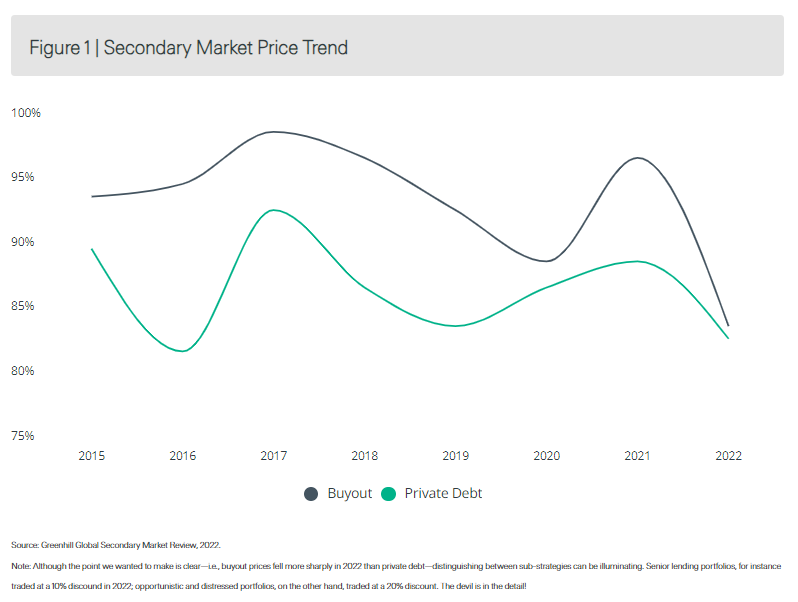
Relative price 'haircuts' on private debt versus other asset classes during market downturns.

Figure 1 illustrates this point: The 2022 price decline in buyouts was more pronounced than in private debt. Notably, there is large price variance from the average prices listed below and the type of private debt strategy is influential to pricing; in 2022, senior lending funds priced in the low 90s, mezzanine strategies in the 80s and distressed/special sits in the high 70s. Compared with private equity discounts, which range from 15–25% during dislocations, private debt can offer an attractive alternative.

Discounts Matter, But Not as Much as One Would Think….

Price bands are important but insufficient to determine returns on their own. Consider that direct loans have an average economic life of 3 years (4 years in the current environment)4. Against a less liquid private equity portfolio, the distribution profile should be more condensed and predictable.

  • Thus, price may vary greatly depending on the stage in the fund term and corresponding drawn and undrawn commitments, its current yield and any expected refinancings in the portfolio.
  • In addition, historical loss rates must be considered and flexed for manager particulars such as concentration and industry exposure.
  • Finally, transaction dynamics come into play, including approved buyer lists, speed of execution and any “stapled” primary investment requests attached to a current manager fund. There may be an amount of book building by the broker due to varying demand for specific funds and available ticket sizes.

This profusion of factors affects bid-ask spreads, but ultimately pricing is only one variable. In short, discounts matter but not as much as you might think!

PDS Market Formation

With a plethora of opportunities and an advantageous supply-demand imbalance, dedicated PDS investors stepped into the market in 2022, armed with lower cost of capital, the ability to apply portfolio leverage (at the investing entity), transaction leverage (through deferred payments), and alternative views on loss rates and cashflow modeling. For these investors, capital at work is as important as IRR and TVPI. Therefore, their desired outcome differs from your stereotypical private equity secondary buyers. So do their target returns: Over 50% of buyers seek a net IRR/TVPI below 12.5%/1.5x.5 This market intervention is a positive secular change for existing private debt investors in need of liquidity.

Formation of the private debt secondaries market and the target return ranges sought by buyers.

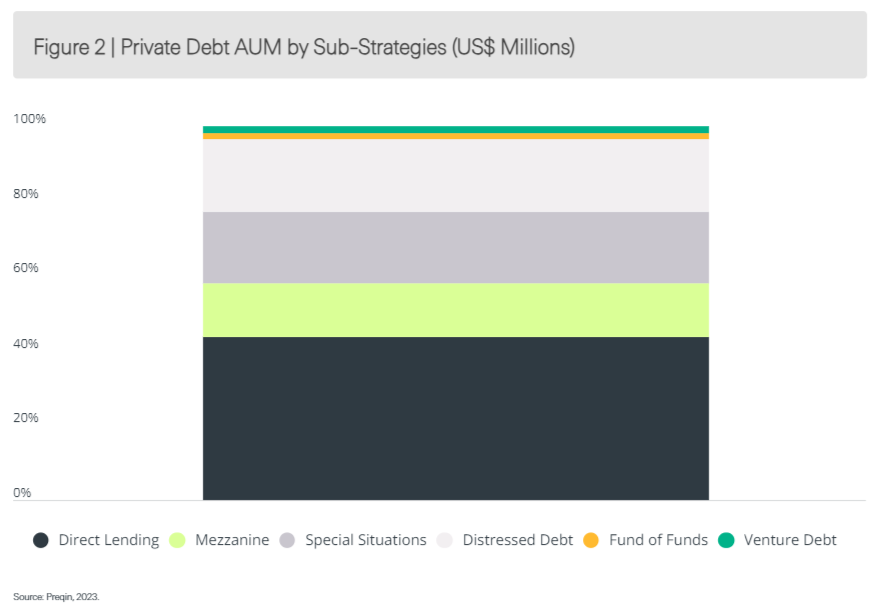
The term private debt covers an array of vastly different sub-strategies, some of which are covered in Figure 2. The market is in fact more disparate, with many more sub-strategies. Having broad coverage and asset class expertise is required to cover the universe.

Vetting broadly diversified direct lending portfolios requires in-depth market data and views on repayment speeds and expected loss rates. Conversely, concentrated distressed portfolios require familiarity with each company and line-item equity-style underwriting. The ability to accurately forecast returns across multiple strategies allows secondary buyers to provide broader and encompassing liquidity solutions. Market coverage is paramount.

Financial Innovation and Bespoke Liquidity Management Techniques

The PDS market may be in its infancy but innovative financing solutions from the private equity market are already being implemented.

  • NAV-Financing is a broad term for financing underpinned by a diversified portfolio, which can contain private equity companies, real estate assets or even private debt funds. The portfolio’s NAV is used as collateral for the loan, generating liquidity for the GP or LP while retaining the future upside from the original portfolio exposure. Realizations in the underlying portfolio are used to fund the repayments of the NAV facility. This product is established in the private equity and real estate markets, but only recently adopted in the private debt secondary market as an alternative to secondary sales.
  • Collateralized Fund Obligations (CFOs) have similar goals to secondaries, i.e., to enhance liquidity for GPs and LPs. CFOs are securities that create leveraged exposure to a portfolio of fund investments through the issuance of an equity tranche and one or more debt tranches. Think: CLOs with funds replacing the underlying loans.

For sellers, structured solutions may be preferable to a secondary sale in order to generate liquidity. Investors can maintain exposure to private debt while generating interim liquidity to rebalance their portfolios. Secondary investors are attracted to this investment style, as it meets the desired returns with a relatively attractive risk profile. With private equity secondaries, buyers and sellers often have differing views on the future valuations and potential upside of the assets. Since upside is relatively limited for private debt, differences of opinion tend to be narrower and more focused on repayment speeds and loss rates. When both parties’ views on future valuations are aligned, the variance in pricing is much lower and a structured solution which accommodates both parties’ requirements is often optimal.

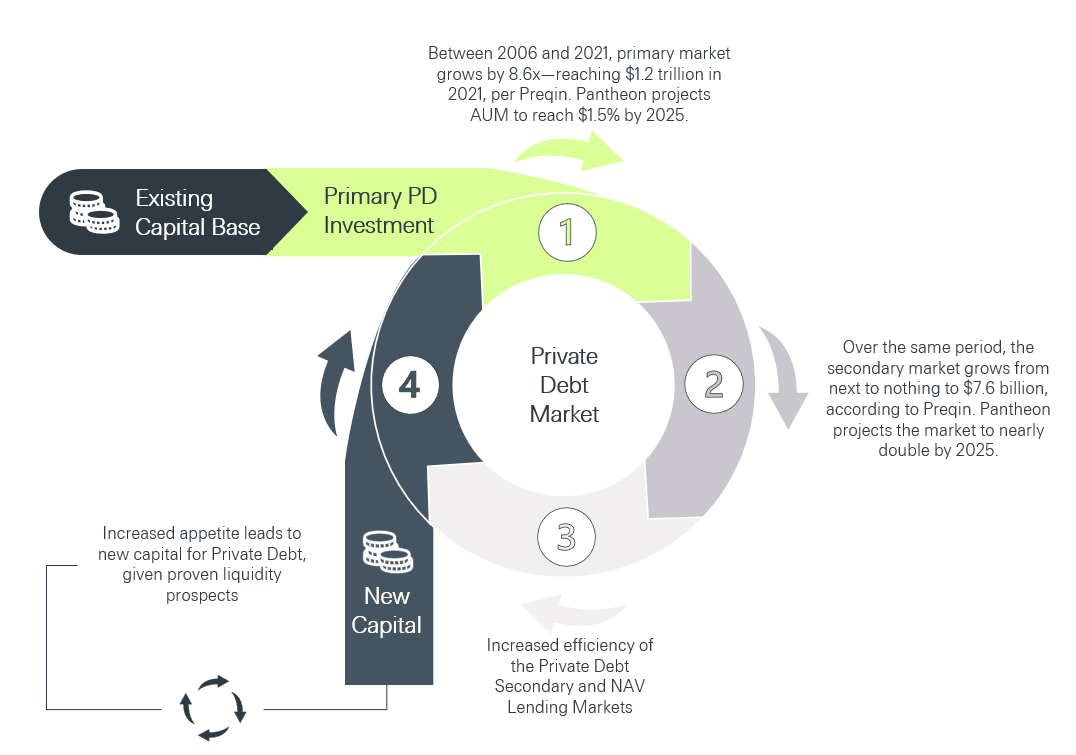
PDS—The Flywheel Effect

The 'flywheel effect' in private debt secondaries, where aligned buyer and seller valuations enable structured liquidity solutions.

In 2022, private debt represented only 4% of the total secondary market.6 As the asset class matures, we expect this share to expand. We suggest the continued growth and effectiveness of the private debt secondaries market will open private debt to a new investor cohort that previously had concerns about liquidity, term, or liability mismatches.

Conclusion

The private debt market is forecast to continue its growth due to its attractive yields throughout credit cycles, low volatility, limited drawdowns, and relatively high risk-adjusted returns. By that same token, volume in its secondary market is expected to increase. Family offices and institutional investors are supporting this growth in both the primary and secondary markets. We have observed LPs making tactical sales of relatively stable private debt portfolios, without exiting the private debt market entirely. We also observe several other important value drivers, in addition to discount emerging. Furthermore, activity has moved beyond traditional secondaries and into the more bespoke world of liquidity management through financial innovation.

By providing innovative liquidity solutions, Family offices and institutional investors are improving asset class accessibility to a new investor base. Now investors can confidently enter the private debt market and avail themselves of its illiquidity premium with the comfort that there will be liquidity if they seek to rebalance. Furthermore, due to the illiquidity of private debt and its corresponding valuations, investors can often transact at relatively attractive prices. As the PDS market matures, structured solutions will develop. Traditional secondary sales, while prevalent in the current market, may only cater to a certain investor group; investors in need of interim liquidity may prefer alternative financing solutions.


About the Authors

Marc J. Sharpe is the founder and Chairman of TFOA, an organization formed in 2007 to provide a forum for education and networking and to serve as a resource for single family office principals and professionals to share ideas and best practices, pool buying power, leverage talent and conduct due diligence. Mr. Sharpe also teaches an MBA class on “The Entrepreneurial Family Office” as an Adjunct Professor at SMU Cox School of Business: Contact: marc@tfoa.me

About TFOA

The Family Office Association (“TFOA”) is a global peer network that serves as the world’s leading single family office community. Our group is for education, networking, selective co-investment, and a resource for single family offices to share ideas, deal flow and best practices. Members are not actively marketing products or services to other members and no contact information or email lists will ever be shared. Since our founding in 2007, TFOA has led the global single family office community by delivering world-class educational content, unique networking opportunities, and exceptional thought leadership to our highly curated network of the world’s largest and wealthiest families.

About StepStone

StepStone Group Inc. is a global private markets investment firm focused on providing customized investment solutions and advisory, data and administrative services to its clients. StepStone partners with its clients, including sovereign wealth funds, insurance companies, prominent endowments, foundations, family offices and private wealth clients, to develop and build private markets portfolios designed to meet their specific objectives across the private equity, infrastructure, private debt and real estate asset classes.

Notes

  1. StepStone Group. 2023. “Relative Attractiveness of Direct Lending: Liquidity, Volatility and Drawdowns.”↩︎
  2. Claire Coe Smith. 2023. “Private Debt Secondaries: Macro disruption generates momentum,” Private Debt Investor, 2 May.↩︎
  3. Setter Capital. 2022. “Volume Report FY 2022.”↩︎
  4. Cliffwater. 2023. “2022 Q4 Report on U.S. Direct Lending”↩︎
  5. Campbell Luytens. 2022. “Secondary Market Overview.”↩︎
  6. Campbell Luytens. 2022. “Secondary Market Overview.”↩︎

StepStone Disclosures

This document is for information purposes only and has been compiled with publicly available information. StepStone makes no guarantees of the accuracy of the information provided. This information is for the use of StepStone’s clients and contacts only. This report is only provided for informational purposes. This report may include information that is based, in part or in full, on assumptions, models and/or other analysis (not all of which may be described herein). StepStone makes no representation or warranty as to the reasonableness of such assumptions, models or analysis or the conclusions drawn. Any opinions expressed herein are current opinions as of the date hereof and are subject to change at any time. StepStone is not intending to provide investment, tax or other advice to you or any other party, and no information in this document is to be relied upon for the purpose of making or communicating investments or other decisions. Neither the information nor any opinion expressed in this report constitutes a solicitation, an offer, or a recommendation to buy, sell or dispose of any investment, to engage in any other transaction or to provide any investment advice or service.

Past performance is not a guarantee of future results. Actual results may vary.

On September 20, 2021, StepStone Group Inc. acquired Greenspring Associates, Inc. (“Greenspring”). Upon the completion of this acquisition, the management agreement of each Greenspring vehicle was assigned to StepStone Group LP. Each of StepStone Group LP, StepStone Group Real Assets LP, StepStone Group Real Estate LP and StepStone Group Private Wealth LLC is an investment adviser registered with the Securities and Exchange Commission (“SEC”). StepStone Group Europe LLP is authorized and regulated by the Financial Conduct Authority, firm reference number 551580. StepStone Group Europe Alternative Investments Limited (“SGEAIL”) is an SEC Registered Investment Advisor and an Alternative Investment Fund Manager authorized by the Central Bank of Ireland and Swiss Capital Alternative Investments AG (“SCAI”) is an SEC Exempt Reporting Adviser and is licensed in Switzerland as an Asset Manager for Collective Investment Schemes by the Swiss Financial Markets Authority FINMA. Such registrations do not imply a certain level of skill or training and no inference to the contrary should be made.

In relation to Switzerland only, this document may qualify as “advertising” in terms of Art. 68 of the Swiss Financial Services Act (FinSA). To the extent that financial instruments mentioned herein are offered to investors by SCAI, the prospectus/offering document and key information document (if applicable) of such financial instrument(s) can be obtained free of charge from SCAI or from the GP or investment manager of the relevant collective investment scheme(s). Further information about SCAI is available in the SCAI Information Booklet which is available from SCAI free of charge. Manager references herein are for illustrative purposes only and do not constitute investment recommendations.

Source:  StepStone Group LP. The information contained herein is © 2023 by StepStone Group LP.


Disclosures

TFOA is a peer network of Single Family Offices. Our community is intended to provide members with educational information and a forum in which to exchange information of mutual interest. TFOA does not participate in the offer, sale or distribution of any securities nor does it provide investment advice. Further, TFOA does not provide tax, legal or financial advice. Materials distributed by TFOA are provided for informational purposes only and shall not be construed to be a recommendation to buy or sell securities or a recommendation to retain the services of any investment adviser or other professional adviser. The identification or listing of products, services, links, or other information does not constitute or imply any warranty, endorsement, guaranty, sponsorship, affiliation, or recommendation by TFOA. Any investment decisions you may make based on any information provided by TFOA is your sole responsibility. The TFOA logo and all related product and service names, designs, and slogans are the trademarks or service marks of The Texas Family Office Association. All other product and service marks on materials provided by TFOA are the trademarks of their respective owners. All of the intellectual property rights of TFOA or its contributors remain the property of TFOA or such contributor, as the case may be, such rights may be protected by United States and international laws and none of such rights are transferred to you as a result of such material appearing on the TFOA web site. The information presented by TFOA has been obtained by TFOA from sources it believes are reliable. However, TFOA does not guarantee the accuracy or completeness of any such information. All such information has been prepared and provided solely for general informational purposes and is not intended as user specific advice.

Frequently Asked Questions

What are private debt secondaries?

Private debt secondaries involve the purchase of existing positions in private credit funds or loan portfolios from sellers who wish to exit before the natural maturity or wind-down of the fund. Buyers typically acquire these positions at a discount to par or net asset value, creating an entry-point advantage over primary investors.

Why do family offices invest in private debt secondaries?

Family offices are attracted to private debt secondaries for their combination of yield, downside protection, and shorter duration than typical private equity secondaries. The discount to NAV provides a margin of safety, the assets are typically income-generating from day one, and portfolio diversification is built in since most positions represent stakes in large, diversified credit funds.

What return profile can investors expect from private debt secondaries?

Private debt secondaries typically target net returns in the 10% to 15% range, with a significant component coming from current income (interest payments from underlying loans) supplemented by the discount captured at purchase. The return profile is more predictable and less binary than private equity, with lower variance across economic cycles.

How liquid are private debt secondary investments?

Private debt secondaries are more liquid than private equity secondaries but still significantly less liquid than public markets. A typical position may have a holding period of two to five years, with partial liquidity as the underlying loans mature or are repaid. The secondary market for private credit is growing but remains less developed than the equity secondary market.

Why Venture-Backed Immigrant Founders Succeed — TFOA whitepaper.

Why Venture Backed Immigrant Founders Succeed

Executive Summary

Immigrant entrepreneurs outperform in founding U.S. unicorns and Fortune 500 companies, creating patents and jobs, and powering innovation in the U.S. economy. This white paper reviews findings from research to demonstrate the success of immigrant innovators and entrepreneurs and explore the reason(s) for their success, including the networking advantage they bring through the companies they lead that specialize in global markets at conception affording these firms a greater chance to succeed and scale.

Key Stats

  • 55% of unicorns (billion-dollar startups) have at least one immigrant cofounder. National foundation for American Policy (2018).
  • 43% of Fortune 500 firms in 2017 and 57% of the top 35 firms were founded by immigrants and their children. Center for American Entrepreneurship (2022).
  • 35% of U.S innovation and entrepreneurship is created by immigrants accounting for 13.7% of the U.S. population. (Kerr & Kerr, 2020; Budiman, A. 2020).
  • 20% of the world’s tech founders are immigrants, while they only make up about 4% of the world’s population. The Global Startup Ecosystem Report by Startup Genome (2022).

Unicorns and Outliers

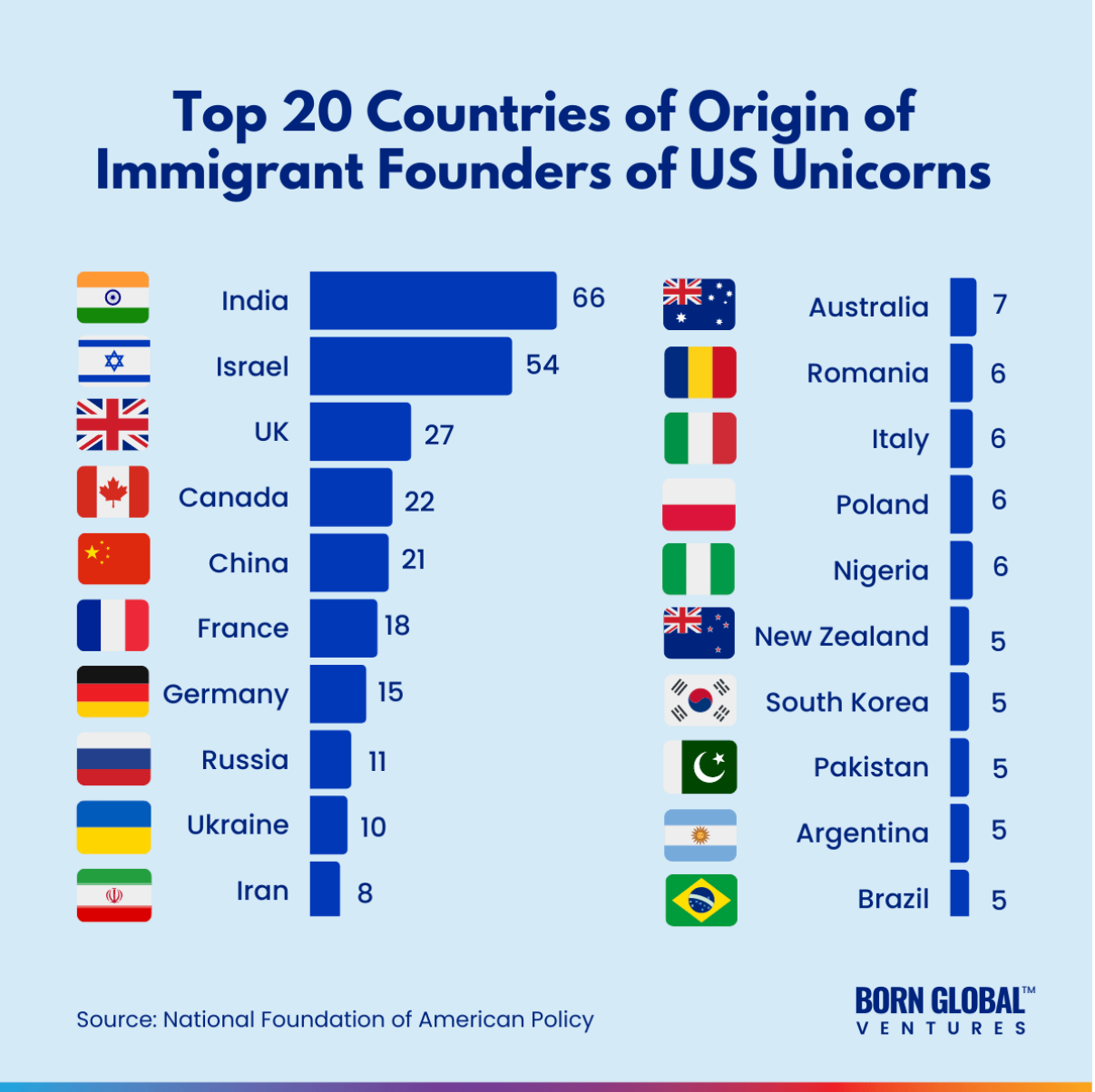
What do SpaceX, Zoom, Wish, Robinhood, Stripe, Uber, DoorDash, InstaCart, and Pfizer have in common? Each one is a U.S. unicorn (i.e., a privately held company with a valuation of over 1 billion dollars) and each one was founded by immigrants. The overwhelming majority of unicorns are tech startups supported by venture capital funding which has generated tremendous returns for their investors.

The overwhelming majority of unicorns are tech startups supported by venture capital funding. Collectively, the VC industry in tech has generated tremendous returns for its investors. Broad research exists on the various factors that drive the success of unicorn companies. Among these are the number of founders, the time required to achieve unicorn status, the variety of industries, and the characteristics of founders.

Unexpectedly, 55% of U.S unicorns studied had at least one immigrant founder (Anderson, 2022). This finding echoes the disproportional success rate among Fortune 500 companies, of which 45% were founded by first- and second-generation immigrants.

Ilya Strebulaev, a tenured professor with the Stanford Graduate School of Business and head of the Venture Capital Initiative, a research group chartered to keep tabs on entrepreneurship, private equity investments, and the impact of venture capital on business, using recent data, has discovered a series of revealing correlations between venture funding, immigrants, and success.

Based on the research of 1,123 U.S based unicorns with some VC backing, start-ups with 3 or 4 immigrant co-founders were a whopping 74% more likely to reach unicorn status. Interestingly, Dr. Strebulaev’s highly representative sample indicates a series of significant correlations between immigrants, their education, their success in corporate leadership, and their success as founders.

Correlations between immigrant background, education, corporate leadership, and startup founder success.

Immigrant founders' representation among unicorn startups and high-growth ventures.

Immigrants Outperform in Entrepreneurship and Innovation

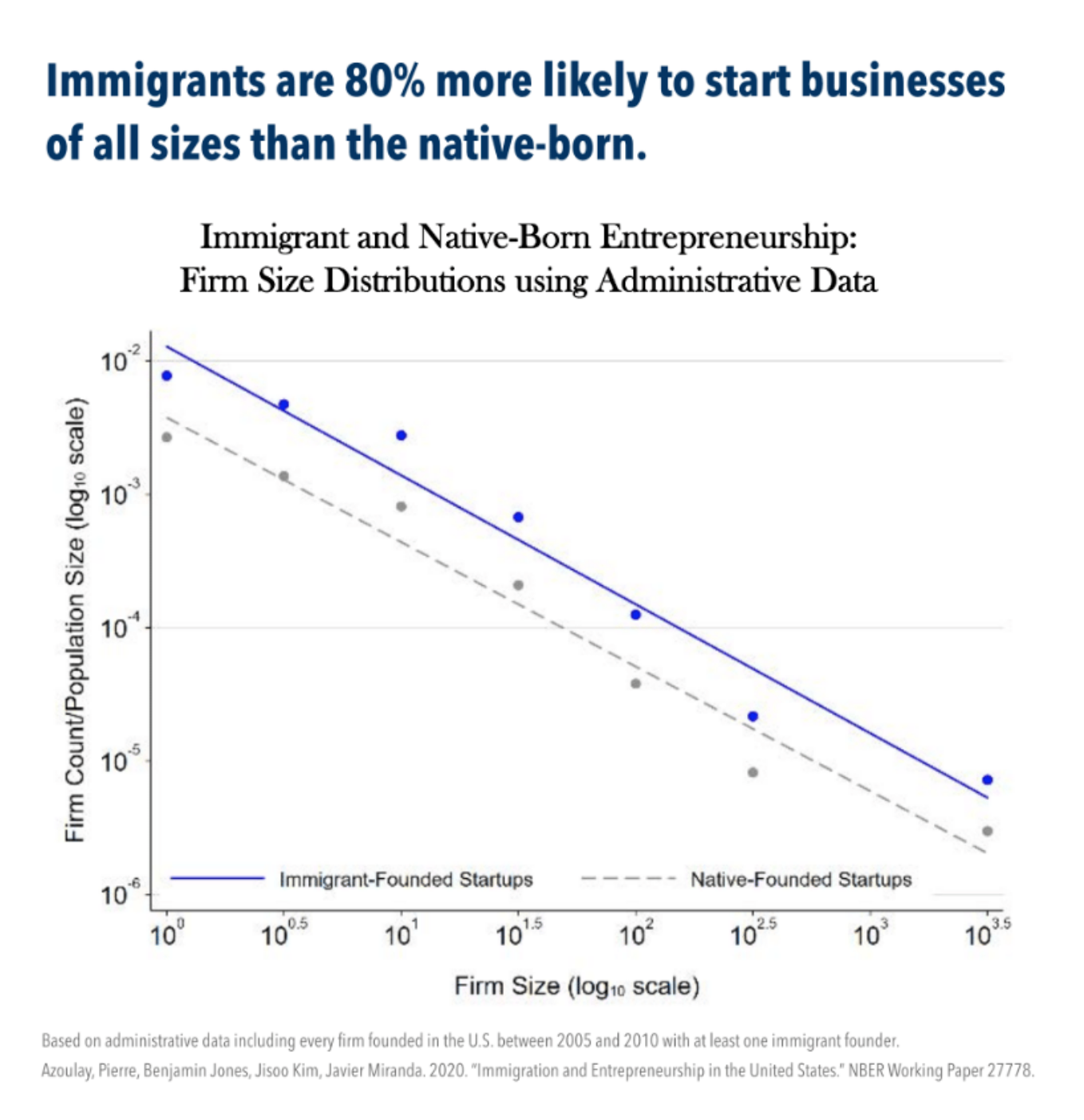
Immigrants’ success in entrepreneurship extends beyond unicorn companies. Between the years 2008 and 2012, immigrants founded 25% of all new businesses (Krol 2021; Kerr and Kerr 2020). When compared to their native-born counterparts, immigrants are 80% more likely to register a business (Dizikes, 2022). Based on 2017 data from Fortune 500 companies, as well as the U.S. Census Bureau’s Longitudinal Business Database, which included information on every new business founded between 2005 and 2010 that lasted at least five years, for a total of 1.02 million firms, immigrants are more likely to found firms (of all sizes) than native-born entrepreneurs.

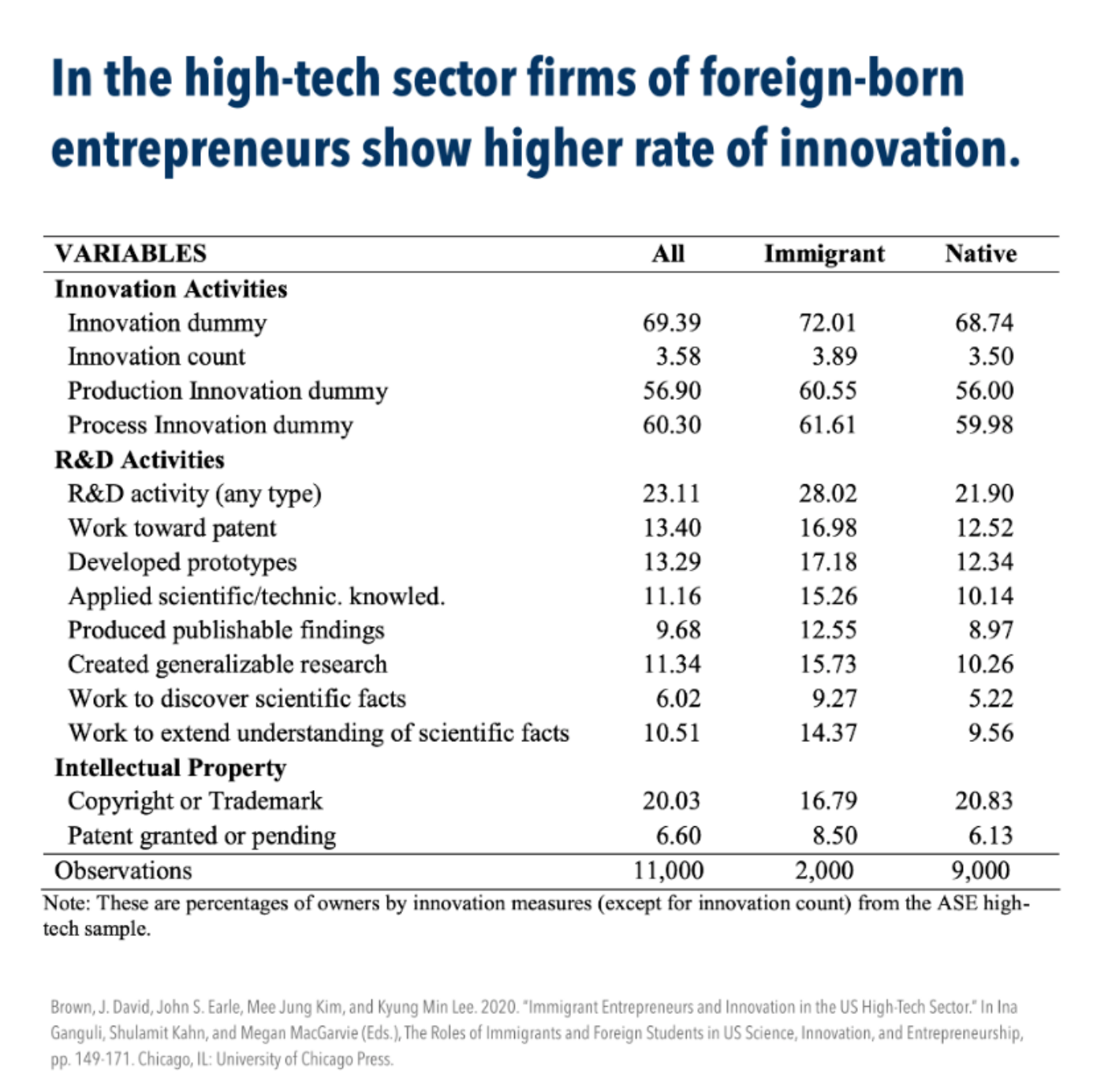
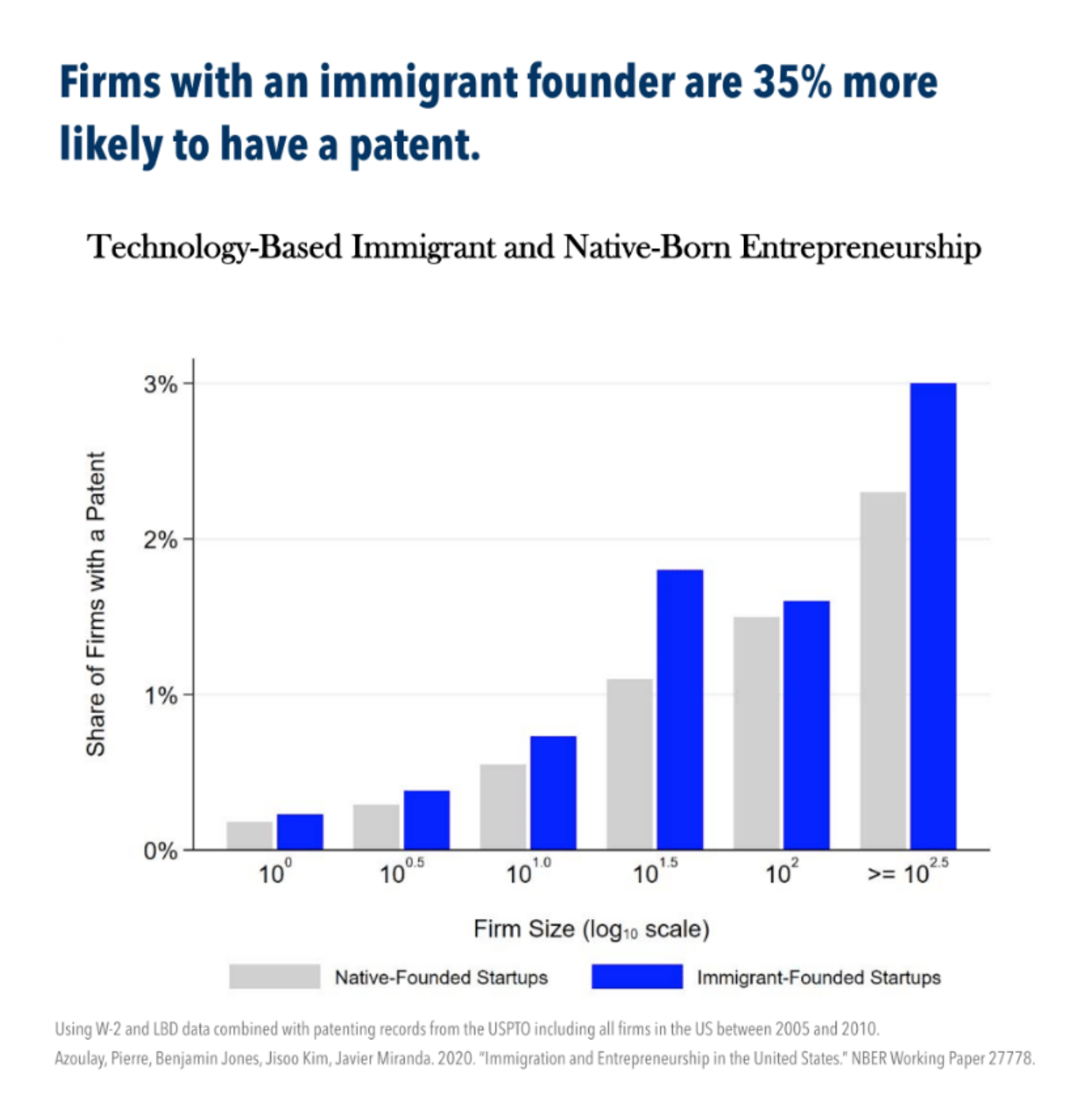
Immigrants’ rate of innovation is also much high than their native-born counterparts. Immigrants account for nearly 1 in 4 U.S. patents, despite constituting only about 14% of the population overall (Azoulay, 2020). From 1975 to 2015, immigrants as a group attained 40% more patents on average compared to all other groups in proportion to their steadily growing percentage of the U.S. population.

Immigrants' share of U.S. patents relative to their share of the population.

Data collected from the U.S. Patent and Trademark Office by Stanford researchers note that the higher number of patents secured by immigrants are in greater use in industry and research. Researchers found that immigrant-originated patents were 40% more likely to be publicly recognized or currently in use. The total speculated economic value of these innovations occurring chiefly through the utilization of patents by public companies is estimated to constitute 25% of economic value, or 50% higher than the overall average (Tam, 2020). Research from the CATO Institute indicates that immigrants are largely the originators of innovation and economic dynamism, rather than the supporters. Data collected from 1975 to 2010 notes that immigrants flowing into the U.S can be tied to a 27% increase in patent acquisition and an increase in regional wages (Burchardi et al., 2020).

Link between immigration and increases in patent acquisition and regional wages, 1975-2010.

Immigration's contribution to U.S. innovation output and entrepreneurship.

Tech Leadership

Data on immigrant founders shows that they have taken on a disproportionately large role in management, product development, and have led several sectors in overall patent attainment. Exclusive use rights have provided their firms with access to new methods integral to emerging product designs. Anderson notes that as of 2016, over 70% of companies involved the contribution of one or more immigrants in a key role in management or product development. As of 2022, nearly 80% of U.S. unicorns have an immigrant founder or an immigrant in a key leadership position.

Notable examples include SpaceX, Uber, and over 30 others. Self-selection bias may be at play given the proportionally higher numbers of immigrant STEM holders. The discrepancy between lower absolute education in the immigrant population and increased numbers of those with STEM expertise is likely the result of a U-shaped skills curve within the immigrant population (Krol, 2021; Ganguli et al., 2020).

Jobs and Value Creation

Contrary to the usual narrative, immigrants create more jobs than native-born entrepreneurs, accordingly to Ben Jones, a professor of strategy at Kellogg. Immigrant-founded companies not only have more patents than native-born-founder-led firms, but they also pay higher wages than native-founded firms. Immigrants are found to be economically compliments in the multiple sectors in which they participate; these groups have been recognized as generators of roughly 25% of American jobs. NFAP finds that privately held U.S. billion-dollar startup companies with immigrant founders have created an average of 859 jobs per company. Thus, immigrants improve the economic outcomes for native-born workers. Immigrant-founded US unicorns are collectively worth $1.2 trillion and would be the 16th largest GDP as a country, more than the value of the companies listed on the major stock markets of most countries.

Self-Selection and Resilience

Many reasons can contribute to immigrant success as startup founders and corporate leaders. Peter Vandor (2021) notes in his Harvard Business Review article that the combination of a high appetite for risk, high achievement motivation, and follow-through are qualities supported by survey data as consistent with a business leader identified as an immigrant.

The ways in which the immigration process leads to a kind of self-selection bias may also be a key contributing factor. Cost, complications, and stringent requirements notwithstanding, the selection involved in F1 and H-1B visa attainment present an often-insurmountable challenge for many prospective immigrants. Given these limits, immigrants who successfully acquire visas and citizenship status exhibit a characteristically uncommon tolerance for risk and adaptability to unfamiliar circumstances.

Research performed by the Vienna University of Economics and Business found that nearly half of students who indicated an interest in starting a business and who also chose to move abroad and return later created a business (Gaskell, 2021). Additional obstructions like labor market discrimination compound these effects.

Nearly 25% of U.S. billion-dollar startup firms have a founder who was once an international student (Anderson, 2022). Standards for admission as an international student are considerably higher than average. Furthermore, international students typically seek out universities with high ranking and better outcomes. This historical data review records in years before 2020 indicating that successes were not influenced by recent or intentional changes.

Education

Successful firms in emerging industries like tech need technically astute talent. Although international students only account for 4% of the U.S. university population, they obtained 50% of the graduate degrees in STEM. Immigrants are 40% more likely to hold a doctorate, according to Tam (2020). And immigrants are the majority recipients of higher-level STEM degrees. NFAP found that in 2011, 65% of Ph.D. recipients and 60% of master’s degree students in electric engineering were foreign-born. Similar results appear in fields like computer science, mathematics, and statistics (Anderson, 2013).

The most current data confirm the value of education to financial outcomes led by immigrants vetted through the emigration process. Illya Stebulaeve (2022) found that 21% of these founders were educated, at least in part, in one U.S university. Universities such as the University of Waterloo and Tel Aviv University have developed immigrants who originated at least 26 unicorns. NFAP also found that 25% of billion-dollar startup companies in the U.S. have a founder who attended a U.S. university as an international student.

Among all the immigrant founders of U.S. unicorns, 174 international students became founders or cofounders. International students typically can only remain in the United States long-term after gaining H-1B status and (or) an employment-based green card. Those who have been granted a continuous stay lead these firms.

Education and visa pathways (H-1B and employment-based green cards) of immigrant founders.

To be Born Global

Vendor (2021) from the Harvard Business Review quotes “immigrant founders have a competitive advantage when it comes to building impactful, global reaching ventures.” Such firms have a global market strategy at inception. These firms’ leadership is more often than not made up of immigrants with diverse backgrounds and competencies relevant to the tech industry.

Simply put, these global reaching ventures are birthed with international orientation by talent originating globally. Their founding teams come from within rather than expand into international markets. Strategic choices made typically mirror the capacities and interests of firm managers who leverage global connections for market access and innovation. These companies leverage local and global ecosystems for innovation and talent acquisition generating a truly unique, difficult to replicate business model. Research indicates that such firm’s success leans heavily on the networking abilities of its founder(s), the globally scalable product, and of course adequate funding (Gabrielsson et al., 2008).

This networking edge has been demonstrated to improve their firms’ chances of success during the take-off early stages of development while positioning them for potentially exponential growth at middle stage and late-stage development. This networking effect lends a competitive advantage due to knowledge generated about the global environment, access to market information, and access to the best products and developers.

Conclusion

The pace at which VC-backed firms achieve billion-dollar valuations is accelerating. In the past 10 years, the number of U.S unicorns has doubled. In the past 5 years, the number of U.S. unicorns went up 500%. For tech startups, global scale companies led by immigrant founders continue to demonstrate real competitive advantages in achieving higher success rates and bringing great returns for investors. This is especially true during times of uncertainty and disruption, given their resilience.

References

Additional Resources

About the Author

Marc J. Sharpe is the founder and Chairman of TFOA, an organization formed in 2007 to provide a forum for education and networking and to serve as a resource for single family office principals and professionals to share ideas and best practices, pool buying power, leverage talent and conduct due diligence. Mr. Sharpe is active in the community and has served on the Board of the Holocaust Museum Houston, the HBS Houston Angels, and on the Investment Committee for two Texas based foundations. Contact: marc@tfoa.me

About TFOA

The Family Office Association (“TFOA”) is a global peer network that serves as the world’s leading single family office community. Our group is for education, networking, selective co-investment, and a resource for single family offices to share ideas, deal flow and best practices. Members are not actively marketing products or services to other members, and no contact information or email lists will ever be shared. Since our founding in 2007, TFOA has led the global single family office community by delivering world-class educational content, unique networking opportunities, and exceptional thought leadership to our highly curated network of the world’s largest and wealthiest families: www.tfoa.info

Disclosures

TFOA is a peer network of Single Family Offices. Our community is intended to provide members with educational information and a forum in which to exchange information of mutual interest. TFOA does not participate in the offer, sale or distribution of any securities nor does it provide investment advice. Further, TFOA does not provide tax, legal or financial advice. Materials distributed by TFOA are provided for informational purposes only and shall not be construed to be a recommendation to buy or sell securities or a recommendation to retain the services of any investment adviser or other professional adviser. The identification or listing of products, services, links, or other information does not constitute or imply any warranty, endorsement, guaranty, sponsorship, affiliation, or recommendation by TFOA. Any investment decisions you may make based on any information provided by TFOA is your sole responsibility. The TFOA logo and all related product and service names, designs, and slogans are the trademarks or service marks of The Texas Family Office Association. All other product and service marks on materials provided by TFOA are the trademarks of their respective owners. All the intellectual property rights of TFOA or its contributors remain the property of TFOA or such contributor, as the case may be, such rights may be protected by United States and international laws and none of such rights are transferred to you as a result of such material appearing on the TFOA web site. The information presented by TFOA has been obtained by TFOA from sources it believes are reliable. However, TFOA does not guarantee the accuracy or completeness of any such information. All such information has been prepared and provided solely for general informational purposes and is not intended as user specific advice.

Frequently Asked Questions

Why do immigrant-founded, venture-backed companies outperform?

Research shows that immigrant founders are disproportionately represented among the most successful venture-backed companies. Key factors include selection bias (immigrants who reach the startup ecosystem have typically overcome significant obstacles, demonstrating resilience and drive), larger networks across multiple cultures and geographies, and the behavioral economics of having less to lose and more to prove.

What percentage of major US technology companies were founded by immigrants or children of immigrants?

Studies have found that immigrants or their children founded more than 40% of Fortune 500 companies, and immigrants have been co-founders or key early employees at a significant share of the most valuable US technology companies. Prominent examples span virtually every major sector of the technology economy, from semiconductor design to e-commerce and artificial intelligence.

Why are family offices interested in investing in immigrant-founded startups?

Family offices that understand the data on immigrant founder performance see this as a systematic source of alpha — a segment of the venture market that is statistically overrepresented among top outcomes but may be undervalued due to biases in traditional VC selection processes. Some family offices specifically seek out diverse founder teams as part of a deliberate investment strategy.

What structural advantages do immigrant founders bring to startup building?

Immigrant founders often have structural advantages including deep domain expertise in markets where they grew up (enabling product insights others miss), established trust networks in international markets that aid global expansion, cross-cultural communication skills valuable for building diverse teams, and the psychological resilience that comes from having navigated significant personal and professional adversity.

Why Family Offices Shouldn't Cut Back on Small Buyouts — TFOA whitepaper.

Family Offices Should Fight the Urge to Cut Back on Small Buyouts

As inflation rages, and central banks raise policy rates, concerns about the health of the economy have been front of mind for investors. Although the US has so far managed to avoid a recession, many consumers and investors are now hunkering down.

Macroeconomic backdrop as investors turn cautious despite the US avoiding recession.

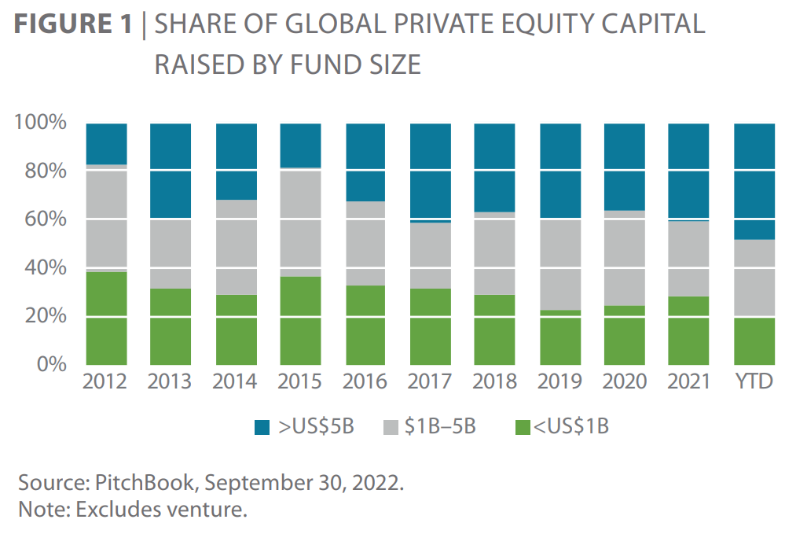
When the economy shrinks, consumers typically respond by paying down debt, saving more, and spending less on nonessential goods. Institutions, on the other hand, try to adjust the “tilts” of their portfolios. They increase their allocations to defensive assets like real assets and private debt, and seek ‘safety’ with larger, more familiar private equity fund managers. Necessarily, this comes at the expense of small, emerging, and diverse managers, which some regard as riskier than their larger, “more proven” counterparts (Figure 1).

The institutions that reduce their allocations to private equity’s small market managers during turbulent markets treat this tranche of the buyout market as a luxury good, something that is consumed when the economy is booming.

Instead, we believe investors should consider it a staple that can bolster and diversify their portfolios regardless of the macroeconomic backdrop.

As global investors contemplate their 2023 budgets and allocation targets, they should resist the temptation to pull back on small-market buyouts. Contrary to what LP actions would imply, now is the time to lean in on the low(er) end.

Why Now May Be the Time to Lean In

The segment of the market we refer to as small-market buyouts (“SBO”) consists of private equity GPs that raise funds smaller than US$1 billion while investing in companies with a total enterprise value (TEV) of US$250 million or less. Although there are several benefits to investing in SBO, we have chosen to highlight the ones that are most salient to current market conditions.

Vast Opportunity Set yet Underallocated

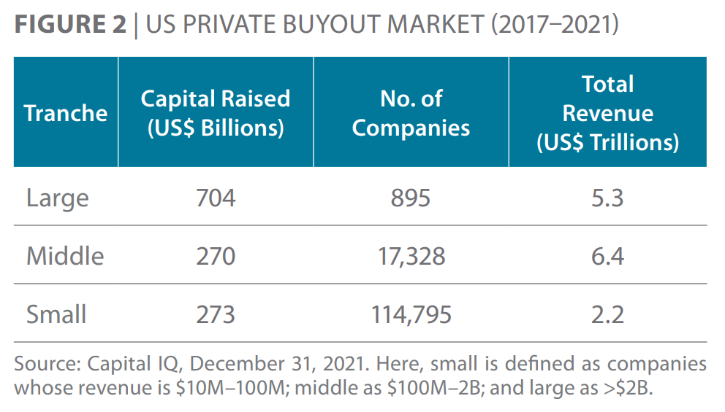
The SBO market is the largest and most dispersed tranche of the buyout market. In the US, which has the largest and most mature SBO market, it is significantly larger than the middle and large markets combined based on number of companies (Figure 2). In fact, the small market is home to nearly 90% of private companies in the US yet represents only a fifth of the capital raised.

Small buyouts represent roughly 90% of US private companies but only a fifth of capital raised.

Family Offices’ propensity to cut back on SBO during downturns means there will be even less capital chasing the segment.

Under-allocation to small buyouts, with even less capital chasing the segment during downturns.

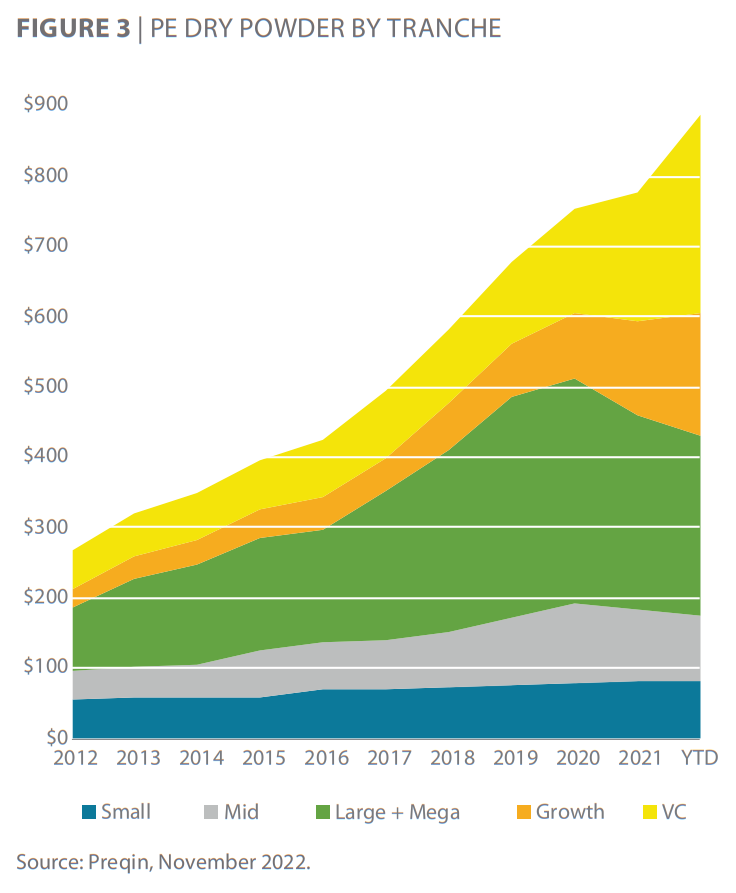
As seen in Figure 3, SBO dry powder has increased modestly compared with other strategies, growing at a CAGR of 3% between 2016 and 2021. While the trend lines for each have been up and to the right across the entire buyout market for many years, SBO has been most insulated from this frothiness.

Greater Focus

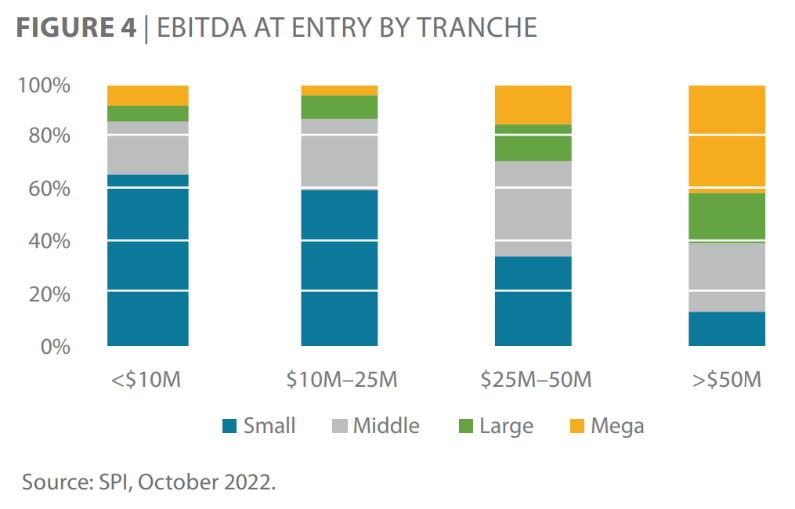
Most SBO funds target businesses with less than US$25 million of EBITDA, (Figure 4). Businesses of this size are less likely to be represented by sophisticated intermediaries (if they are represented at all), enabling SBO managers to source investments in a less competitive environment. By sourcing directly, SBO firms generate value from price inefficiencies, improved asset selection, and greater awareness of the true operational value-add potential of a business.

Greater operational focus and value-add potential in small-buyout investing.

Less Leverage

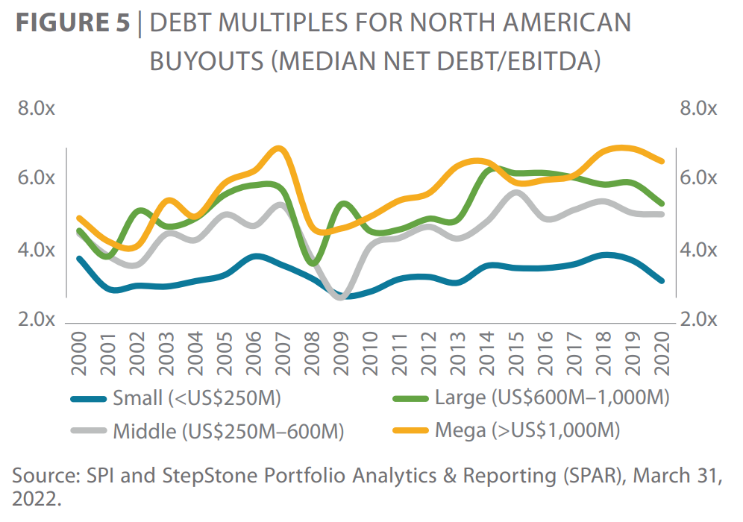
As seen in Figure 5, which illustrates leverage multiples for various tranches of the buyout market, small-market companies have used considerably less leverage than their larger counterparts. Because they have less debt to pay down, small-market companies have more free cash flow to reinvest in their businesses.

Lower leverage in small-market companies, leaving more free cash flow to reinvest.

Multiple Expansion

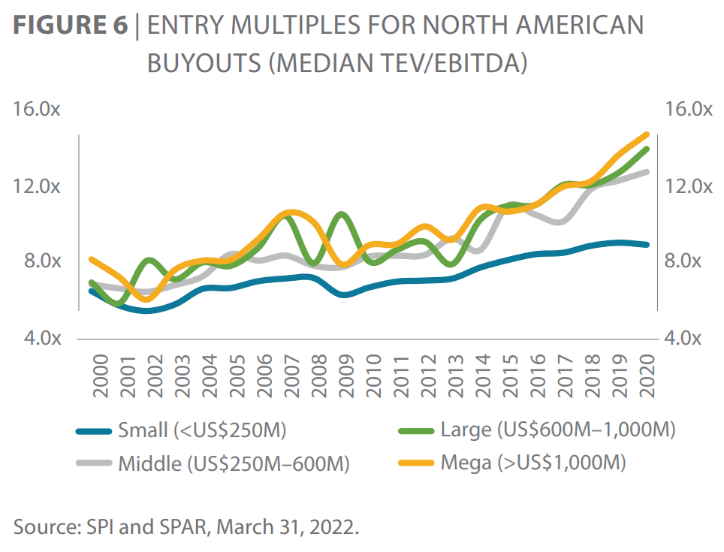
Historically, purchase price multiples have been much lower for small-market companies (Figure 6). And while the low-interest- rate environment that has characterized the past 15-plus years has allowed valuations to increase for all assets, entry multiples for small-market companies have risen more modestly.

Entry valuation multiples for small-market companies have risen more modestly than larger deals.

Low entry multiples and a greater capacity for operational improvements create ideal conditions for multiple expansion. Harkening back to Figure 3, ample dry powder, particularly upmarket, suggests the pool of potential buyers is well funded.

“Home Run” Potential

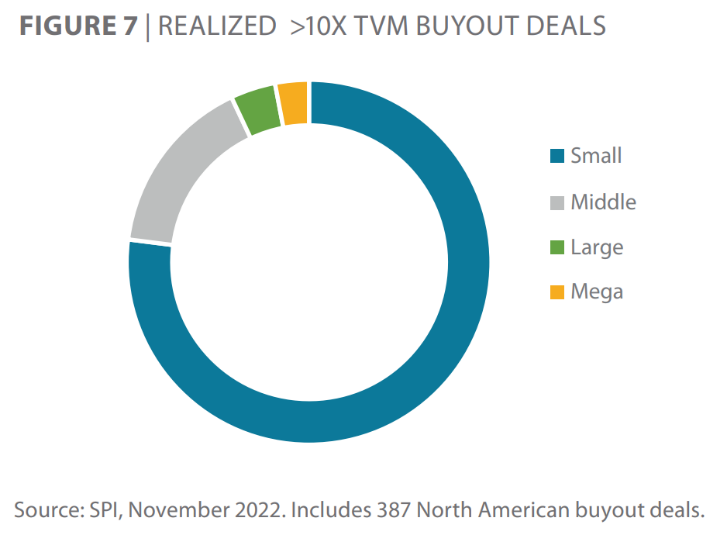
Large sponsor interest in high-quality assets that can serve as a platform for consolidation of high-growth or fragmented sectors can lead to home run deals. Of the 387 realized North American buyout deals tracked for his whitepaper that have generated a 10x outcome or better, 77% were in SBO funds (Figure 7).

Share of 10x-or-better investment outcomes coming from small-buyout funds.

While multiple expansion can certainly boost an outcome from good to great, it’s not required to generate strong returns given the other value creation levers available in the small market.

In response to questions around the sustainability of multiple expansion as a source of return, one should ponder the impact on both existing and new deals. While the range of potential multiple expansion may compress on existing deals, valuations for new deals have also compressed, providing the same opportunity for multiple expansion in the future. Simply put, multiple expansion is a feature of the valuation environment and competition (read: dry powder) at different segments of the buyout market, which we believe positions SBO well for the foreseeable future.

Sensitivity to Public Market Volatility

Small buyouts' lower sensitivity to public-market volatility versus other buyout segments.

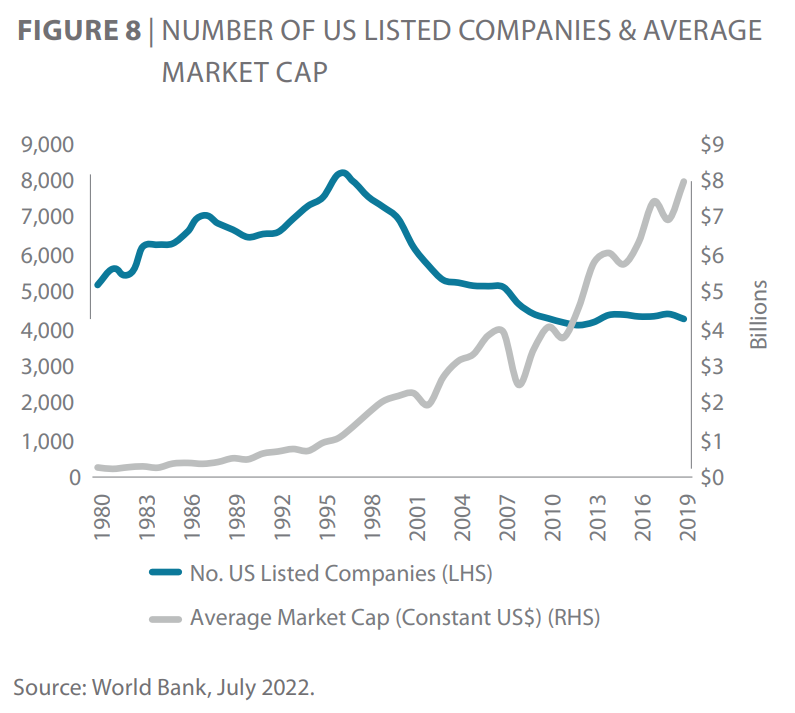
Adding private markets to a traditional portfolio provides exposure to assets that may be underrepresented in listed markets. Over the past 30 years, the size and composition of listed markets have changed markedly. As seen in Figure 8, the number of public companies has fallen by half. At the same time, the average market cap has grown markedly, suggesting the number of public micro- and small-cap companies has fallen as well. Investors building well-rounded portfolios are therefore looking increasingly to the private markets to gain small-cap exposure. Moreover, because small-market companies are underrepresented in stock markets, they are less sensitive to swings in the stock market than larger companies.

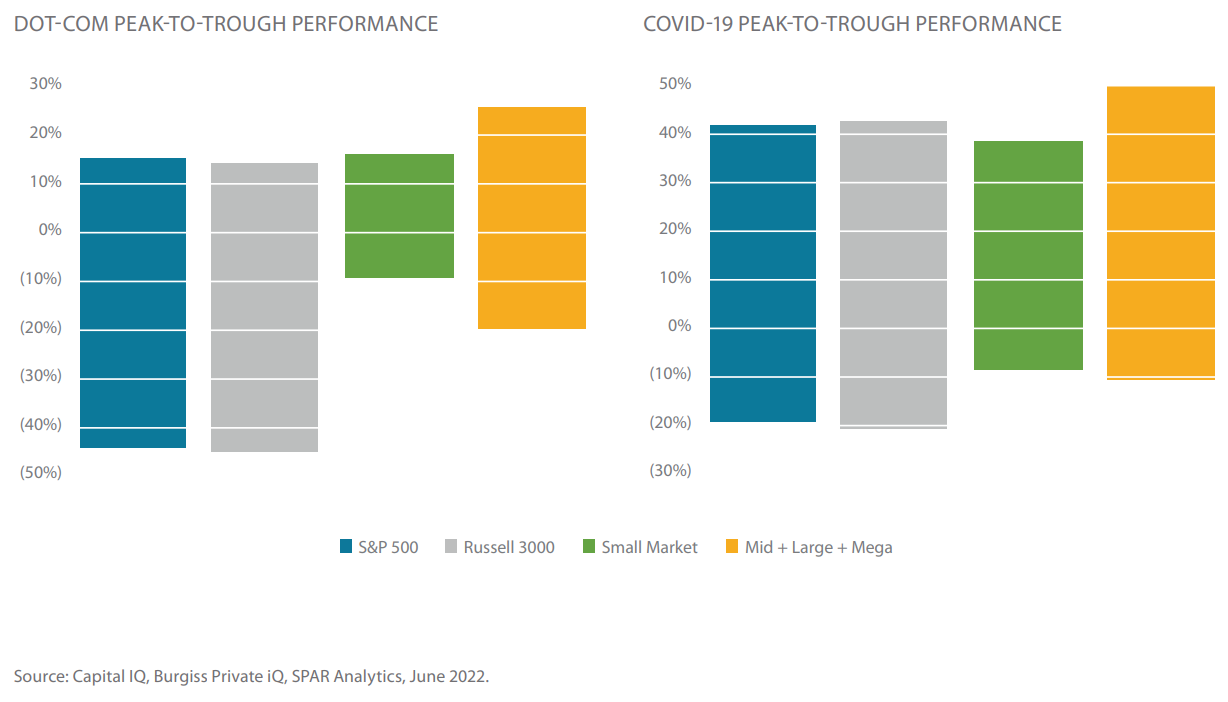
To get a sense of just how sensitive, we compared the peak-to- trough performance of mega, large, middle and SBO funds with the public markets’ during three crash and recovery cycles: the dot-com bubble, the Global Financial Crisis (GFC) and Covid-19. We refer to this analysis as upside/downside capture.1

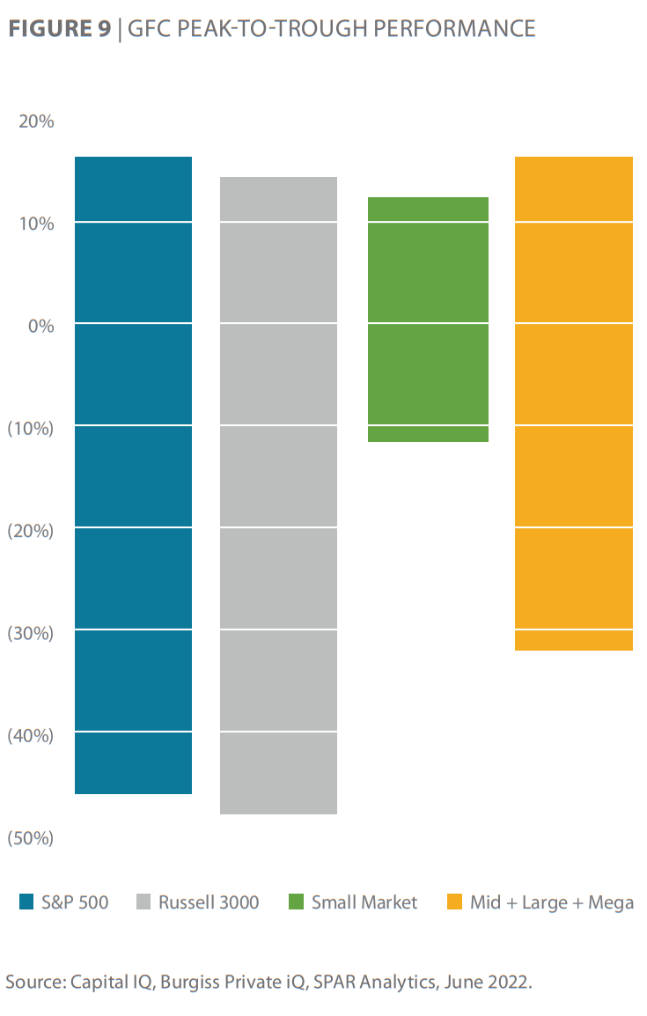
Figure 9 illustrates the market capture during the GFC. As you can see, SBO valuations rose 13.7%, capturing 91% of the gains in the public markets, on average. By contrast, mid, large, and mega fund valuations rose by 15.2%, in line with the public benchmarks. However, upside is only half of the picture. To get a sense of how the two tranches performed during the entire cycle, we also examined the downside. From their peak at the end of September 2007, SBO valuations fell by 12.6%, roughly 75% less than either public benchmark. Mid, large and mega fund valuations, by contrast, fell by more than one- third, capturing closer to 70% of public market downside. These results were consistent across all three cycles. On average, we found that SBO captured 30% of market downside and 94% of upside. This seems to run contrary to the popular assumption that SBO is riskier than other buyout strategies. How can this be?

Risk comparison showing small buyouts are not riskier than other buyout strategies.

Several factors may explain why small-market funds are less sensitive to fluctuations in equity markets.

  1. Because the preponderance of small-market companies are privately held, there are fewer comps in the public markets.
  2. SBO funds are generally more conservative in marking up businesses despite mark-to-market accounting. Mega and large buyout funds are more visible (some GPs even public themselves) and possibly held to more stringent accounting standards.
  3. Large buyout managers tend to come back to market sooner, often raising capital for alternative strategies or products or both. Therefore, interim returns matter. This speaks more to upside capture.
  4. SBO funds depend more on carry than management fees, which are calculated from a smaller basis. Small-market managers generally care more about exits than interim marks.

SBO Can Offer Great Access to Diverse Buyout Managers

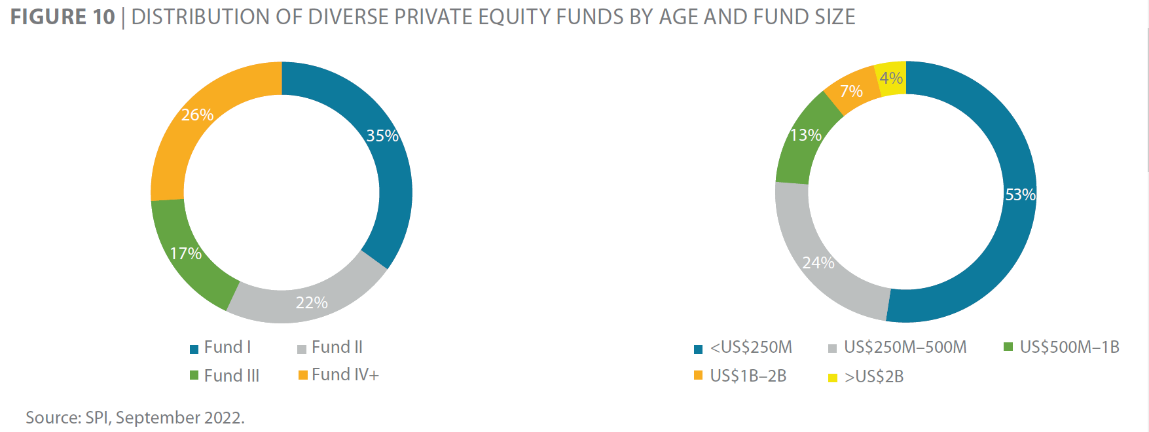
We define a diverse fund as one that passes the “33% test.”2 Of the 1,400-plus North American buyout managers tracked by SPI,3 128 have raised a fund that passes this test. SBO managers account for 100 of them. As seen in Figure 10, diverse managers not only skew smaller but younger as well. Nearly three-quarters of diverse-managed private equity funds are new or emerging, and 90% are smaller than US$1 billion.4

Diverse-managed private equity funds are largely new, emerging, and under US$1 billion.

A substantial body of work examining the effect diversity has on decision-making, organizational health and investment performance has emerged. For example, A 2021 study by the National Association of Investment Companies found that diverse private equity funds beat the Burgiss median across several key performance indicators: net IRR, MOIC and DPI.5

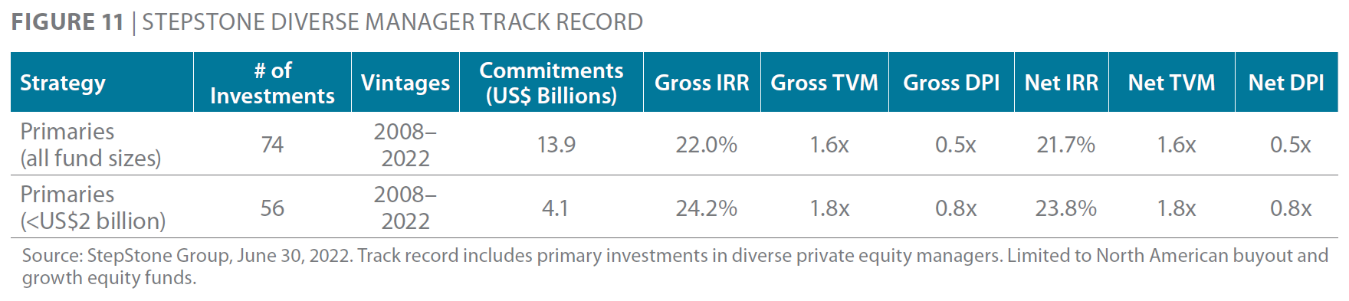
We have observed similar outcomes in our diverse manager track record (Figure 11).

  • For primary buyout and growth equity funds, diverse managers’ net TVM of 1.6x outperforms the benchmark median of 1.49x over the same vintages.6
  • This outperformance has been concentrated in the lower end of the market, where funds raising less than US$2 billion have generated a net TVM of 1.8x.

Smaller funds, below US$2 billion, have generated higher net total value multiples.

Performance of smaller buyout funds at the lower end of the market.

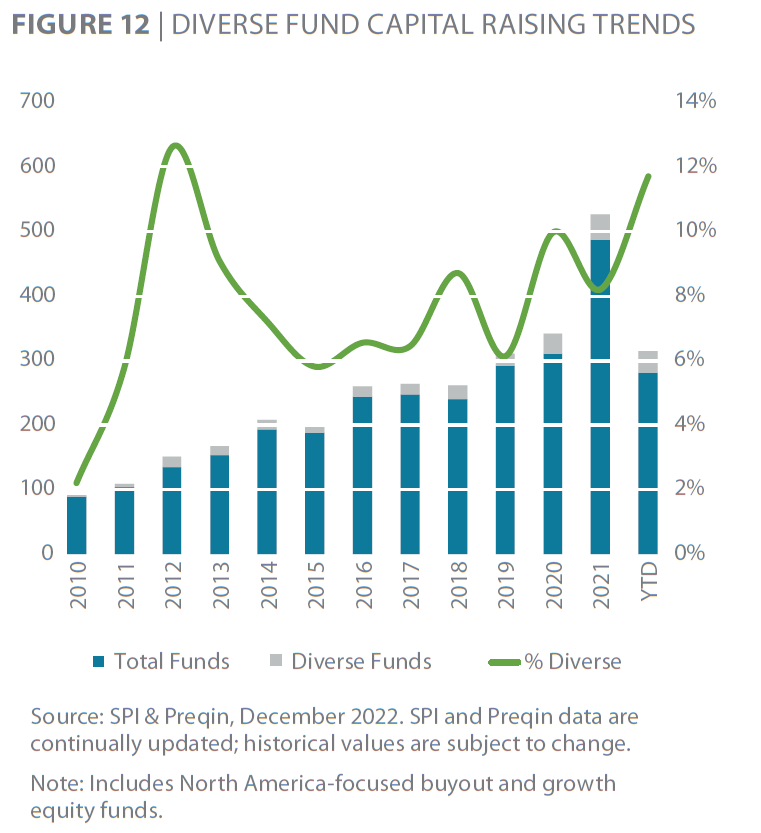
Notwithstanding these impressive returns, Family Offices have historically underweighted SBO where 90% of diverse talent exists. That said, the number and share of diverse funds has been increasing (Figure 12).

Though promising, it all feels a bit too frail. Unless Family Offices back enough of them, and diverse GPs consistently deliver competitive returns, few will survive, let alone graduate. Until that happens, SBO is buyout investors’ best / only realistic choice.

Challenges & Solutions

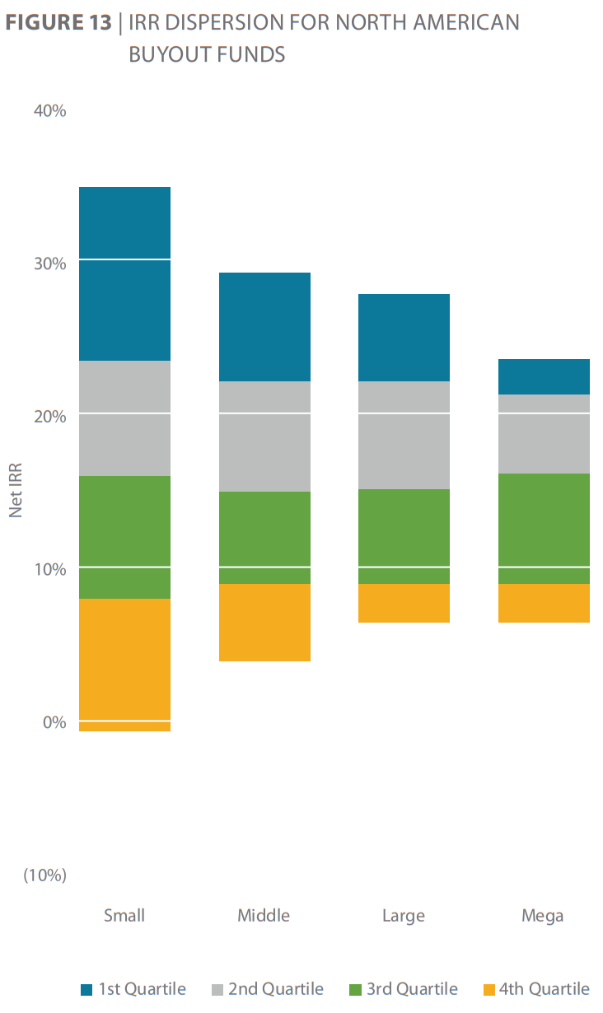
For all its benefits, SBO can present Family Offices with some challenges. It has more managers than any other segment of the buyout market. That many of these GPs are new or emerging means there are a lot of unproven teams and track records to decipher. Moreover, the difference between first- and fourth-quartile managers is widest for SBO.

Wide dispersion between top- and bottom-quartile managers in small buyouts.

The importance of manager selection is a common refrain in private markets. Within buyouts, this axiom rings truest for SBO funds, which have exhibited the highest and lowest return potential relative to other tranches (Figure 13).

Not only are the inter-quartile spreads widest for SBO, but they also have the widest average “intra-quartile” spreads.

When comparing SBO managers, quartile may be too coarse a measure; Family Offices and their advisors might consider thinking in terms of deciles.

Unless a family office has significant resources in-house, attempting to cover the small market can feel like a tall order, and they might feel tempted to default to brand-name managers. But is it worth it to try?

Incremental Effort

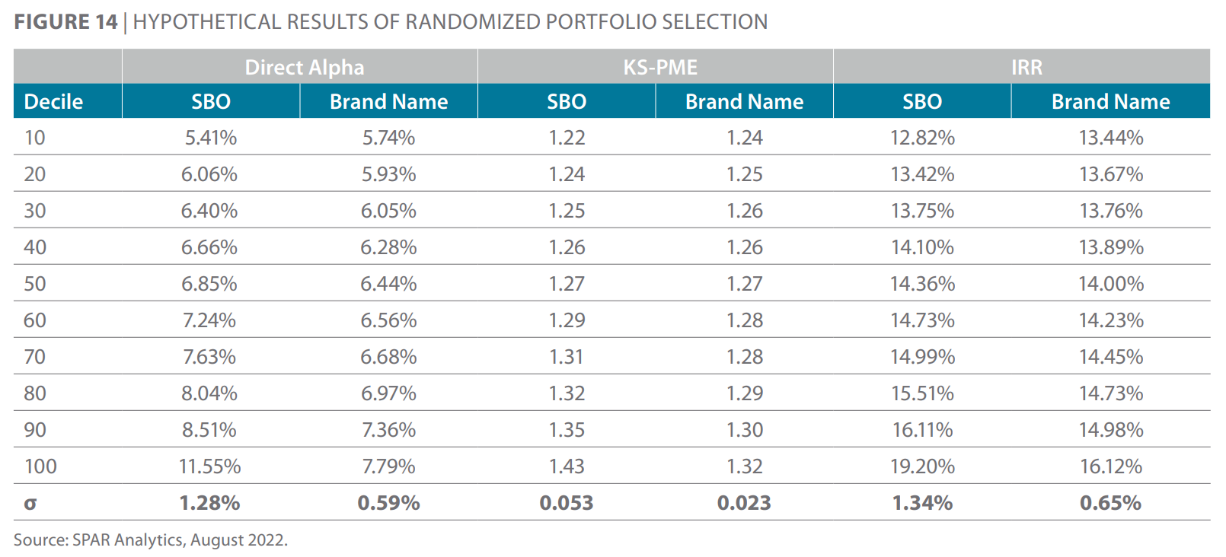
To help family offices determine whether they should attempt to dedicate resources toward SBOs, we compared the hypothetical spread of performance one might expect from assembling portfolios of either brand-name or SBO funds.

We examined buyout funds raised between 1985 and 2021. We defined brand-name funds as those whose fund sizes were in the top tercile (67th percentile) for a given vintage; SBO funds as those whose fund sizes were in the bottom tercile (33rd percentile). We created 100 portfolios made up of 10 funds by randomly selecting five of each fund type. To approximate hypothetical median performance—and avoid overweighting a good vintage or a poor fund—we also equally weighted vintages as well as commitments in each. We measured hypothetical performance across three dimensions: IRR, Direct Alpha, and Kaplan Schoar PME. The hypothetical results are summarized in Figure 14.7

Performance of small buyouts across IRR, Direct Alpha, and Kaplan-Schoar PME measures.

To help answer our question, we calculated the standard deviation (σ) of each measure. Harkening back to SBO’s return dispersion, it should come as no surprise that SBO had a higher σ. But this wide distribution isn’t necessarily bad: We found that a 1σ increase in SBO’s IRR is roughly equivalent to a 1.3σ increase in brand names.8 In other words, the marginal return on effort is higher for SBO.

Think of this as an optimization exercise. In a world of limited time and money, we must choose how to spend either. Suppose a family office CIO must choose between randomly selecting one type of fund and spending resources vetting another. Clearly, they should randomly pick from the pool of brand- name managers where the marginal returns of climbing to the next decile are lower, and the risks of picking poorly are less pronounced. In assembling an SBO portfolio, a CIO needn’t even aim for the top quartile; if they can get to the 40th percentile, their time and energy will have been well spent.

Conclusion

As Family Offices ponder the composition of their portfolios for 2023, they may feel tempted to flock to familiar managers at the upper end of the market. Based on the data, we would say: Fight the urge! We believe now is the time to lean in to SBO. Less competition, attractive entry valuations, lower leverage, dry powder upmarket, multiple arbitrage, and a low correlation with stock market volatility are several reasons why. Regardless of market cycles, SBO can play a central role in an family office’s portfolio, complementing other private equity strategies by providing alternative return drivers and diversification benefits. Moreover, cutting back on SBO disproportionately affects capital going to diverse and emerging managers. However family offices choose to proceed, we believe investing in SBO to be well worth the effort. And there’s no better time than now.

Appendix A | Peak-to-Trough Performance

Peak-to-trough performance of small buyouts versus other strategies (Appendix A).


Appendix B | Hypothetical Results

Hypothetical results comparing small-buyout investment scenarios (Appendix B).

Notes

  1. Downside is defined as the maximum drawdown between the peak and trough during a crisis; upside is the annualized return between the trough of the previous crisis and the peak of the next crisis. Dot-com peak March 31, 2000, trough September 30, 2002; GFC peak September 30, 2007, trough March 31, 2009; Covid peak December 31, 2019, trough March 31, 2020; post-Covid peak September 30, 2021.↩︎
  2. In our view, to be diverse, funds must pass at least one of the following tests: One-third of ownership counts as diverse; one-third of carry goes to diverse individuals; or one-third of individuals covered by a fund’s key-person clause are diverse.↩︎
  3. As of September 30, 2022. StepStone Private Markets Intelligence, Stepstone’s proprietary research library, garnered data on more than 15,000 GPs, 40,000 funds and 180,000 investments.↩︎
  4. We define new managers as those raising a Fund I; emerging managers as those raising Funds II–III.↩︎
  5. National Association of Investment Companies. 2021. “Examining the Returns 2021: The Financial Returns of Diverse Private Equity Firms.”↩︎
  6. StepStone Portfolio Analytics & Reporting. 2022. Omni Fund Benchmark, June 30.↩︎
  7. The following model is entirely hypothetical and an illustration of returns that could be earned if the assumptions specified above occurred. Investors are advised that actual returns could vary significantly from those shown herein. Any return contained herein is hypothetical and is not a guarantee of future performance. The returns set forth herein do not constitute a forecast; rather they are indicative of the StepStone internal transaction analysis regarding outcome potentials. Any returns set forth herein are based on the belief about the returns that may be achievable on investments that it intends to pursue. Such returns are based on the StepStone current view in relation to future events and financial performance of potential investments and various models, estimations and “base case” assumptions made by StepStone, including estimations and assumptions about events that have not occurred. Actual events and conditions may differ materially from the assumptions used to establish returns and there is no guarantee that the assumptions will be applicable to the investments. Refer to the appendix for graphical summaries of the analysis.↩︎
  8. This observation holds for the other measures as well. A 1σ increase in SBO was roughly equivalent to a 1.1σ increase in brand-name Direct Alpha and a 1.2σ increase in brand-name KS-PME.↩︎

About the Author

Marc J. Sharpe is the founder and Chairman of TFOA, an organization formed in 2007 to provide a forum for education and networking and to serve as a resource for single family office principals and professionals to share ideas and best practices, pool buying power, leverage talent and conduct due diligence. Mr. Sharpe is active in the community and has served on the Board of the Holocaust Museum Houston, the HBS Houston Angels, and on the Investment Committee for two Texas based foundations. Contact: marc@tfoa.me

About TFOA

The Family Office Association (“TFOA”) is a global peer network that serves as the world’s leading single family office community. Our group is for education, networking, selective co-investment, and a resource for single family offices to share ideas, deal flow and best practices. Members are not actively marketing products or services to other members, and no contact information or email lists will ever be shared. Since our founding in 2007, TFOA has led the global single family office community by delivering world-class educational content, unique networking opportunities, and exceptional thought leadership to our highly curated network of the world’s largest and wealthiest families: www.tfoa.info


Disclosures

TFOA is a peer network of Single Family Offices. Our community is intended to provide members with educational information and a forum in which to exchange information of mutual interest. TFOA does not participate in the offer, sale or distribution of any securities nor does it provide investment advice. Further, TFOA does not provide tax, legal or financial advice. Materials distributed by TFOA are provided for informational purposes only and shall not be construed to be a recommendation to buy or sell securities or a recommendation to retain the services of any investment adviser or other professional adviser. The identification or listing of products, services, links, or other information does not constitute or imply any warranty, endorsement, guaranty, sponsorship, affiliation, or recommendation by TFOA. Any investment decisions you may make based on any information provided by TFOA is your sole responsibility. The TFOA logo and all related product and service names, designs, and slogans are the trademarks or service marks of The Texas Family Office Association. All other product and service marks on materials provided by TFOA are the trademarks of their respective owners. All of the intellectual property rights of TFOA or its contributors remain the property of TFOA or such contributor, as the case may be, such rights may be protected by United States and international laws and none of such rights are transferred to you as a result of such material appearing on the TFOA web site. The information presented by TFOA has been obtained by TFOA from sources it believes are reliable. However, TFOA does not guarantee the accuracy or completeness of any such information. All such information has been prepared and provided solely for general informational purposes and is not intended as user specific advice.

This document is for information purposes only and has been compiled with publicly available information. StepStone makes no guarantees of the accuracy of the information provided. This information is for the use of StepStone’s clients and contacts only. This report is only provided for informational purposes. This report may include information that is based, in part or in full, on assumptions, models and/or other analysis (not all of which may be described herein). StepStone makes no representation or warranty as to the reasonableness of such assumptions, models or analysis or the conclusions drawn. Any opinions expressed herein are current opinions as of the date hereof and are subject to change at any time. StepStone is not intending to provide investment, tax or other advice to you or any other party, and no information in this document is to be relied upon for the purpose of making or communicating investments or other decisions. Neither the information nor any opinion expressed in this report constitutes a solicitation, an offer, or a recommendation to buy, sell or dispose of any investment, to engage in any other transaction or to provide any investment advice or service.

Past performance is not a guarantee of future results. Actual results may vary.

On September 20, 2021, StepStone Group Inc. acquired Greenspring Associates, Inc. (“Greenspring”). Upon the completion of this acquisition, the management agreement of each Greenspring vehicle was assigned to StepStone Group LP. Each of StepStone Group LP, StepStone Group Real Assets LP, StepStone Group Real Estate LP and StepStone Group Private Wealth LLC is an investment adviser registered with the Securities and Exchange Commission (“SEC”). StepStone Group Europe LLP is authorized and regulated by the Financial Conduct Authority, firm reference number 551580. StepStone Group Europe Alternative Investments Limited (“SGEAIL”) is an SEC Registered Investment Advisor and an Alternative Investment Fund Manager authorized by the Central Bank of Ireland and Swiss Capital Alternative Investments AG (“SCAI”) is an SEC Exempt Reporting Adviser and is licensed in Switzerland as an Asset Manager for Collective Investment Schemes by the Swiss Financial Markets Authority FINMA. Such registrations do not imply a certain level of skill or training and no inference to the contrary should be made.

In relation to Switzerland only, this document may qualify as “advertising” in terms of Art. 68 of the Swiss Financial Services Act (FinSA). To the extent that financial instruments mentioned herein are offered to investors by SCAI, the prospectus/offering document and key information document (if applicable) of such financial instrument(s) can be obtained free of charge from SCAI or from the GP or investment manager of the relevant collective investment scheme(s). Further information about SCAI is available in the SCAI Information Booklet which is available from SCAI free of charge. Manager references herein are for illustrative purposes only and do not constitute investment recommendations.

Frequently Asked Questions

What is a small buyout investment for a family office?

A small buyout refers to the acquisition of a controlling interest in a lower middle market company, typically with enterprise values between $10 million and $100 million. Family offices pursue small buyouts directly, through independent sponsors, or via lower middle market private equity funds — often finding less competition and more attractive pricing than in the larger buyout market.

Why do family offices prefer the lower middle market for direct investing?

The lower middle market offers less institutional competition, lower entry multiples, more direct access to owner-operators, and greater ability to add value through operational improvements and strategic repositioning. Family offices' patient capital and long investment horizons are well-suited to building value in smaller businesses over time.

What are the risks of small buyout investing for family offices?

Key risks include management dependency (smaller companies often rely heavily on one or two key people), limited operational capacity to manage a business through a downturn, illiquidity (exits can take 5 to 10 years), deal concentration (a single bad investment can significantly impact portfolio performance), and the operational complexity of owning a business.

How do family offices typically exit small buyout investments?

Exit routes for small buyouts include sale to a strategic acquirer (the most common outcome), sale to a larger private equity firm as the company grows, sale to another family office, management buyout, or in some cases an IPO. Family offices with no fund termination pressure can afford to be patient, which can improve exit outcomes.

The Renaissance of Energy — TFOA whitepaper.

The Renaissance of Energy

Over the past fifteen years, the energy industry has experienced significant challenges, which yield compelling opportunities today…

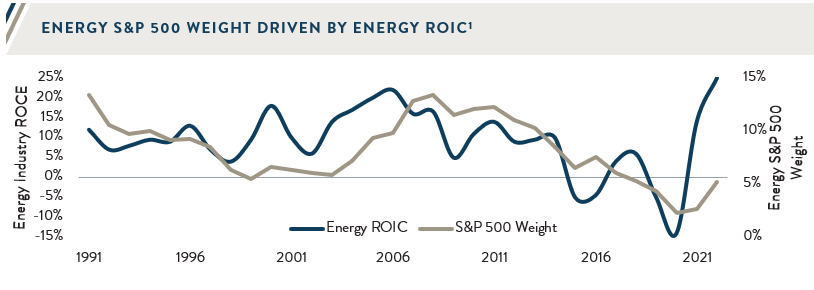
The Global Financial Crisis triggered a flood of capital into the market, ultimately hurting the returns on capital for energy investments due to their long-lived, capital-intensive nature. Over time, the shortcomings of spending on high-decline shale were seen and Returns on Invested Capital (ROIC) fell by nearly 2000 bps (20%) over the 2006-2019 period. As ROIC dwindled, mainstream investors retreated, further deepening the challenges by 2020.

Decline in energy-sector return on invested capital (ROIC) from 2006 to 2020 and investor retreat.

Source: Third Gear Investments, Factset

As ROIC fell, generalist investors shunned energy companies, and these capital-intensive businesses could not secure development capital.1 Over time, the fiscal situation worsened, investor apathy increased, and in 2020, capital disappeared; this forced additional bankruptcies, dividend cuts, and significant layoffs to self-fund ongoing operations.

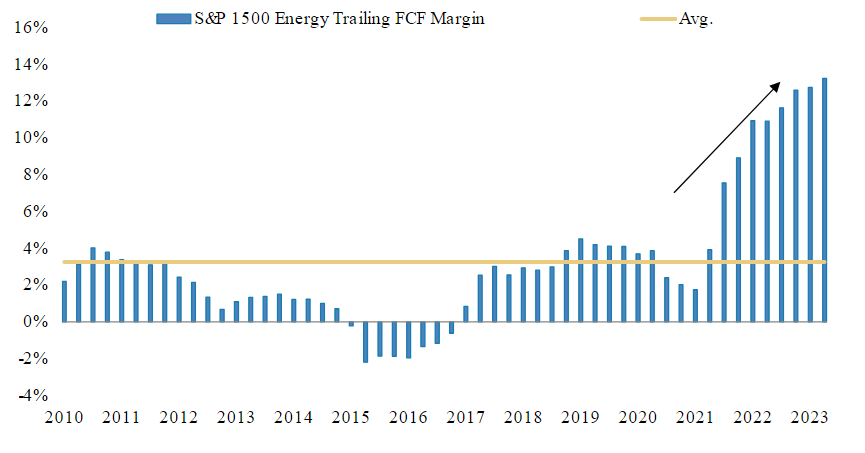
However, the industry shifted its focus, prioritizing returns over asset growth, leading to a “Renaissance of Energy.” Despite these positive changes, many outside the sector remained oblivious. But the numbers speak for themselves. The industry is now making steady progress, and the increasing Free Cash Flow (FCF) to energy is undeniable evidence of this evolution.

Rising free cash flow generated by the energy sector as evidence of its turnaround.

Source: Third Gear Investments, Bloomberg

Efficiency, Optimization, and Technology

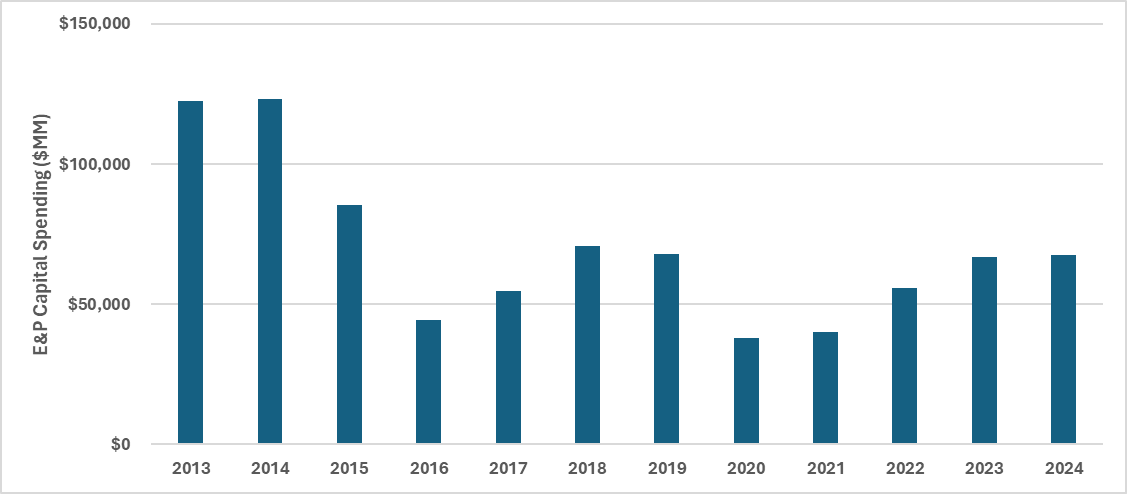
Contrary to popular belief, OPEC’s decision to increase production in 2014 was not targeted at U.S. shale but at large investment programs that required high commodity prices ($100/bbl+) to justify their significant capital investment and long gestation periods (5-7+ years to first production). OPEC’s strategy led to financial strains across all energy sub-sectors as investment was slashed in every vertical. However, this gave rise to a new era focused on capital discipline and resource optimization (i.e., inventory management and cost efficiency).

The energy sector's shift toward capital discipline, inventory management, and cost efficiency.

In 2020, there was a further reallocation of capital towards renewable electrification as many investors left traditional energy for more compelling narratives around renewables; clearly, a material change in behavior was underway.

However, what hasn’t changed is the notion that investors should embrace (and prioritize) companies generating tangible free cash flows, especially with rising capital costs and inflationary pressures, to earn a positive return on their investment. Investors should also recognize that traditional hydrocarbon producers contribute significantly to developing emerging technologies due to their financial strength, engineering expertise, and asset mix, allowing for commerciality and scalability assessments.

These alternative energy investments are in addition to traditional energy companies enabling global economic growth as they maintain investment in the fuels that power 93% of electricity demand today while working to improve (reduce) their carbon emissions. Hydrocarbon companies have traditionally focused on asset growth, but now they are increasingly prioritizing improved returns; efficiency and technology are potential ways to improve the company’s margins and environmental footprint simultaneously.

How technology can improve energy companies' margins and environmental footprint simultaneously.

For example, heat loss accounts for approximately 25% of the lost energy supply, making resource optimization a top priority for industry (and the global economy). New technologies are promising, but old technologies are still the easiest path to improved energy supply and a lower carbon footprint. The hydrocarbon industry is investing more in resource optimization, which will help to maintain and enhance hydrocarbon supply. That said, demand continues to rise, with OPEC forecasting 105.2 MMBD in Q4 2024 (up 3% from the current 102 MMBD) and 110 MMBD in 2030; and supply growth will be challenged to meet this demand over the next 5-7 years due to insufficient investment. As such, we also need new sources of incremental electricity supply to support future demand needs. Therefore, the energy renaissance is an exciting time for industry, and we all hope for a cleaner, more efficient energy future.

The world will unlikely abandon any source of hydrocarbons for electric power generation for decades; this is an evolution of energy, not a transition from hydrocarbons. It is essential to appreciate this narrative because as energy consumption per person grows, it is not being met with improved efficiency elsewhere. Therefore, while the percentage growth rate of a specific energy source may slow, it is still growing on an absolute basis. Javon’s Paradox supports the narrative: efficiency enables one to use more of what they have, not to use less due to efficiency gains.

Hydrocarbons are the building blocks of consumer society, and nearly 60% of global end-use products have no alternative to hydrocarbons. Natural gas, propane, ethane, and butane demand is expected to grow approximately 5% annually over the next decade. With ~1.2 billion people entering the middle class by 2030 and nearly 3 billion in energy poverty, demand for all energy sources will continue to grow.

Projected growth in global energy demand driven by a rising middle class and energy poverty.

Source: Enterprise Products

Renewables will not ‘democratize’ energy overnight, as the power sector has struggled with integrating intermittent forms of electricity. Therefore, the global market will continue to rely on natural gas, coal, and nuclear to accommodate imbalances from weather seasonality.

Continued reliance on natural gas, coal, and nuclear to balance seasonal energy demand.

Source: IEA, World Bank, Third Gear Investments

Energy security, reliability, and affordability are fundamental rights for the global population; they drive points 1-3 of the UN Sustainable Development Goals. In the IEA (International Energy Agency) Outlook of December 2022, 775 million people globally lack access to electricity, equivalent to the populations of the US and EU. This number is expected to increase through 2025, primarily in Africa and Oceania, where population growth is highest.2

Projected energy demand growth through 2025, led by Africa and Oceania.

Source: IEA, World Bank, Enterprise Products

By 2050, Asia and Africa will comprise 80% of the global population, while North America and Europe will only represent 11.7%. Incremental energy demand will come from these regions rather than the US and Europe.

Shift in incremental global energy demand toward emerging regions rather than the US and Europe.

Source: All data per World Bank, 2012, Data illustration per Grace Newton, Department of Geography, University of Illinois, 2016

Global energy consumption has nearly tripled since 1971, from 230 EJ to 608 EJ in 2019. Coal demand saw its market share go from 26.1% to 26.8%; in absolute terms, coal generated 60 EJ of power in 1971 and nearly 162 EJ in 2019 – more than triple.

When one contemplates the future of crude oil, natural gas, and natural gas liquids, to paraphrase Mark Twain: “It seems as though the tale of [their] demise is greatly exaggerated.” Unfortunately, energy investment in these hydrocarbons has fallen significantly, with current global upstream capex at less than half the levels of 2012-2014 (while crude oil prices are at the same levels), and with no signs of increases ahead, capital discipline is the new mantra in the oil patch and returns on invested capital are rising.

Rising returns on invested capital as capital discipline takes hold in the oil sector.

Source: Third Gear Investments, Bloomberg, RBC

Fortunately, global markets have become increasingly comfortable with natural gas as a transition fuel. Still, propane, butane, ethane, and crude oil will also play an essential part in improving the energy security, affordability, and reliability of global electricity demand and HDI (human development index) improvement. For example, the IEA forecasts that propane, butane, and ethane will see demand growth of nearly 5% annually through 2030. Without significant new sources of supply, prices will rise, which benefits margins and delivers more free cash flow.

How constrained new supply supports higher energy prices, margins, and free cash flow.

The growth in natural gas liquids demand is supported by the massive growth emerging from the Midland and Delaware Basins in the Permian. The US is well endowed with natural resources, and these molecules are evacuated through the US Gulf Coast midstream and export facilities. The US is now the largest exporter of NGLs globally.

U.S. natural gas liquids exports through Gulf Coast facilities, now the world's largest.

Source: Grand View Research

The value of traditional energy, as viewed from the lens of public equities, is likely understated. This is especially true when considering the immense economic costs of ramping up production to satisfy current demand. Over the past decade, the global economy has been flooded with inexpensive energy — a consequence of over $500 billion in lost investor capital. However, management teams are increasingly zeroing in on enhancing their Return on Capital Employed (ROCE). This is a crucial determinant of valuation in the capital markets. Current forward estimates suggest that energy may be undervalued by approximately 35-40% compared to its peers, especially considering the ROCE. And this assessment may be conservative due to three main reasons:

  1. Supply growth is decelerating, whereas demand continues to climb.
  2. Energy companies have significantly improved their leverage ratios, leading to superior earnings quality and reduced volatility.
  3. Increasing capital discipline and industry consolidation will compel companies to maximize their existing resources.

Industry consolidation and capital discipline driving companies to maximize existing resources.

Source: Bloomberg

The near-term future suggests a rise in hydrocarbon prices, given that supply is expected to lag demand. Inventories, when adjusted for demand, are at historic lows. Until a short while ago, OPEC was producing at its peak capacity. Many OPEC+ nations are yet to fulfill their designated quotas. Throughout 2022, Russian crude oil and other products flowed continuously into China and India. The US Strategic Petroleum Reserve introduced an additional 750 MBD into the market during the same period. This was concurrent with a withdrawal of nearly two million barrels a day of demand from the market, attributed to China’s zero-COVID policy; both factors have since reversed.

The recent cut by OPEC, spearheaded by Saudi Arabia, reflects strategic foresight. They recognize the peril of halting hydrocarbon investments in the US. If prices stagnate between $60-$70 for a prolonged period, it’s likely to deter producers from investing. Given the ever-increasing global demand, this would hasten the natural decline of fields and pose a more significant challenge in just a few years. With Saudi Arabia at the helm, OPEC+ isn’t merely playing the game; they’re strategizing several steps in advance.

Of critical note is India’s looming surge in demand. Although lagging behind China by approximately 15 years, India has a population of 440 million below 18. This promises a sharp spike in demand over the next decade. Yet, there are no ready resources to counterbalance this anticipated near 10% hike in global demand.

Valuation & Market Leadership: Both Are Improving

The S&P Energy composite will represent nearly 10-13% of S&P EPS in 2023-2025 but is a mere 4.8% of the S&P 500. Ten (technology) companies in the S&P 500 currently represent 34% of the total market capitalization and trade at an average 50x P/E multiple. Energy multiples have contracted over the past decade, while technology multiples have expanded significantly. A notable change of leadership is emerging.

Energy versus technology sector valuation multiples and shifting market leadership.

Source: Bloomberg, Wolfe Research

Public energy equities are expected to deliver industry-leading returns on capital, which should drive multiple expansion and improve valuation. As the market adapts to the new paradigm, the outlook for all hydrocarbon prices is higher. Importantly, for the energy investor, this demand has been increasingly met by US Shale – the Permian Basin – and the US Gulf Coast. If management discipline continues, it should drive improved valuation in the equity markets, and the Renaissance of Energy will be at hand.

Potential for improved energy-sector equity valuations as the sector strengthens.

Source: Bloomberg, Third Gear Investments

Electrification is a cornerstone in our transition to a low-carbon economy, with every energy source holding a pivotal role in this transformation. Renewable electricity is on an impressive growth trajectory. Yet renewables account for a mere 7% of global energy consumption. The projected surge in electricity demand will dwarf the forecasted growth of renewables. Princeton University predicts a 43% increase in electricity demand in the US by 2035 – electricity demand has been flat for 20 years, but AI, Cloud Computing, and EVs are dramatically changing that.

Projected surge in electricity demand to 2035 driven by AI, cloud computing, and EVs after two flat decades.

Source: Princeton University, REPEAT Study

A modest 2% uptick in global energy demand would necessitate renewable power generation equal to roughly 30% of the existing infrastructure. Therefore, the Energy Renaissance needs to be holistic and encompassing – an “All-of-the-Above” stance. However, staying financially grounded, operationally pragmatic, and commercially realistic.

An “All-of-the-Above” Approach Should Provide Energy Stability, Reliability, and Affordability.

In conclusion, the exponential growth in global energy demand will compel the world economy to incorporate more nuclear and renewable sources while acknowledging the indispensable role of hydrocarbons. As a stable and consistent energy foundation, hydrocarbons fuel both emerging economies and the progress of developing nations. Their significance in our future energy landscape remains undeniable.

The 'all-of-the-above' energy mix supporting reliability and affordability for developed and developing economies.

Source: EIA

Strategic investments in energy companies and new technologies, primed for scaling and commercialization, are essential to satiate this burgeoning demand. Traditional energy companies have often been in the crosshairs of environmental concerns and greenhouse gas emissions. Yet, the undervaluation they face in the market currently offers an attractive prospect for investing in these vital hydrocarbon companies as they work to improve their environmental footprint.

Notes

  1. Importantly, as shown later in the white paper, E&P companies had already begun to adopt discipline by reducing capital spending.↩︎
  2. Africa’s population is growing at approximately 2.5% per year versus Europe’s 0.06% and North America’s 0.62% (including Mexico’s).↩︎

About the Authors

Sean M. Maher is a Partner and Co-Founder of Third Gear Investments (TGI). TGI was founded in 2023 to redefine energy investment. Before founding Third Gear, Mr. Maher managed public equity portfolios for an energy boutique for fifteen years and served as a publicly traded energy company director. He began his career in energy finance at Morgan Stanley’s energy investment banking program in 1999 before covering Integrated Oils, Independent Refining, Midstream, and Integrated Natural Gas in the firm’s Equity Research division. Mr. Maher serves as Chair of the Investment Committee for the Houston Museum of Natural Science and as a Trustee for Covenant House Texas.

Marc J. Sharpe is the founder and Chairman of TFOA, an organization formed in 2007 to provide a forum for education and networking and to serve as a resource for single family office principals and professionals to share ideas and best practices, pool buying power, leverage talent and conduct due diligence. Mr. Sharpe also teaches an MBA class on “The Entrepreneurial Family Office” as an Adjunct Professor at SMU Cox School of Business: Contact: marc@tfoa.me

About TFOA

The Family Office Association (“TFOA”) is a global peer network that serves as the world’s leading single family office community. Our group is for education, networking, selective co-investment, and a resource for single family offices to share ideas, deal flow and best practices. Members are not actively marketing products or services to other members and no contact information or email lists will ever be shared. Since our founding in 2007, TFOA has led the global single family office community by delivering world-class educational content, unique networking opportunities, and exceptional thought leadership to our highly curated network of the world’s largest and wealthiest families.

Important Notes

This document and the information contained herein are for educational and informational purposes only and do not constitute, and should not be construed as, an offer to sell, or a solicitation of an offer to buy, any securities or related financial instruments. Responses to any inquiry that may involve the rendering of personalized investment advice or effecting or attempting to effect transactions in securities will not be made absent compliance with applicable laws or regulations (including broker dealer, investment adviser or applicable agent or representative registration requirements), or applicable exemptions or exclusions therefrom.

This document, including the information contained herein may not be copied, reproduced, republished, posted, transmitted, distributed, disseminated, or disclosed, in whole or in part, to any other person in any way without the prior written consent of Third Gear Investments, LP (“Third Gear”). By accepting this document, you agree that you will comply with these restrictions and acknowledge that your compliance is a material inducement to Third Gear providing this document to you.

This document contains information and views as of the date indicated and such information and views are subject to change without notice. Third Gear has no duty or obligation to update the information contained herein. Further, Third Gear makes no representation, and it should not be assumed, that past investment performance is an indication of future results. Moreover, wherever there is the potential for profit there is also the possibility of loss.

Certain information contained herein concerning economic trends and performance is based on or derived from information provided by independent third-party sources. Third Gear believes that such information is accurate and that the sources from which it has been obtained are reliable; however, it cannot guarantee the accuracy of such information and has not independently verified the accuracy or completeness of such information or the assumptions on which such information is based. Moreover, independent third-party sources cited in these materials are not making any representations or warranties regarding any information attributed to them and shall have no liability in connection with the use of such information in these materials. Statements made herein that are not attributed to a third-party source reflect the views and opinions of Third Gear.

This document contains forward-looking statements, including observations about markets and industry and regulatory trends as of the original date of this document. Forward-looking statements may be identified by, among other things, the use of words such as “expects,” “anticipates,” “believes,” or “estimates,” or the negatives of these terms, and similar expressions. Forward-looking statements reflect Third Gear’s views as of such date with respect to possible future events. Actual results could differ materially from those in the forward-looking statements as a result of factors beyond Third Gear’s control. Readers are cautioned not to place undue reliance on such statements. Third Gear bears no responsibility or obligation to update any of the forward-looking statements in this document.

Charts, tables and graphs contained in this document are not intended to be used to assist the reader in determining which securities to buy or sell or when to buy or sell securities.

Disclosures

TFOA is a peer network of Single Family Offices. Our community is intended to provide members with educational information and a forum in which to exchange information of mutual interest. TFOA does not participate in the offer, sale or distribution of any securities nor does it provide investment advice. Further, TFOA does not provide tax, legal or financial advice. Materials distributed by TFOA are provided for informational purposes only and shall not be construed to be a recommendation to buy or sell securities or a recommendation to retain the services of any investment adviser or other professional adviser. The identification or listing of products, services, links, or other information does not constitute or imply any warranty, endorsement, guaranty, sponsorship, affiliation, or recommendation by TFOA. Any investment decisions you may make based on any information provided by TFOA is your sole responsibility. The TFOA logo and all related product and service names, designs, and slogans are the trademarks or service marks of The Family Office Association. All other product and service marks on materials provided by TFOA are the trademarks of their respective owners. All of the intellectual property rights of TFOA or its contributors remain the property of TFOA or such contributor, as the case may be, such rights may be protected by United States and international laws and none of such rights are transferred to you as a result of such material appearing on the TFOA web site. The information presented by TFOA has been obtained by TFOA from sources it believes are reliable. However, TFOA does not guarantee the accuracy or completeness of any such information. All such information has been prepared and provided solely for general informational purposes and is not intended as user specific advice.

Frequently Asked Questions

What is the investment thesis for energy in a family office portfolio?

The energy investment thesis centers on a structural transformation in global energy supply and demand: aging legacy infrastructure requires massive reinvestment, renewable energy is reaching cost parity with conventional sources, AI and data center growth is driving unprecedented electricity demand, and geopolitical pressures are reshaping energy trade flows. These trends create durable investment opportunities across the energy spectrum.

How are family offices investing in energy?

Family offices invest in energy through direct investments in oil and gas royalties and working interests, LP commitments to private energy funds, co-investments alongside experienced energy operators, infrastructure investments in pipelines and terminals, and increasingly through allocations to clean energy and climate technology funds.

What is the role of nuclear energy in family office investment strategies?

Nuclear energy is experiencing a renaissance driven by AI's electricity demands, net-zero commitments, and the proven reliability of nuclear as a baseload power source. Family offices with long investment horizons are well-positioned to participate in the nuclear build-out through investments in uranium, small modular reactor developers, and nuclear services companies.

What energy investment risks should family offices be aware of?

Key risks include commodity price volatility (oil and gas revenues fluctuate with market prices), regulatory and political risk (energy policy can change rapidly), technological disruption risk (the energy transition may strand some conventional assets), and project execution risk in capital-intensive infrastructure and clean energy projects.

The Role of Family Office Capital in National Security

Context

This white paper outlines the strategic importance of private capital investment in the US and Western defense and national security sectors and invites family office investors to consider the significant impact and potential returns of such investments.

“The last man lives in a world without conflict or danger, without passion or excitement, without love or hate. He lives in a world without history.”

– Francis Fukuyama, The End of History and the Last Man

Executive Summary

In today’s rapidly evolving geopolitical landscape, the United States and her Western Allies face an imperative need to enhance the collective Defense Industrial Base (DIB). While government funding plays a crucial role, it alone cannot sustain the significant expenditures required to maintain a robust and innovative defense and national security sector, notably at this juncture of history with increasing geopolitical challenges and emerging budgetary constraints. To that end, a significant generational opportunity exists for family office private capital to bridge this gap, providing a strategic advantage to the US and Allies in strengthening the ‘Arsenal of Democracy’.

Figure 1Global National Defense Spending ($ Billion)

Current challenges in defense and national security funding include:

  • Capital Market Constraints: Environmental, Social, and Governance (ESG) guidelines have limited access to critical funds. Furthermore, the consolidation of capital markets and a lack of defense sector-specific knowledge has restricted investment in related sectors.
  • Economic Volatility: Recent economic disruptions, such as the collapse of Silicon Valley’s primary lender, and rising interest rates, have led to a retrenchment in the venture capital ecosystem, negatively impacting funding availability.
  • Chinese Military Civil Fusion (MCF): China has successfully integrated civilian innovations into military applications at a rapid pace, leveraging fewer barriers between civilian and defense sectors. This strategy has given China a competitive edge in developing advanced military capabilities.

Despite these challenges, private capital markets in the US, with $4.5 trillion in private funds (McKinsey Global Private Markets Review 2023), hold immense potential to enhance defense and national security capabilities. Strategic deployment of these resources can address capability shortfalls, fund technological advancements, and support transformation efforts across the sector. Family offices have a key role to play here by funding projects with flexible, patient, and sophisticated capital.

Key investment areas where family office capital can have the greatest impact include:

  • Technological Innovation: Funding cutting-edge technologies that can be quickly integrated into defense applications and fielded with the warfighter.
  • Dual-Use Technologies: Investing in commercial technologies with military applications, such as drones and satellites.
  • Early-Stage and Lower Middle Market Enterprises: Supporting critically underfunded sectors that drive commercialization of innovation and enable fielding of new capabilities. This is particularly relevant to hardware manufacturing businesses ranging from sensors and weapons systems to energy storage and advanced materials.

The intersection of current geopolitical, capital markets, government, and investor conditions present a clear opportunity for family office capital to play a transformative role in defense and national security. By providing the necessary funding, private investors can support critical innovations, enhance the US’s strategic capabilities, and achieve attractive returns.

The Current State

The United States and Western allies, in particular the UK and Australia (AUKUS trilateral agreement), are engaged in a strategic competition on a global scale that threatens Western hegemony. The post-WW2 and Cold War peace dividends that delivered relative stability throughout the second half of the 20th century and much of the first quarter of the 21st century have been exhausted. The West has now re-entered a period of geopolitical instability where peer or near peer competitors struggle for dominance over their desired spheres of influence. The emerging global landscape, driven in large part by changing economic and demographic conditions, underscores the end of ‘Pax Americana’ unipolarity established in the wake of World War II and the shift to multipolarity global power dynamics.


G7 vs. BRICS GDP as percent of global total


Note: G7 includes United States, United Kingdom, Canada, France, Germany, Italy, Japan

Note: Old BRICS includes Brazil, Russia, India, China, and South Africa

Note: Remaining BRICS includes Russia, China, Iran, India, Brazil, South Africa, Argentina, Saudi Arabia, Egypt, Ethiopia, and United Arab Emirates Source: The World Bank. (2023, February 8). GDP, PPP (current international $)

While, for a variety of geopolitical, sociological, societal, and economic reasons, this is unlikely to result in a direct kinetic conflict between the main protagonists, it is of critical importance to our collective national security that we are prepared to deter and, if necessary, defend against the threats posed.


Comparative defense spending


Note: Adversary includes China, Russia, and Iran.

Note: See above prior graphics for constituent definitions of AUKUS, Remaining BRICS, and BRICS+.

Source: Stockholm International Peace Research Institute (SIPRI). “Trends in World Military Expenditure, 2022.” SIPRI, 2022

Leaving aside issues of root secular causes, the Russian invasion of Ukraine, alongside the Iranian instigated and backed proxy war in Gaza that threatens to spread into Lebanon, all concurrent to the growing tensions in the South China Sea, clearly highlight the multi-theatre challenges faced by the West. The strategic purpose of these actions reaches far beyond the apparent tactical objectives. While Vladimir Putin may portray himself as a modern-day Katherine the Great, emulating the second partition of Poland (1793) and reincorporating something akin to the 9th Century Kyivan Rus territory into the Russian Federation. In reality, his “Special Military Operation” represented to him a seemingly low risk opportunity to test the resolve of the West by applying pressure to NATO and the EU.

Similarly, the Iranian backed proxy war in the Middle East, notably bringing together previously adversarial Shia (Hezbollah) and Sunni (Hamas) factions in a common cause of attacking Israel, has less to do with securing a homeland for the Palestinian people and more to do with stress testing the resolve of the Western leaning Gulf Cooperation Council (GCC), discrediting Israel in the eyes of Western allies, and derailing the strategically important Abraham Accords.

Beyond these kinetic conflicts, and arguably of greater significance, is the Chinese led low intensity probing and challenging of Western influence that can be seen across the globe. These activities range from deniable actions, such as deployment of adversarial capital into Western innovation ecosystems, cyber-attacks and influence operations, to more overtly state sponsored acts of economic warfare and saber rattling (e.g., Spratly Islands, Papua New Guinea, Solomon Islands, etc.) in their attempts to subjugate their near abroad.

Key to countering these threats is the clear national strategic imperative to develop a robust and broad DIB across the Western allies but, in particular, domestically in the US. The current DIB has proven to be insufficient to meet the equipment, technology, and munitions needs required for a potentially protracted conflict across multiple theaters. Western government funding simply cannot sustain ever increasing expenditure needs and therefore suitable private capital resources are needed to amplify government spending, increase manufacturing capacity and foster innovation.

Military Civil Fusion (MCF)

In China, and to a lesser extent Russia and Iran, the government is scaling proven ideas into deployable systems at lower cost and with a velocity that is orders of magnitude faster than the US and other Western allies (which are bound by the conventions of traditional defense procurement). China, in particular, is actively utilizing Military Civil Fusion (MCF) programs and strategies to develop the most technologically advanced military in the world. A key part of MCF is the elimination of barriers between civilian R&D, commercial activities, capital markets, the military, and the defense industrial sectors.

Figure 2

China is implementing this strategy, not only through its own R&D efforts, but also by acquiring and diverting the world’s cutting-edge technologies, including through nefarious means, to achieve commercial and military dominance. To further enable this strategy, China has deployed ever increasing quantities of state funds to rapidly establish and develop its industrial base more broadly. In doing so, China has aggressively secured raw materials from primary industries across the Global South and allies of convenience, such as Russia, Iran, and North Korea, creating a vast sphere of influence, controlled largely by the creation of financial dependency on the Chinese State. Chinese, or Chinese proxy, control of a large proportion of the world’s natural resources, combined with a disproportionate concentration of processing capabilities in China, has created a significant advantage for Chinese manufacturers with the added benefit of creating market control and supply chain dependencies that adversely impact many Western industries, including our critical defense sector.

MCF is key to China’s developing a “world class military” by mid-21st century while also deploying commercial technologies globally that provide unrivaled information and actionable intelligence on competitors and adversaries critical to advancing its regional and global ambitions1. China is systematically reorganizing Chinese industry to ensure that new innovations simultaneously advance economic and military development, leveraging its growing GDP to expand its defense industrial sector.

Conversely, over the past thirty years US and broader AUKUS policies led to boom-bust cycles of defense spending and drastic consolidation of the largest defense contractors, which has impaired the legacy of Western military innovation.

The Counterbalance, a Critical Need for Private Investment

Key industry insiders are aware of the need for private capital to address US and AUKUS objectives and have become increasingly frustrated with the lack of progress and the persistent funding gap. “VCs are critical to this,” Joseph Felter, director of the Gordian Knot Center for National Security Innovation at Stanford University urged recently, before suggesting commercial investment in US defense was “incomparable” to that of China. Thomas Tull, founder, and chairman of the US Innovative Technology Fund, has said, “We can stand around and complain, but every day we do nothing, we are losing ground on our adversaries.” David Spirk, senior counselor at Palantir and former USSOCOM Chief Data Officer added, “If we can’t slow them down, we can accelerate ourselves.” At the AUKUS level this sentiment was echoed and emphasized by former Australian Prime Minister and incumbent Ambassador to the United States, Dr. Kevin Rudd, who in October 2023 publicly called for the Australian superannuation funds to begin investing a portion of their $2.5 trillion to support the expansion of the defense space across the AUKUS alliance, stating to a joint US Australian defense centric audience in Washington, D.C., that “the time for seminaring (sic.) is over, the time for action is now!”

“A dollar can do more damage than a bullet.”

– Major General Gary Harrell, Former Delta Force Commander

Recent initiatives, such as the formation of the Office of Strategic Capital within the Pentagon to ensure that the US maintains its technological superiority and secures its DIB against current and future threats, have helped define the capital need; however sufficient sources of capital continue to lag.

Notwithstanding the urgent and growing demand for capital, with expected asymmetric returns, private capital, in addition to credit capital, are simply not proceeding apace in providing adequate funding to the landscape. In part, this is due to idiosyncrasies in government contracting structures; confounded by expanding and restrictive investing promulgations prohibiting most institutional investors (which practically includes all investment funds, private equity, and venture capital sources) from investing in many defense asset classes. These circumstances, when taken together with the shifting global conflict matrix, the evolution of warfighting to increasingly be reliant on technology, the profound increase in the deployment of dual-use commercial technologies, and lessons learned in recent conflicts, have created a unique market window for family offices to step in and take a leading position.

Figure 3

While limited sources of investment and liquidity are available to large, well-established players in the target markets, early-stage and lower middle market enterprises represent a critical, severely capital starved element of the defense and national security ecosystem. Combined, these factors catalyze an opportune investing environment with an established prime contractor landscape providing viable exit opportunities. Considering the historical and prevailing geopolitical, market, government, and investor conditions, there exists a clear and present opportunity to provide deeply needed private capital with reasonably predictable attractive investor returns. Knowledgeable investors working closely with government (US / AUKUS) and understanding the needs and the landscape, can deliver flexible private capital to mitigate the identified challenges and generate attractive investor returns.

Government Response and Opportunity Landscape

The US, along with its AUKUS partners, is implementing significant changes to its defense acquisition processes to address critical needs and maintain technological superiority. These efforts aim to modernize, diversify, and build resilience into the DIB while attracting new commercial partners to the Department of Defense (DoD).

Key initiatives include:

  • Small Business Focus: The DoD is required to award at least 23% of its contracts to small businesses, with prime contract awards to small businesses now exceeding $80 billion annually. Other agencies involved in these efforts include the Department of Energy, Department of Homeland Security, and various other agencies/branches.
  • Innovation Programs: The DoD has established various innovation hubs and programs, such as the Rapid Defense Experimentation Reserve, Defense Innovation Unit, AFWERX, SOFWERX, NavalX, Army Futures Command, and the Chief Digital and Artificial Intelligence Office.
  • SBIR/STTR Programs: These programs stimulate technological innovation by directing contracts to small businesses for R&D, promoting commercialization of technology beyond core defense markets. They offer a beneficial structure allowing companies to retain commercial ownership of developed technologies.
  • New Funding Initiatives: Recently introduced programs include:
    • Office of Strategic Capital (OSC): Provides financial assistance to critical defense technology companies for scaling up operations.
    • Defense Innovation Unit (DIU): Identifies and supports the development of commercial technologies with defense applications.
  • Established Programs:
    • Defense Advanced Research Projects Agency (DARPA): Focuses on innovative technologies for national security.
    • In-Q-Tel: The Intelligence Community’s venture capital arm, investing in innovative technologies.
    • DoD Manufacturing Technology Program (DMTP): Supports US defense companies in adopting new manufacturing technologies.

Figure 4

Source: National Defense Industrial Association (NDIA), Department of Defense (DoD), Small Business Administration (SBA).

These initiatives create various direct and comingled investment opportunities that offer attractive prospective returns for family office investors within the defense and dual-use sectors. Focus areas include:

  • Seed / Venture: Over the past decade a robust ecosystem of defense and national security technology centric venture firms have emerged, many led by Veterans, seeking to deliver innovative capability into the hands of the warfighter on an expedited basis. These range significantly in scale and focus from the deeply technical (e.g., Razors Edge), to the highly sector specific (e.g., Veteran Ventures), and the more generic but with an interest in the sector (e.g., Crosslink).
  • Venture Debt: A multitude of non-sector specific venture debt providers operate in this sector (e.g., SVB) alongside a variety of factoring businesses, however a gap exists in the market for the provision of government contract underwritten credit solutions aimed at providing non / less dilutive capital options to high growth, venture backed technology companies scaling to deliver against government needs.
  • Late Venture / Early Growth Equity: A small number of DoD centric late-stage venture / early-stage growth funds operate in the market (e.g., Shield Capital) and are largely focused on emerging technologies graduating from specific DoD funded initiatives such as DIU. Opportunities also exist to invest alongside the government through equity and convertible debt placements into companies benefiting from scale up SBIR Phase III awards designed to bring capital intensive technologies into service. Beyond this there is a value-added follow-on investment need to bring capital paired with sector specific acquisition expertise in support of companies that have made initial inroads into the DoD but are yet to scale, this is the domain of a number of niche funds.
  • Credit: At the larger end of the market credit funds alongside traditional banks are active but in the lower middle market there is a significant opportunity for contract-backed financing, with an estimated $20B private credit market capital gap supporting recipients of $335B in US government prime contract awards to small businesses. A number of new funds are seeking to fill this void.

Despite these efforts, there remains an insufficient amount of private capital addressing strategic national security initiatives. The defense ecosystem represents a significant opportunity for family offices to fund high-growth investments in companies that have secured early government contracts and are looking to scale.

Notes

  1. Chinese Communist Party (“CCP”) articulated goals during 19th National Congress of the CCP, held on October 2017↩︎

About the Authors

Nick Fisher is a Principal with Anzu Partners and a Fellow with the Australian Strategic Policy Institute. Over the past 25 years Nick has gained significant experience across the defense, national security and government contracting sectors of the US, UK, Australia and other allied nations. During this period, he has seen service as a Commissioned Officer in the Royal Navy, has acted as an advisor to government departments on the matter of private capital participation in the national security related innovation ecosystem and has undertaken corporate roles globally ranging from government sector business development to venture capital and lower middle market investment banking focused on the aerospace, defense and the government sector. Contact: ndf@anzupartners.com

Marc J. Sharpe is the founder and Chairman of TFOA, an organization formed in 2007 to provide a forum for education and networking and to serve as a resource for single family office principals and professionals to share ideas and best practices, pool buying power, leverage talent and conduct due diligence. Mr. Sharpe also teaches an MBA class on “The Entrepreneurial Family Office” as an Adjunct Professor at SMU Cox School of Business. Contact: marc@tfoa.me

The Family Office Association (“TFOA”) is a global peer network that serves as the world’s leading single family office community. Our group is for education, networking, selective co-investment, and a resource for single family offices to share ideas, deal flow and best practices. Members are not actively marketing products or services to other members and no contact information or email lists will ever be shared. Since our founding in 2007, TFOA has led the global single family office community by delivering world-class educational content, unique networking opportunities, and exceptional thought leadership to our highly curated network of the world’s largest and wealthiest families: www.tfoa.info

———————————–

Disclosures

The Family Office Association (“TFOA”) is a peer network of single family offices. Our community is intended to provide members with educational information and a forum in which to exchange information of mutual interest. TFOA does not participate in the offer, sale or distribution of any securities nor does it provide investment advice. Further, TFOA does not provide tax, legal or financial advice. Materials distributed by TFOA are provided for informational purposes only and shall not be construed to be a recommendation to buy or sell securities or a recommendation to retain the services of any investment adviser or other professional adviser. The identification or listing of products, services, links, or other information does not constitute or imply any warranty, endorsement, guaranty, sponsorship, affiliation, or recommendation by TFOA. Any investment decisions you may make based on any information provided by TFOA is your sole responsibility. The TFOA logo and all related product and service names, designs, and slogans are the trademarks or service marks of The Family Office Association. All other product and service marks on materials provided by TFOA are the trademarks of their respective owners. All of the intellectual property rights of TFOA or its contributors remain the property of TFOA or such contributor, as the case may be, such rights may be protected by United States and international laws and none of such rights are transferred to you as a result of such material appearing on the TFOA web site. The information presented by TFOA has been obtained by TFOA from sources it believes are reliable. However, TFOA does not guarantee the accuracy or completeness of any such information. All such information has been prepared and provided solely for general informational purposes and is not intended as user specific advice.

Frequently Asked Questions

What is the investment opportunity in national security for family offices?

National security investing involves deploying capital in defense technology, cybersecurity, critical infrastructure, space, and dual-use technologies that serve both commercial and government applications. As governments increase defense spending and modernize military capabilities, private capital — including family office capital — is playing an increasingly important role in funding innovation.

Why are family offices interested in national security investments?

Family offices are drawn to national security investments for several reasons: the asset class has demonstrated strong risk-adjusted returns, government contracts provide revenue visibility, the technology cycle is long (creating durable competitive advantages), and many family office principals are patriotically motivated to support national security. The sector is also increasingly accessible through specialized funds and co-investments.

How can family offices access national security investment opportunities?

Access routes include: LP commitments to defense-focused venture and growth equity funds, co-investments alongside specialized defense technology investors, direct equity investments in defense technology companies, and investments in dual-use technology companies with significant government revenue. Due diligence should include an assessment of the regulatory environment, export control restrictions, and CFIUS considerations.

What regulatory considerations apply to family office investments in national security?

Family offices investing in defense and national security must navigate export control regulations (ITAR and EAR), Committee on Foreign Investment in the United States (CFIUS) reviews for foreign-connected investors, and security clearance requirements that may affect board participation. Legal counsel specializing in defense transactions should be engaged on any significant investment in this sector.

Family Office Investing: Merchant Cash Advances

Abstract

This research report analyzes the history, performance, risk, and returns of the merchant cash advance (MCA) industry in the United States. The MCA industry has grown significantly in the past decade, providing small businesses with an alternative to traditional bank loans. However, the industry has faced some criticism due to its high-interest rates and lack of regulation. Through a review of literature and analysis of industry data, this report presents an overview of the MCA industry, including its history, market size, major stakeholders, risk factors, and financial performance. The report concludes with recommendations for policymakers and investors on how to address the risks associated with the MCA industry.

Introduction

Merchant cash advance (MCA) is a form of alternative financing that provides small businesses with a lump sum payment in exchange for a percentage of future sales. The MCA industry has grown significantly in recent years, with estimates of its market size ranging from $10 billion to $15 billion annually. While MCA has become an attractive financing option for small businesses, it has also faced criticism for its high-interest rates and lack of regulation. This research report aims to provide a comprehensive analysis of the history, performance, risk, and returns of the MCA industry in the United States.

MCA is a form of financing for small businesses that usually have no other means to borrow money. This is an under-the-radar industry, largely overlooked by academia, media, and government, and as a result has very little regulation. Most lenders in this space are privately-owned and there is little public data on this industry.

The typical firm taking an MCA is a small-to- medium sized business, often a subprime borrower, often paying a much higher interest rate than a typical business loan. It is estimated that in 2016 MCA borrowing summed to around $10 billion, with a default rate up to 600% higher than loans from the U.S. Small Business Administration. Many borrowers find MCA to be a last resort option, if they are unable to get a loan from a bank and because “cheaper loans backed by the Small Business Administration are tough to get and can take months to close.”

History of the MCA Industry

The MCA industry emerged in the early 2000s as a response to the difficulties small businesses faced in obtaining traditional bank loans. The MCA industry began by offering cash advances to small businesses in exchange for a fixed percentage of future credit and debit card sales. This model proved successful and expanded to include other forms of payment, such as ACH transfers. The MCA industry has continued to grow as a result of the continued difficulties small businesses face in obtaining traditional bank loans, particularly in the wake of the 2008 financial crisis.

The merchant cash advance industry is relatively new. MCAs are only possible with the advent of digital payments. In some ways they can be thought of as the technological successor to factoring. Credit cards became widespread in the 1990s, and the MCA industry closely followed. It is believed that AdvanceMe in Georgia became the first MCA provider in 1998. Originally, AdvanceMe had a patent on MCA technology, which meant it was the only provider at that time. In 2007, a Texas judge invalidated AdvanceMe’s patent on cash advances against future credit card transactions, allowing new MCA firms to compete.

Within the next year, the 2008 crisis and following recession greatly changed the financial system. Firstly, banks as a whole became more reluctant to underwrite loans. Loans were risky, and after the housing and financial system collapse, banks were risk averse. Secondly, the banking system saw consolidation. Large banks absorbed many smaller regional ones. Between 1998 and 2015, the number of small banks decreased by 38%. Small regional banks have traditionally been, and still are, more willing to lend to small and medium sized businesses, as compared to large, multinational banks. Historically, big banks approve roughly 22% of small business loans, compared to small banks approving 49%. The effect of the financial crisis was therefore twofold: banks reduced lending to small businesses overall due to uncertainty in the economy, and small banks which are more likely to lend to small businesses were replaced with large banks.

In addition, regulation and compliance costs disincentivize big banks from lending to small businesses because the regulatory costs are not worth these small dollar loans. For a small bank, the dollar amount of a small business loan is more meaningful to the bottom line of the firm. The aftermath of the financial crisis led to more regulations, exacerbating this issue. Legislation like Basel III and Dodd-Frank made the financial industry more cumbersome, which to some extent reduced small business lending.

Borrowers’ Reasons for Dissatisfaction by Lender Type

Percent of Employer Firms Dissatisfied with Lender

Chart

Overall, small business lending has declined throughout the United States over the past decade. As a result of these changes, many small businesses are unable to obtain a traditional loan from a bank. Their need for financing still exists, however, so small businesses are forced to look for alternative ways to borrow money. This has led to the merchant cash advance industry becoming increasingly popular.

Market Size and Major Stakeholders

The MCA industry has grown significantly in the past decade, with estimates of its market size ranging from $10 billion to $15 billion annually. Private companies dominate the industry, with the largest players including CAN Capital, OnDeck, and RapidAdvance. However, the MCA industry has also attracted the attention of ‘disruptive technology’ public companies, such as Square and PayPal, who have begun to offer their own MCA products. In addition to private and public companies, the major stakeholders in the MCA industry include small businesses, funders, and brokers.

The Small Business Credit Survey (SBCS) is a collaboration of all 12 Federal Reserve Banks and provides timely information about small business conditions to policymakers and lenders, including an annual survey of firms with fewer than 500 employees. These types of firms represent 99.7% of all employer establishments in the United States.

Financing & Credit Products Sought by Small Business

In 2021, the survey found that application rates for traditional financing were lower in 2021 than in recent years, and those that did apply were less likely to receive the financing they sought. The share of firms seeking traditional financing fell from 43% in 2019 to 34% in 2021. One beneficiary of this reduced demand for traditional credit is the MCA industry which, according to the SBCS survey, now comprises 8% of financing sought by small businesses.

Percent of Applicants

Chart

Source: The Small Business Credit Survey (SBCS) – 2022 Report on Employer Firms

Growth of the MCA Industry in the United States

While the MCA industry is still a small percentage of the overall lending in the United States, at an estimated $15.3 billion in 2017 it is clearly emerging as an important growth segment for small and medium sized businesses.

USD Billions

Chart

Source: “A Dive into the Merchant Cash Advance Industry” by Noah Britton

Origination

Merchant cash advance providers source their clients in one of two ways, each making up around half of the advances in the industry. The first is directly, meaning their internal marketing team will find merchants in need of an advance. The second is through an Independent Sales Organization (ISO). Both methods involve cold calling and paid outreach to small businesses. The ISOs will charge the MCA provider a one-time commission, usually around 5-10% of the advance amount.

As part of the underwriting process, MCA providers conduct a due diligence. This may involve analyzing bank statements, monthly credit card sales volume, the age of the company, and the rent-to-sales ratio, among other things. With an MCA ‘advance’ a business will receive a lump sum of capital and will pay back a multiple of that amount with automatic daily deductions until it is paid off. These ‘advances’ are typically short-term, with little paperwork involved, and the money is received in as fast as 24 hours.

By way of example, in a typical MCA the borrower will receive a lump sum, say $100,000. The borrower will owe an amount larger than the amount received. This figure will be equal to the advance amount times the buy rate, also known as the factor rate. In this example, the borrower will repay $135,000. because the buy rate is 1.35x on $100,000. The terms of the MCA specify how the advance will be repaid. Unlike a traditional loan, the borrower does not pay the lender in fixed amounts. Instead, the borrower repays the MCA with automatic electronic payments. More specifically, a designated percentage of daily, weekly, or monthly credit card sales will be directly sent to the MCA provider until the borrower pays the entire payback amount.

Notice how words like “interest rate,” “debt,” or “loan” are not used to describe an MCA. This is because an MCA is classified as an “advance” rather than a “loan.” Even though a loan and an MCA both involve receiving a sum of money that must be paid off, regulators do not consider an MCA a loan. In effect, MCA’s “aren’t actually charging interest—they’re buying the money businesses will make in the future, at a discount.”

Although it seems like a pedantic distinction, by not being classified as a loan MCAs avoid the laws and regulations associated with lending. For example, banks that lend are subject to Dodd-Frank and Basel III, which include capital and disclosure requirements, whereas MCAs are not. In addition, MCA providers are not subject to usury laws, which limit the maximum percentage of interest that can legally be charged. Therefore, MCA providers can charge whatever APR equivalent they desire without disclosing it to the borrower. This has been proven in court as recently as 2018. Champion Auto Sales, LLC et al. v Pearl Beta Funding, LLC in the state of New York found (in a unanimous decision) that MCA lending above the usurious limit is permitted.

Risk Factors

MCA firms are buying the rights to the future receivables of their customers. As a result, if the customer finds that it cannot pay back the loan or that the repayment on each transaction becomes too high, it may cease operations so that there are no more future receivables. And since it is not debt, the “lender” has no claims to the assets during bankruptcy or liquidation. Therefore, MCAs are riskier than debt, which means lenders need to be compensated accordingly.

Rates and Time to Funding Vary Dramatically by Product

Small Business Loan Products by APR, Time to Fund, and Borrower Credit

Chart

Source: Fundera, Inc.

Some commentators have criticized the MCA industry due to its high-interest rates and lack of regulation. The effective interest rates on MCA loans, given their short duration, can be very high, which has led to concerns about predatory lending practices. In addition, the lack of regulation in the MCA industry means that borrowers may not have the same protections as those who obtain traditional bank loans. The lack of transparency in MCA loan agreements has also led to concerns about hidden fees and charges.

By the same token, concerns are also raised about the high cost of short-term lending products now being offered by online lending platforms. Providers of these loans explain that the APR is an annual cost and overstates the actual expense, or dollar cost, of a loan that is only in place for typically less than twelve months. Some industry observers have raised concerns that costs at this level are very hard for a small business to manage in a profitable way. They argue that a small business needs to generate a very high return in a very short period, or they risk the consequence of being unable to repay. On the other hand, these loans or advances are valuable for a small business that, for example, needs to buy inventory for the holiday season or bridge a seasonal cash shortage.

In all cases, to minimize defaults it is clearly important that small businesses understand in a clear fashion the product obligations they are committing to take on, including exactly how much they are paying.

Financial Performance

Despite the risks associated with the MCA industry, it has demonstrated strong financial performance in recent years. The average annual return on MCA investments is estimated to be between 15% and 40%. This high return has attracted a range of investors, including private equity firms and hedge funds. However, the high returns come with significant risks, and investors should be aware of the potential for losses due to default or fraud.

MCAs serve a purpose. If a business needs quick capital to cover liquidity needs and no bank approves their application, it often has no other option than an MCA. The industry exists because small businesses that cannot borrow through traditional finance need to borrow money.

Conclusion

The MCA industry has provided small businesses with an alternative to traditional bank loans but has also faced criticism for its high-interest rates and lack of regulation. This research report has presented a comprehensive analysis of the history, performance, risk, and returns of the MCA industry in the United States. Policymakers should consider regulating the industry to ensure that borrowers are protected from predatory lending practices and have the same rights as those who obtain traditional bank loans. Investors should be aware of the risks.

Arguably, MCAs have a niche in the economy because of government regulation. Usury laws prevent banks from charging their risk-adjusted required rate of return from small business loans, so they opt to not lend to these businesses. Banking regulations have made it difficult for small banks to compete with big banks, while simultaneously disincentivizing small business lending with onerous requirements. The Small Business Administration is unable to provide adequate loans to all the small businesses in need. If banks can charge higher interest rates or are otherwise incentivized to lend to small businesses, this might reduce the market for MCAs. Additionally, new disruptive technology like peer-to-peer and decentralized blockchain lending pose a potential alternative.

Banning the MCA industry outright would mean that many small businesses would lose their only source of financing. Regulators must legislate on the fine line between protecting borrowers, while at the same time ensuring that these borrowers do not lose their existing lenders of last resort.

Bibliography

  • “It’s Settled, Merchant Cash Advance Not Usurious | DeBanked.” Accessed May 5, 2021. https://debanked.com/2018/03/its-settled-merchant-cash-advance-not-usurious/ .
  • Stevens, Jordan. “The Merchant Cash Advance Industry May Have a Few Bad Apples, but That Does Not Mean It’s Time to Empty the Barrel Comments.” Texas Tech Law Review 49, no. 2 (2017 2016): 501–46.
  • “What Is MCA ‘Stacking’ and Why We Discourage It?” Accessed May 5, 2021. https://www.elevatefunding.com/post/what-is-mca-stacking-and-why-we-discourage-it .
  • “A Dive into the Merchant Cash Advance Industry” by Noah Britton (Leonard N. Stern School of Business)
  • “BPC-MCA-SMB-Financing-Industry-Report.Pdf.” Accessed May 5, 2021. https://bryantparkcapital.com/wp-content/uploads/2018/06/BPC-MCA-SMB-Financing- Industry-Report.pdf.
  • Dabertin 1, Troutman Pepper-Mark T., and Gregory J. Nowak. “Merchant Cash Advance Participations and the Federal Securities Laws | Lexology.” Accessed May 5, 2021.
  • “FTC Alleges Merchant Cash Advance Provider Overcharged Small Businesses Millions | Federal Trade Commission.” Accessed May 5, 2021.
  • The State of Small Business Lending: Innovation and Technology and the Implications for Regulation by Karen Gordon Mills & Brayden McCarthy (Harvard Business School)
  • Small Business Credit Survey – 2022 Report on Employer Firms (Federal Reserve Banks)

About the Author

Marc J. Sharpe is the founder and Chairman of TFOA, an organization formed in 2007 to provide a forum for education and networking and to serve as a resource for single family office principals and professionals to share ideas and best practices, pool buying power, leverage talent and conduct due diligence. Mr. Sharpe also teaches an MBA class on “The Entrepreneurial Family Office” as an Adjunct Professor at SMU Cox School of Business. Contact: marc@tfoa.me

About TFOA

The Family Office Association (“TFOA”) is a global peer network that serves as the world’s leading single family office community. Our group is for education, networking, selective co-investment, and a resource for single family offices to share ideas, deal flow and best practices. Members are not actively marketing products or services to other members and no contact information or email lists will ever be shared. Since our founding in 2007, TFOA has led the global single family office community by delivering world-class educational content, unique networking opportunities, and exceptional thought leadership to our highly curated network of the world’s largest and wealthiest families: www.tfoa.info

Disclosures

The Family Office Association (“TFOA”) is a peer network of single family offices. Our community is intended to provide members with educational information and a forum in which to exchange information of mutual interest. TFOA does not participate in the offer, sale or distribution of any securities nor does it provide investment advice. Further, TFOA does not provide tax, legal or financial advice. Materials distributed by TFOA are provided for informational purposes only and shall not be construed to be a recommendation to buy or sell securities or a recommendation to retain the services of any investment adviser or other professional adviser. The identification or listing of products, services, links, or other information does not constitute or imply any warranty, endorsement, guaranty, sponsorship, affiliation, or recommendation by TFOA. Any investment decisions you may make based on any information provided by TFOA is your sole responsibility. The TFOA logo and all related product and service names, designs, and slogans are the trademarks or service marks of The Family Office Association. All other product and service marks on materials provided by TFOA are the trademarks of their respective owners. All of the intellectual property rights of TFOA or its contributors remain the property of TFOA or such contributor, as the case may be, such rights may be protected by United States and international laws and none of such rights are transferred to you as a result of such material appearing on the TFOA web site. The information presented by TFOA has been obtained by TFOA from sources it believes are reliable. However, TFOA does not guarantee the accuracy or completeness of any such information. All such information has been prepared and provided solely for general informational purposes and is not intended as user specific advice.

Frequently Asked Questions

What is a merchant cash advance (MCA)?

A merchant cash advance is a form of business financing in which a company receives a lump sum in exchange for a percentage of its future sales (typically credit card or debit card revenue). Unlike a traditional loan, an MCA does not have a fixed repayment term — repayment accelerates when sales are high and slows when sales are low, making it flexible but typically more expensive than bank financing.

Why do small businesses use merchant cash advances?

Small businesses use MCAs because they can access capital quickly (often within 24 to 72 hours), do not require collateral, and have minimal documentation requirements compared to bank loans. MCA approval is based primarily on revenue history rather than credit score, making them accessible to businesses that cannot qualify for traditional financing.

What returns do investors earn from merchant cash advance investments?

MCA investors earn returns through the factor rate differential — the difference between the amount advanced to the business and the total repayment amount. Annual equivalent returns can range widely, from 20% to 100%+ depending on the factor rate and repayment speed, though investors must account for default risk, which can be significant in economic downturns.

What risks should family offices consider before investing in the MCA industry?

Key risks include high default rates (particularly among the weakest borrowers), regulatory risk as states increasingly regulate MCA products, concentration risk in consumer-dependent small businesses, fraud risk in the origination process, and the overall complexity of monitoring a large portfolio of short-duration assets. MCA investing requires specialized operational infrastructure and experienced management.

Family Office Strategic Planning with Life Insurance

Family offices serve as an intergenerational hub for family legacy, comprehensive and effective wealth management, as well as estate and business transition. Life insurance can play an important role in the strategic planning for successful families, although feelings towards such insurance, in many cases, is best described as a love/hate relationship. Almost two thirds of high-net-worth individuals and families have expressed a distrust of the insurance industry, while, in direct contrast, three quarters of them acknowledge that life insurance plays a role in their strategic planning1. This whitepaper will explore the value of life insurance as part of a robust estate and/or business plan and its role within the big picture perspective of family office legacy planning.

Despite the insistence of some overzealous agents, life insurance is not the panacea for all financial ills. It does, however, provide a solution for specific risks facing successful families; and when utilized and structured correctly, can help instill a sense of tranquility during turbulent times. Both simple and complex solutions can be tailored for the family office, but it is important to elevate the discussion beyond simply product towards risk exposures, risk management, and only then, optimal product solutions.

The purpose of this paper is to highlight some of the planning issues facing family offices where life insurance may be a viable solution; as well as sophisticated techniques utilized by family offices to structure coverage. As noted, the discussion of product selection is secondary to identifying the problem and developing strategies required to resolve specific issues.

Liquidity Needs

Liquidity at key moments for the family, the business, and the family office is essential, and if life policies are correctly owned and executed, they become immensely valuable in mitigating the dangers around illiquidity.

  • Survivorship — Whether the family office is embedded in a business or operating as a stand-alone entity, the majority of assets are often invested in illiquid holdings. It would seem counter-intuitive that these wealthy families would need insurance coverage for survivorship, yet, in many cases, the patriarch’s or matriarch’s passing can cause a significant disruption as family members grieve and their family office begins the arduous probate process. Many families find that maintaining a policy on key family members can bring a sense of calm to an otherwise tumultuous period. The dollar amount of coverage can be nominal when compared to their overall wealth, but the liquidity provided can allow family members and the family office to take a deep breath and make optimal decisions. To avoid inclusion inside of one’s estate, the policy should be trust-owned, and a spousal trust, children’s trust, or other legacy trust are all viable options for ownership.
  • Estate Taxes — The most prevalent usage of life insurance by high-net-worth families and their family offices is to provide liquidity for their heirs to pay projected estate taxes. It is only one of several legacy planning issues but the one with the most immediate financial implications. A 40% tax on assets inside of one’s estate can cause a significant liquidity crisis, particularly since the tax is due within nine months of the date of death and due in cash. Illiquid assets can create a challenge when the need for liquidation is relatively immediate and trust-owned life insurance becomes a valuable risk management tool in these instances. One of the many responsibilities of a family office is to coordinate a comprehensive effort to effectively shift as many assets as possible outside of the family’s estate. This is done to minimize the effects of estate taxes as well as for asset protection purposes. The reality, however, is that it is difficult to eliminate all estate tax liability, but implementing an effective estate plan can reduce and better define the projected amount of tax due. Life insurance can then be utilized to provide the needed liquidity to avoid a forced sale of assets.

Estate Planning

Outside of the need for estate liquidity, there are other legacy planning issues where life insurance can be a viable solution. For example, family offices often find themselves struggling to find answers to succession and inheritance planning that allow heirs to live self-determined lives while maintaining family harmony. There are several other areas, in addition to estate tax liquidity, where well-structured life insurance can be utilized to solve planning issues facing successful families.

  • Estate equalization — one of the more difficult decisions that successful families and family offices face is how to effectively deal with the “fair” distribution of their estate. The difficulty lies in the fact that, in some cases, there needs to be a differentiation between “fair and equal.” This determination, however, is easier said than done and life insurance can play an integral role in solving a number of these needs.
    • Second marriages — estate planning for blended families can be a delicate and complicated process, particularly if one spouse entered the marriage with significantly more wealth and sustained earnings. Whether both spouses had children prior to this marriage or not, determining an agreed upon estate plan can be a challenge. Life insurance is an answer to this dilemma, allowing potentially separate property assets to remain within one family line while insuring an inheritance for the other.
    • Business holdings — a challenge facing business owners is planning for children in or out of a family business. Children working in the business may not agree with a plan that includes sharing both revenue and value equally with their siblings. Once again, life insurance, structured to help equalize the estate, is an attractive solution. If all children already own stakes in the business, a buy-sell plan between family members is critical planning for a family office. In this case, regardless of terms of valuation metrics, insurance can provide the necessary liquidity to execute this plan.
    • Farms/Ranches — a challenge for family offices is planning for the family farm or ranch. In many cases, this asset represents a significant holding, but like the family business, not all heirs necessarily participate equally. As with the other estate equalization needs, insurance can be the solution to help maintain family harmony. In addition, if the family wants to maintain the farm/ranch as a legacy asset, the family office might consider funding a Family Trust with enough life insurance to both purchase and fund the future maintenance of the ranch. By implementing this strategy, they can create a multi-generational legacy asset, outside the reach of estate taxes, which has the ability to sustain itself for years of family use.

Charitable Planning

Family offices are charged with the effective use of charitable planning to meet the needs and goals of the families they serve. In most cases, the donation of existing assets is the most fulfilling method since it meets the family’s altruistic goals while providing a current tax benefit for them. There are several uses for life insurance, however, that can be helpful within a family’s estate plan.

  • Direct Gift — many families and their family offices find that using life insurance to meet a testamentary pledge may be an efficient way to fund their desired gift. This is especially true for families with substantial illiquid investment holdings. The family office may find that the payment of premiums today is more cost-effective than the liquidation of assets upon death.
  • The Zero Tax Estate — the charitably inclined family may decide that the most attractive means to reduce estate taxes is to leave their assets which remain inside their estate to charity. Many times, this involves a family foundation or donor advised fund. After all, there are only three potential beneficiaries for accumulated wealth; their family, charitable institutions, or Uncle Sam; and few choose to benefit the latter. Life insurance can play a significant role for the family office by replacing the donated wealth with tax-free benefits for the heirs. For some families, this allows the flexibility to give all their estate to charity and ensure that their heirs receive an equivalent benefit via insurance. It can be utilized by family offices to reduce the complexity of what can become quite complicated estate planning and enable families with the ability to make large charitable gifts during their lifetime.

Business Planning

Planning for the succession of business assets, whether that be an operating business or more passive investment entities such as LLCs and FLPs, can be more challenging than traditional estate planning. For non-related business partners, strategies are typically more straightforward, though still with a degree of complexity but absent the softer issues of family dynamics. When the succession plan includes children in and out of the family business, family offices are tasked with the more complicated responsibility of managing the goals and aspirations of all heirs. Once the original wealth creators have passed, it may become apparent that not all heirs have the same level of interest in the family business or necessarily care to be co-invested with their siblings. As Mark Twain said: “You never really know someone until you share an inheritance with them” and the succession of business assets can be a major catalyst for family disharmony. Life insurance, structured in conjunction with well-drafted legal agreements, is an effective solution to help fund a comprehensive succession plan and maintain family harmony.

  • Buy-Sell — creating effective buy-sell plans is a requisite not only for an operating business but for the more passive entities formed to hold and protect investments for family members. Family offices not only have to ensure that continuity strategies are in place for these entities, but for the family office itself. Not only must comprehensive plans be developed, but they must be flexible enough to conform to the complex tax issues related to these asset sales. In addition, they must be reviewed periodically to ensure they meet the needs of all owners and contain default language acceptable to all parties, should the periodic document review be overlooked. Life insurance is the most viable option when it comes to funding these plans, but it still requires several decisions ranging from policy type, ownership structure, and tax -effective funding to ensure they comply with the overall tax strategy. Company ownership of the policy can cause an increase to the overall valuation of the business (based upon a recent IRS ruling2 necessitating a degree of creativity in how these policies are owned.
    • Term vs. Perm — many buy-sell plans are funded with term life insurance, yet that may not be the best option in most cases. Term insurance has a significant advantage when it comes to being cost effective, but the reality is that over 90% of term policies never pay their death benefit. Typically, if the owners live beyond 65-70 years old, the term policy has expired. They then find themselves without a funding mechanism when it is most needed.
    • Permanent Life — though a more costly option than term, family offices should consider utilizing permanent life insurance in business succession planning when economically viable. In addition to having the funds available for the life of the insured parties, there are other uses that may advantage family members and business partners alike.
      • Bonus out the policy — One of the attractive features of permanent life insurance is the fact that it will be in-force when most needed. If a business partner, family member, or key person decides to retire for whatever reason, the policy is an attractive benefit that can be bonused to them for a variety of uses. This is a valuable instrument that can be utilized as a company benefit for retaining key personnel.

      • Cash value — depending on product chosen, funding structure, and guarantees, many permanent insurance policies build cash value in addition to offering a death benefit. Policies can be designed to offer maximum cash value at the optimal window (projected time of retirement or business transition), which allows for substantial flexibility in the use of the policy.

      • Retirement income — a popular strategy is to utilize the cash value of a life insurance policy for retirement income. This is achieved through tax-free loans from the policy and can help the retiring party with supplemental cash flow (tax-free).

      • Disability/Long-term care — depending upon riders associated with the policy, a permanent life insurance policy can help solve for needs regarding both disability and long-term-care.

      • Estate planning — whether individually or business owned, the policy can be gifted or sold to a trust to provide liquidity for surviving family members for both estate and/or potential income taxes.

      • Business asset — for businesses that have capital requirements to meet loan covenants, adding a high cash value rider to a permanent life insurance policy helps maintain the policy’s cash value, making it a valuable asset for the business’s balance sheet.

      • Pension Plans — family offices looking to shelter income for high-earning family members may consider the more “modern” versions of pension plans, such as hybrid cash balance plans. Depending on a participant’s age, pre-tax contributions can range to almost $400k a year and there is no age limit for starting a plan. Coupling this substantial contribution with a portion dedicated to funding permanent life insurance within the plan, can truly supercharge the overall benefit. With proper structuring, the policy can be removed (via sale) once premiums are paid, providing substantial flexibility for its uses. Pension plans can be a tax advantaged method to fund life insurance with pre-tax dollars.

Tax-free Investment/Income

For many years, the consensus has been to defer income tax as long as possible through qualified plans and other specialized tax-advantaged investment strategies. The reality being faced by family offices and wealthy individuals today, is that tax rates may be higher in the years ahead, making deferral not quite as attractive. Despite how it may feel, today we are truly in the golden age of taxation with the lowest tax rates seen in the U.S. since the 1930’s. This is across the full spectrum of tax including income tax, estate tax (along with the highest exemption in history), corporate tax, and capital gains tax. With deficits growing and government spending continuing to increase, it is hard to imagine that tax rates will remain indefinitely at such historically low levels. This is a valid reason for family offices to consider life insurance from an investment perspective as well as a source of income since both the death benefit and policy distributions (using loans) are generally tax-free.

  • Internal rates of returns for an insurance policy’s death benefit, based upon the insured’s actuarial age, typically range from 5%-7%, depending upon policy construction and chosen product. Inventive methods of policy funding may increase these rates of return even higher. The taxable equivalent return for traditional investments may have to exceed 9%-10% to match the return generated by a permanent life insurance policy. In addition, some family offices are looking at interest rate sensitive products such as Whole Life or Universal Life, as a hedge to their equity exposure without directly investing in fixed income instruments. Life insurance, which can provide a secure, tax-free rate of return, is increasingly viewed as an investment class, as opposed to simply a risk management tool, by wealthy families and their family offices.
  • Tax-free distributions from a life insurance policy can be an important part of a family’s financial plan. This source of tax-free income, based upon policies with favorable loan provisions, will become even more valuable should we encounter a higher income tax rate environment. Structuring a policy for cash accumulation and eventual income distributions is an art form in itself and product selection is an important component. Historically, Whole Life policies have not been the best option for this strategy due to higher loan costs and lack of flexibility, while Universal Life policies tend to be better suited to meeting income/distribution goals. For family offices looking to generate tax-free income, a well-structured insurance policy may provide both a near-term death benefit and future income for the families they serve.

Policy Funding

For the typical family with a need for life insurance coverage, funding their policies is typically simpler, becoming more a function of desired benefit, product selection, underwriting status, and desired length of premium payments. For family offices, however, much larger policies are typically required to execute estate and business planning strategies and funding mechanisms become significantly more complicated. In addition to the costs of premiums and illustrated payment structure, there are tax consequences, both income and estate, as well as contribution limitations that must be carefully considered.

  • Premium structure — once the desired amount of coverage is identified, the next “solve for” is to determine the most efficient method of funding the policy. As noted, for most conventional coverage, there are rarely significant tax consequences, even if the policy is to be trust-owned. By including children, and grandchildren as beneficiaries, along with a current annual exclusion of $18,000 per person ($36,000 per couple), most families can avoid gift tax and fund relatively substantial premium payments. However, this is not always the case for many and certainly a challenge for family offices looking to procure significant amounts of benefit for the families they serve.
    • Traditional premium structure — for most policies, premiums are typically structured in what is termed a “shorter pay” manner (typically 10, 15, or 20 years) or payments for life. As a rule of thumb, the shorter the payment period, the higher the IRR at the insured’s actuarial age. Cash flow restrictions, in many cases, dictate the desired choice of years for policy funding.
    • Skip design — some family offices may find that there are advantages to front loading a policy to take advantage of a current excess of cash available. In this case, future premiums can many times be “skipped” for a number of years, ranging from as few as 3-4 years up to 25+ years of no premium payments. Though an attractive strategy to many with improved IRRs through the insured’s actuarial age, the downside is substantial premium costs later in life. Living beyond that point in time greatly reduces the return profile of this strategy.
    • Income and pension design — for families looking to generate maximum income from their insurance policy or fund life insurance within a pension plan, most utilize a shorter premium payment period of between 5-7 years. For incomes strategies, this allows for substantial premium contributions to the policy to quickly accumulate tax-deferred. For use of permanent insurance within a pension plan, the shorter premium period facilitates the repositioning (via sale or distribution) of the policy from the plan once all premiums are paid.
    • Private split dollar — this planning technique is attractive to family offices and their clients by allowing payment of annual premiums on trust owned policies without incurring gift tax consequences by making large gifts that would exceed the client’s lifetime exemption. The loans made to trust have income tax implications and are usually treated as either a collateral assignment (economic benefit calculated upon the cost of term insurance) or a loan regime (typically an interest rate tied to the long-term AFR rate). In addition to traditional split dollar, there are private switch dollar plans (switching between the economic benefit and loan regime upon a triggering event) and intergenerational split dollar plans (grandparents funding policies on children’s lives for the benefit of grandchildren). Split dollar planning is an important tool for family offices looking to acquire life insurance but not utilizes additional estate tax exemption or generate gift taxes. They should be aware, however, that private split dollar plans require diligent administration and compliance to ensure their efficacy. This includes proper legal agreements that outline the responsibilities of all involved parties on issues including premium payment responsibilities, death benefit allocation, and the sharing of policy cash value.
    • Premium finance — for the past decade plus, interest rates have been historically low making the financing of insurance policies through third party loans attractive to family offices and the families they represent. Provided that an arbitrage exists between loan rates and the policy’s rate of return, this is a strategy that has the potential to substantially increase IRRs based on the age-old strategy of utilizing leverage. Though there are plenty of well structured, financed policies with accompanying credit facilities, the use of premium finance, sold many times as “free life insurance,” has also had its share of pitfalls. The reality is that if a plan is well-structured, with realistic assumptions for both interest rates and market returns, as well as a viable exit strategy to retire the loan, premium finance of life insurance is a good strategy for family offices to consider. The current rate environment, with interest rates more “normalized” than over the past decade, presents an opportunity to illustrate realistic assumptions with the opportunity for upside should rates decrease in the future. As with all life insurance tied to either fixed income or market returns, the moving parts, both returns and costs, are based upon assumptions. The use of financing brings another variable to that equation. Current trends utilized by family offices include the restructuring (rescue) of previously issued policies as well as the blending of Whole Life into product selection to add return stability.

Private Placement Life Insurance (PPLI)

High net worth families are attracted to the potential benefits of private placement life insurance, and this strategy has grown rapidly over the past decade due to substantial interest from both family offices and investment advisors alike. PPLI is a niche life insurance product that offers high-net-worth investors an opportunity to combine the benefits of life insurance with tailored investment opportunities in a tax advantaged manner. Though it still functions as a life insurance policy, it allows the policyholder to allocate a portion of the premium payments to a wide range of investment options, including hedge funds, private equity, real estate, and other alternative investments. Being a life insurance policy, the cash value grows tax-deferred, allowing the accumulation of wealth without incurring annual income taxes on their investment gains. This is valuable for investments in tax inefficient strategies such as hedge funds and other alternatives which generate substantial short-term capital gains. Other benefits include the tax-free death benefit passing to beneficiaries, making it a valuable tool to help mitigate potential estate tax liabilities, as well as the asset protection provided for insurance related products. While this strategy can provide certain tax advantages, it is a complex financial tool and not without potential drawbacks. Some of the “cons” of PPLI are the costs associated with the strategy, which includes management fees, insurance charges and administrative expenses. In addition, family offices need to be aware of the liquidity constraints related to this strategy and potential legislative risks. Along these lines, it is important to note that the Senate released a report in February 2024 specifically targeting private placement life insurance. Though no regulatory changes were enacted, the strategy is on the government’s radar and proposals to curb the use of this strategy may be forthcoming. Family offices should rely on competent legal and tax advice (not necessarily from an insurance agent or investment advisor) before engaging in this strategy.

In conclusion, there are four core risk pillars for the family office – strategic risks, commercial risks, financial risks, and personal risks. Life insurance should be seen as a risk management solution for these families, which are often immensely complex in their business and investment holdings, as well as their family dynamics. Family offices are increasingly focused on helping families achieve overall financial wellness by analyzing clients’ lifestyle and financial goals – both personal and professional – and then using tools such as insurance to develop a holistic financial strategy that puts them on a path to achieving those objectives. As noted earlier, it is key for family offices to not simply talk product, but to understand the role of life insurance in the strategies utilized to meet their clients’ objectives. Life insurance is not a panacea for all financial ills but, as I hope we have illustrated, can be an integral component of a comprehensive plan, transferring wealth in a tax-efficient, protected manner and as a funding mechanism for estate and business planning strategies.

Notes

  1. Swiss Life Global Solutions – “Risk and the Family Office: How Life Insurance Can Help” (May 18, 2022)↩︎
  2. Thomas Connelly v. United States, U.S Court of Appeals (June 2023)↩︎

About the Authors

Jay Goldberg is Founder and CEO of Integris Legacy Solutions, a life insurance consulting practice focused on bringing transparency to the design and structuring of life insurance as well as the often-overlooked need for ongoing policy review. Prior to forming Integris, Jay was a Founding Partner of Mosaic Advisors, a consulting group providing comprehensive tax, financial, and business planning advice to UHNW business owners and their families. His experience of reviewing policies for firm clients lead to the conclusion that there was too much opaqueness in the life insurance industry and that few clients truly understood the workings of the insurance products they owned. Jay formed Integris with a commitment to in-depth design and review of life insurance policies along with an emphasis on educating and empowering clients so that they can make informed decisions regarding their insurance needs. Contact: jay@integrislegacy.com

Marc J. Sharpe is the founder and Chairman of TFOA, an organization formed in 2007 to provide a forum for education and networking and to serve as a resource for single family office principals and professionals to share ideas and best practices, pool buying power, leverage talent and conduct due diligence. Mr. Sharpe also teaches an MBA class on “The Entrepreneurial Family Office” as an Adjunct Professor at SMU Cox School of Business. Contact: marc@tfoa.me

About TFOA

The Family Office Association (“TFOA”) is a global peer network that serves as the world’s leading single family office community. Our group is for education, networking, selective co-investment, and a resource for single family offices to share ideas, deal flow and best practices. Members are not actively marketing products or services to other members and no contact information or email lists will ever be shared. Since our founding in 2007, TFOA has led the global single family office community by delivering world-class educational content, unique networking opportunities, and exceptional thought leadership to our highly curated network of the world’s largest and wealthiest families: www.tfoa.info

Disclosures

The Family Office Association (“TFOA”) is a peer network of single family offices. Our community is intended to provide members with educational information and a forum in which to exchange information of mutual interest. TFOA does not participate in the offer, sale or distribution of any securities nor does it provide investment advice. Further, TFOA does not provide tax, legal or financial advice. Materials distributed by TFOA are provided for informational purposes only and shall not be construed to be a recommendation to buy or sell securities or a recommendation to retain the services of any investment adviser or other professional adviser. The identification or listing of products, services, links, or other information does not constitute or imply any warranty, endorsement, guaranty, sponsorship, affiliation, or recommendation by TFOA. Any investment decisions you may make based on any information provided by TFOA is your sole responsibility. The TFOA logo and all related product and service names, designs, and slogans are the trademarks or service marks of The Family Office Association. All other product and service marks on materials provided by TFOA are the trademarks of their respective owners. All of the intellectual property rights of TFOA or its contributors remain the property of TFOA or such contributor, as the case may be, such rights may be protected by United States and international laws and none of such rights are transferred to you as a result of such material appearing on the TFOA web site. The information presented by TFOA has been obtained by TFOA from sources it believes are reliable. However, TFOA does not guarantee the accuracy or completeness of any such information. All such information has been prepared and provided solely for general informational purposes and is not intended as user specific advice.

Frequently Asked Questions

Why do family offices use life insurance as an investment vehicle?

High-net-worth families use life insurance — particularly permanent life insurance such as whole life and variable universal life — for wealth transfer, estate tax liquidity, and as a tax-advantaged investment vehicle. The death benefit passes income-tax-free to heirs, and the cash value inside the policy can grow on a tax-deferred basis, sometimes rivaling the after-tax returns of traditional fixed-income investments.

What is private placement life insurance (PPLI)?

Private placement life insurance (PPLI) is a specialized form of variable universal life insurance available to ultra-high-net-worth investors. It allows the policyholder to invest the cash value in separately managed accounts — including hedge funds, private equity, and other alternatives — within a tax-advantaged insurance wrapper. PPLI is a sophisticated tax planning tool that requires specialized legal and insurance expertise.

How is life insurance used to fund estate tax liabilities for wealthy families?

Life insurance held in an irrevocable life insurance trust (ILIT) can provide estate-tax-free liquidity at the death of the insured. The death benefit is excluded from the taxable estate and can be used by heirs to pay estate taxes without forcing the sale of illiquid assets such as a family business or real estate portfolio. This is one of the most widely used estate planning strategies for wealthy families.

What are the risks of using life insurance as a family office investment vehicle?

Key risks include carrier credit risk (the solvency of the insurance company), policy lapse risk if premiums are not maintained, regulatory changes affecting tax treatment, the complexity of PPLI structures that require ongoing legal and tax oversight, and the illiquidity of policy cash values relative to direct investment alternatives.

Family Office Direct Investing Survey

In 2018, investors Mohnish Pabrai and Guy Spier spent $650,100 to have lunch with Warren Buffet. These charity lunch auctions are a regular event for the Glide Foundation and illustrate how much some are willing to pay to learn from The Oracle of Omaha. While we can’t promise this whitepaper will provide millions of dollars in value to our readers, we do hope that it offers some unique insight into the best direct-investment practices that The Family Office Association’s (TFOA) community of single family offices have learned over the years. Many of our family office members echo the advice Buffet offered Pabrai during their lunch, namely invest in what you know and focus on a long time horizon instead of a “quick flip.”

Since TFOA’s inception in 2007, we’ve found there are two basic motivations for single family offices to join our private family office peer network. Some are looking for a safe place for support and advice for matters ranging across operations, structure, design, governance, and long-term planning. Others are looking for like-minded families to co-invest with on direct investments, where they can share their expertise and benefit from proprietary sources of deal flow.
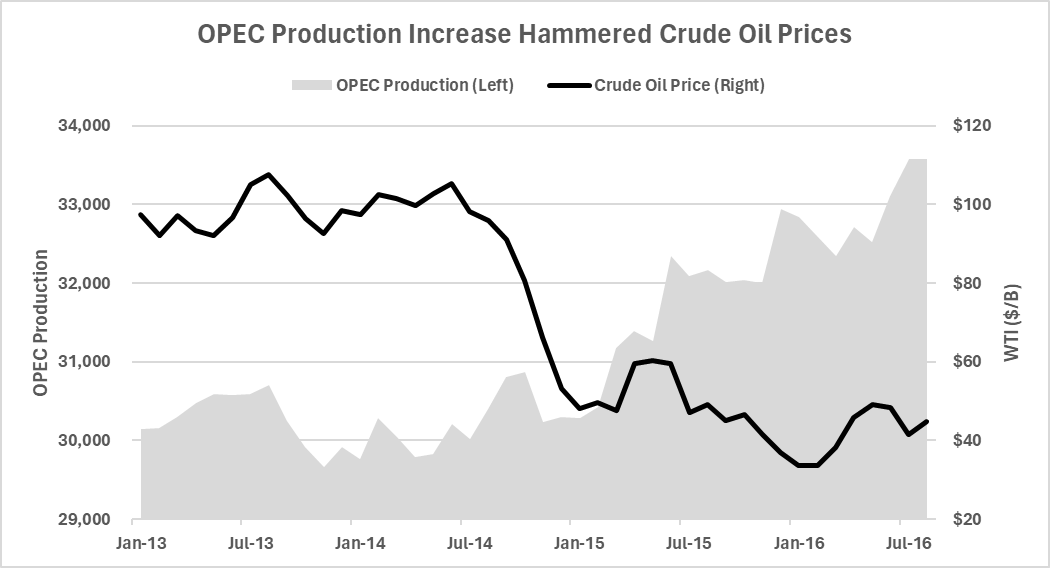
Over the years we’ve learned much from our members about what drives them, the advantages they bring to direct investing, and their approaches to direct investing operations. While TFOA’s membership represents a small fraction of the total family office universe, their insights align well with the growing body of knowledge around what makes family office direct investing successful (or not). To share some of these hard-earned insights, we conducted a survey of our members over a two week period in June 2022, with a series of questions about their direct investing habits.

Our data is fascinating. Thirty nine single family office principals and executives answered eleven questions regarding their direct investing practices and shared some of the key insights they’ve learned over the course of their investing career.

Survey results chart

The first thing we learned is that over eighty percent of respondents make direct investments in private companies. With patient capital, a team of administrative and investment professionals, and access to off-market opportunities, many family offices clearly feel like they have all the necessary ingredients to source, screen, and execute a direct private investment program successfully. But the desire to execute private, direct deals does not necessarily equal the ability to do so. As we’ve discussed in previous whitepapers, a common behavioral driver is the “Fear of Missing Out” or FOMO. Thus, even when a family office has access to the basic ingredients for successfully pursuing direct investments, they may not have the team, capacity, or pipeline of opportunities to sustain a direct investing program beyond a handful of opportunistic deals. To explore this further, we asked what the primary drivers were that initially led respondents to pursue a direct investing strategy within their family office.

Survey results chart

The results were broadly split across a range of factors, including access to proprietary deal flow, the desire for greater control, close relationships with other direct investors, and specific domain expertise in certain industries and asset classes. Interestingly, private equity fund fees were not mentioned as a major driver, suggesting that fee structure is not as important as more qualitative factors like access to quality deals, strong partnerships, and industry expertise. The evenness across the board shows that family office investors aren’t focused on one particular driver, but rather have a holistic view that values a range of factors in assessing direct investment opportunities.

Of course, the question of fees is not an inconsequential one. The costs of administering a direct investing program can quickly eat into performance. One family offered the following advice: “If you can’t source, diligence, and execute a specific strategy in-house for less than 2/20, then outsource it to a manager who has the resources and expertise in that area.” This respondent uses the private equity fee structure as a ‘cost-basis’ to measure their in-house activity against. A framework like this might not work for all families, but it is a simple framework to think about when considering whether a direct investing program makes sense to pursue internally or to outsource to a third-party private equity fund.

Direct Investing Challenges

When it comes to managing risk, many of our family office respondents identified ‘sourcing quality investments’ as the most challenging component of implementing a successful program.

Survey results chart

When you have access to high quality opportunities, all the subsequent elements of risk management become significantly easier. If there is one piece of advice to take away from our survey, it may be this comment from one of our respondents: “Focus your energy on identifying and building relationships with excellent sources for deal flow.” This is easier said than done, as most sponsors believe that their deal flow is excellent. One cannot understate the importance of finding good partners that are trustworthy and can deliver on their claims.

When asked to expand on how they would like to improve their investment practices in the future, fifteen respondents noted aspects related to diligence, information management, transparency, and other aspects of investor relations. Our conclusion is that while sourcing may be the greatest challenge, developing an efficient and coherent methodology to diligence and manage investments represents the largest area for targeted internal improvement. As families consider how to best assess and improve their operations, we think a candid-self inventory is a good place to start.

Developing A Candid Self-Inventory

Family offices interested in building out their direct investment capabilities, or family offices looking to improve their existing operations, need to take a candid self-inventory of their capabilities (as well as their goals). One of the unspoken advantages of having a family office is that you have a group of professionals with enough critical distance and capability to provide insight into the gap between how a family office perceives their abilities vs. where their abilities actually are.

Survey results chart

While many families are interested in seeing opportunities, the majority of our respondents execute between one and three opportunities per year. If you’re a sponsor in conversation with a family office, it’s good to have a sense of the volume of deals they execute and to measure your opportunity against the kinds of deals the family typically makes. While a lot of ink can be spilt on designing and managing a risk-mitigated direct investing platform, the actual volume that the platform manages may be relatively small, especially in comparison with other parts of the allocation, and therefore may not be worth the investment of time, capital, or administrative resources.

When it comes to investment style, our family office respondents lead the investments less than thirty percent of the time. It’s important to point out that team bandwidth is often a limiting factor for even the most well-staffed family offices; and the costs of increasing team capability may not improve the return on investment a family office receives versing investing with an established private equity firm.

Survey results chart

Most of TFOA’s members have teams comprised of 1 – 5 people, and given the volume of deals per year, many of these individuals are likely tasked with other aspects of investment and asset management besides direct deals.

Survey results chart

When it comes to self-assessment, there are three broad categories that should be considered: sourcing, vetting, and executing. In each of these categories the thrust of the inquiry should examine the limits of the ability when measured against a set of viable alternatives. With regard to sourcing, how truly unique and off-market are the deals that you have access to? If you wanted to improve your access, what steps would the family office have to take and how long would it take to generate results? Is your access to off-market opportunities truly better than some of the large or boutique firms that specialize in these strategies?

Regarding vetting, given the size and background of your team, how many deals per quarter can they reasonably screen, diligence, negotiate, and deploy capital to? What are the capabilities of your management team (in many cases this is the same team that’s charged with overseeing the diligence process) and how disciplined are you as a buy-side investor? Do you have a clear exit strategy in place for your investments and do you have the resources and patience necessary to achieve those exit strategies?

The result of this kind of self-inventory is not a simple binary between either doing direct deals or not doing direct deals, but rather it creates a better sense for a family office’s capabilities. If the gap between ability and desire is large, there are usually ways a family office can draw these two poles together. Networks like TFOA exist to provide peer-support and direct knowledge transfer from families that have successfully navigated these waters.

One of the structural challenges for a family office direct investment program is the balancing act with working with others while also maintaining their exemption status under the family office rule. One of the tenets of the rule is that no family can hold themselves out to the public as an investment adviser. Private investment clubs and networks can help manage the desire for families to partner with others on specific projects, without being in violation of the rule.

It is with this in mind that TFOA has developed a co-investment option that allows members to bring investments to the group to invest collaboratively. This not only saves on administrative costs but allows members to co-invest with each other without having to take on the regulatory burden that would come from raising funds by registering with any regulatory body. And importantly, this allows family’s to execute opportunities and form capital with their peers without having to reinvent the administrative wheel every time they want to do so.

The Pros and Cons of Direct Investing

As touched upon in the preceding paragraphs, there is an array of advantages that family offices can leverage to justify having a direct investing program. For example, the family office may have a particularly strong understanding of a specific asset class, business, or industry because of the family’s legacy operating company; the family office typically has patient capital; and, the cost of the transaction can be lowered by leveraging existing resources that sit within the family office (in particular, without a third party manager, investments are not subject to a fee structure like the traditional 2% management fee and 20% carried interest on profits).

But there can also be disadvantages to bringing direct investing in-house for some family offices. The knowledge advantage that a family may possess within a certain industry can lead to concentration risk. Greater control of the direct investing program may also lead to greater exposure to operational risk and expanding overhead or administrative costs (that may ultimately become greater than a 2 and 20 fee structure). Finally, there is the risk of SEC oversight if the family office rule is ever breached for any number of reasons that we don’t have the time to go into in this short whitepaper. As a result of these risks, the direct investment platform can end up taking a disproportionate time and costing significantly more resources than the returns ultimately justify.
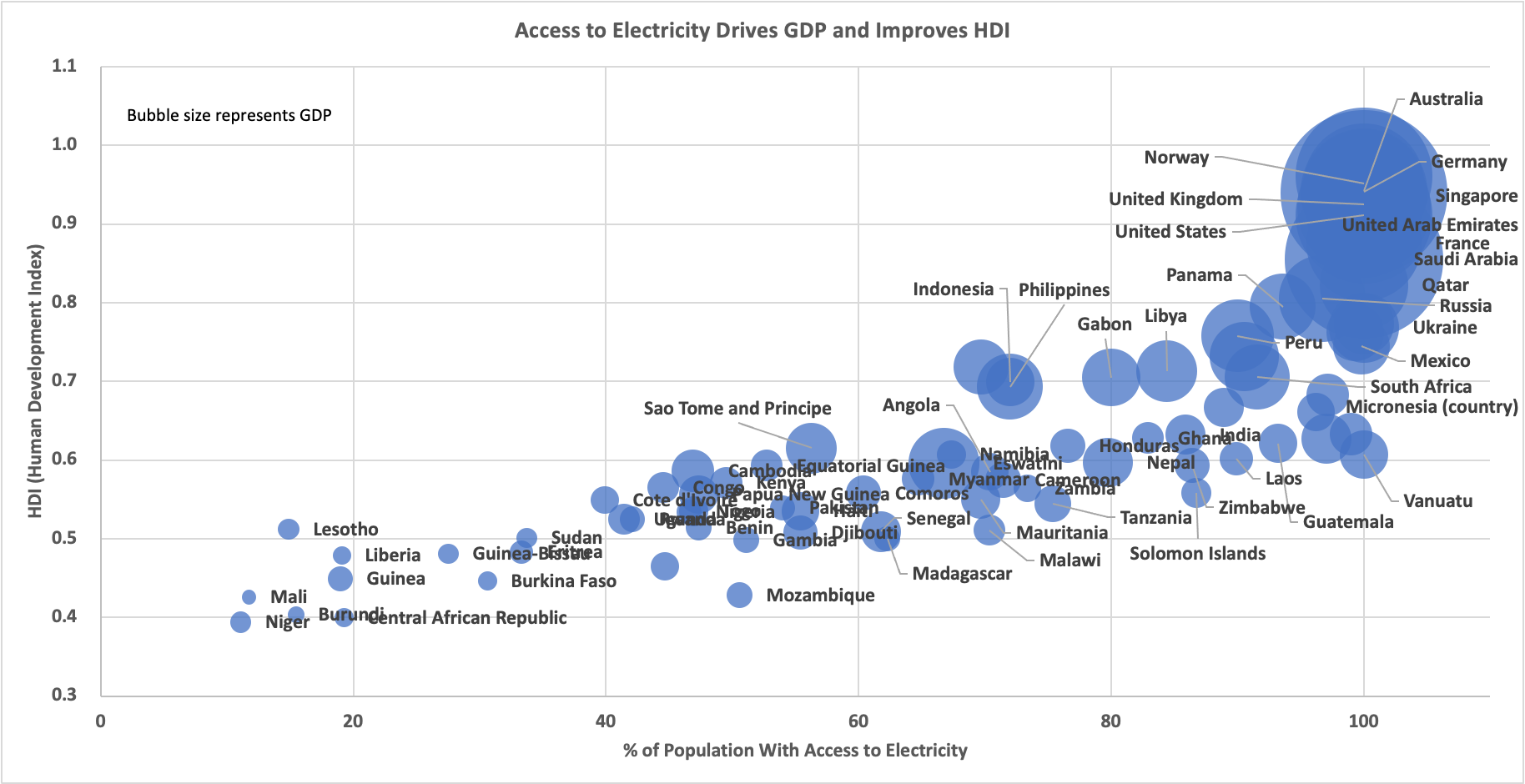
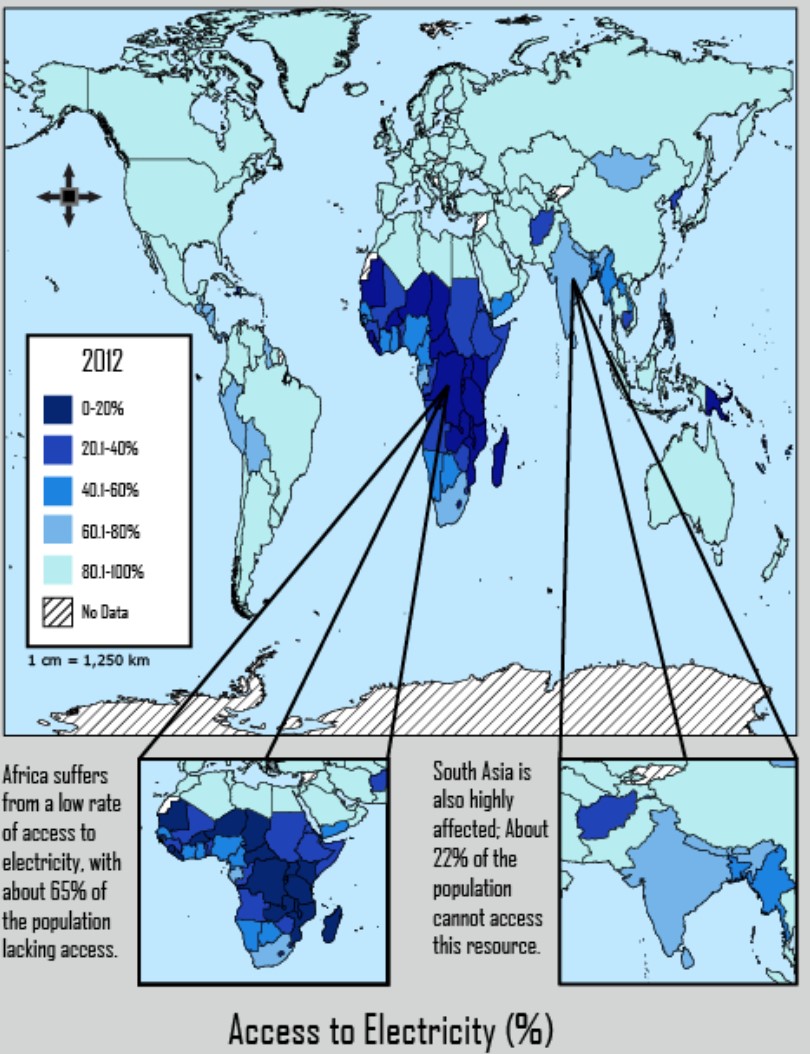
Successful direct investing is not a question of size or scale, but simply about correctly aligning the family offices’ operations in terms of incentives and ability. In the words of one member: “Invest in what you understand. Look for simplicity in structure.” While it may be easy to get caught up in the moment, feeling the pull of FOMO, or perhaps being lured into a complex new security that might boost returns or improve diversification; successful family office direct investors have learned to proceed with caution and temper their expectations. One of our Single Family Office members offered this advice for any family office interested in direct investing: “If it doesn’t pass the initial smell test, move on immediately.” Simple common sense wisdom is often the most profound!

About the Authors

Marc J. Sharpe is the founder and Chairman of TFOA, an organization formed in 2007 to provide a forum for education and networking and to serve as a resource for single family office principals and professionals to share ideas and best practices, pool buying power, leverage talent and conduct due diligence. Mr. Sharpe also teaches an MBA class on “The Entrepreneurial Family Office” as an Adjunct Professor at SMU Cox School of Business. Contact: marc@tfoa.me

Seth Morton, Ph.D. has served family offices in areas of investment diligence, execution, and management; governance; research; communications; and multi-generational, sustainable legacy planning. He seeks to improve team performance by cultivating learning-focused and communications-driven processes that deliver exceptional results. He and his family are currently based in Texas.

About TFOA

The Family Office Association (“TFOA”) is a global peer network that serves as the world’s leading single family office community. Our group is for education, networking, selective co-investment, and a resource for single family offices to share ideas, deal flow and best practices. Members are not actively marketing products or services to other members and no contact information or email lists will ever be shared. Since our founding in 2007, TFOA has led the global single family office community by delivering world-class educational content, unique networking opportunities, and exceptional thought leadership to our highly curated network of the world’s largest and wealthiest families: www.tfoa.info

Disclosures

The Family Office Association (“TFOA”) is a peer network of single family offices. Our community is intended to provide members with educational information and a forum in which to exchange information of mutual interest. TFOA does not participate in the offer, sale or distribution of any securities nor does it provide investment advice. Further, TFOA does not provide tax, legal or financial advice. Materials distributed by TFOA are provided for informational purposes only and shall not be construed to be a recommendation to buy or sell securities or a recommendation to retain the services of any investment adviser or other professional adviser. The identification or listing of products, services, links, or other information does not constitute or imply any warranty, endorsement, guaranty, sponsorship, affiliation, or recommendation by TFOA. Any investment decisions you may make based on any information provided by TFOA is your sole responsibility. The TFOA logo and all related product and service names, designs, and slogans are the trademarks or service marks of The Family Office Association. All other product and service marks on materials provided by TFOA are the trademarks of their respective owners. All of the intellectual property rights of TFOA or its contributors remain the property of TFOA or such contributor, as the case may be, such rights may be protected by United States and international laws and none of such rights are transferred to you as a result of such material appearing on the TFOA web site. The information presented by TFOA has been obtained by TFOA from sources it believes are reliable. However, TFOA does not guarantee the accuracy or completeness of any such information. All such information has been prepared and provided solely for general informational purposes and is not intended as user specific advice.

Frequently Asked Questions

What does the TFOA direct investing survey reveal about family office preferences?

The TFOA direct investing survey reveals that the majority of single family offices are actively engaged in or actively pursuing direct investments, with a preference for deals in the $5 million to $50 million range. Most prefer to co-invest alongside experienced operators or sponsors rather than lead deals independently.

What sectors do family offices prefer for direct investing?

Based on survey data, family offices show the strongest preference for real estate, private equity (particularly lower middle market buyouts), and technology and software. Healthcare, energy, and food/agriculture are also popular sectors, often reflecting the family's operating business background and domain expertise.

How do family offices source direct investment deals?

Deal sourcing for family offices primarily comes through peer networks and co-investment relationships (the most valuable source), investment banker relationships, independent sponsors, private equity fund GPs offering co-investment rights, and increasingly through curated deal platforms specifically designed for family office investors.

What due diligence process do family offices use for direct investments?

Most family offices use a multi-stage process: initial screening against a defined investment thesis, management team evaluation, financial model review, legal due diligence on documents and structure, reference checks on the management team and existing investors, and final investment committee approval. Many supplement internal capabilities with outside advisors for specialized due diligence.

Creating A Single Family Office

Abstract

A Single Family Office (SFO) is a private company comprised of dedicated professionals who are employed exclusively to manage the investment, personal, and legacy needs of one family.

The modern concept and understanding of family offices was developed in the 19th century. In 1838, the family of J.P. Morgan founded the House of Morgan, which managed the families’ assets and in 1882, the Rockefellers founded their family office, which prevailed until today. Family offices started gaining significant popularity in the 1980’s; and since 2005, as the ranks of the super-rich have grown to record proportions, family offices have also swelled proportionately. Extreme volatility, banking and business failures, and investment fraud, has motivated many families of significant wealth to take control of their financial affairs and preserve their family legacy.

The SFO’s financial capital is the family’s own wealth, often accumulated over many family generations. Traditional family offices provide personal services such as managing household staff and making travel arrangements. Other services typically handled by the traditional family office include property management, day-to-day accounting and payroll activities, and management of legal affairs. Family offices often provide family management services, which includes family governance, financial and investment education, philanthropy coordination, and succession planning.

While many wealth management firms have “family office” practices or offer “family office” services, this white paper focuses on the “Single Family Office” or SFO in the context of a privately-owned and run operating entity developed for the sole benefit of one family. Each SFO is as unique as the family who founded it. As the old joke goes: “If you’ve seen one single family office, you’ve seen one single family office.”

Single Family Offices

The modern concept and understanding of family offices was developed in the 19th century. In 1838, the family of J.P. Morgan founded the House of Morgan, which managed the families’ assets and in 1882, the Rockefellers founded their family office, which prevailed until today. Family offices started gaining significant popularity in the 1980’s; and since 2005, as the ranks of the super-rich have grown to record proportions, family offices have also swelled proportionately.

A single family office (“SFO”) provides information, education, opportunities for networking, idea sharing, and pooling of buying power, to affluent families, and prepare the next generation for their wealth. Importantly, an SFO is a private company that manages investments and trusts for a single family. The company’s financial capital is the family’s own wealth, often accumulated over many family generations. Traditional family offices provide personal services such as managing household staff and making travel arrangements. Other services typically handled by the traditional family office include property management, day-to-day accounting and payroll activities, and management of legal affairs. Family offices often provide family management services, which includes family governance, financial and investment education, philanthropy coordination, and succession planning.

The SFO’s are run by trusted professionals with a fiduciary responsibility to a single family. The professionals running these family offices have broadly defined roles, covering multiple areas and multiple skill sets. The offices tend to be staffed with talented individuals who can span accounting, legal, operational, and investment management activities, among others. Defining the service proposition is not straightforward and a common phrase used by industry insiders is: “When you have seen one single family office, you’ve seen one single family office”

The wealth management industry like to classify family offices based on size of assets under management. Some believe the monetary threshold before a single family office (SFO) makes sense is at least $200 million in total assets. A better question to ask is: “Are my family’s financial and non-financial interests best served by our existing (or additional) outsourced advisors?” If the answer is “no” then a single family office might be the solution…

Some SFOs are substantial wealth management institutions, with large teams of experienced professional overseeing fully diversified portfolios, including hedge funds, private equity, oil & gas interests, direct investments, real estate, commodities, and other alternative investments, as well as accounting, asset management, legal, security, and other functions. Other SFOs are more lightly staffed, with a variety of activities outsourced. Almost all SFOs share the following features:

  • Dedicated focus on the specific needs and requirements of the family
  • Alignment with the family’s legacy, vision and values
  • Privacy and confidentiality is strictly maintained
  • Investment time line typically spans multiple generations
  • Overseas a complex mix of investment and personal assets
  • Purchasing leverage, fee minimization and cost savings
  • Avoids many of the conflicts inherent in the wealth-management industry
  • Strong coordination between investment, business, philanthropic and personal services

All global families, regardless of geography, industry, ethnic make-up, dynamics and individual objectives, share certain common imperatives to operate effectively:

  • Retaining top management talent
  • Sustaining growth and profitability
  • Optimizing capital structure
  • Adapting to evolving risk profile
  • Developing a coherent family agenda
  • Mapping tax, legal and regulatory priorities
  • Evaluating strategic relationships
  • Embedding family vision and values in the SFO culture

SFO success depends in large part on how effectively the family reevaluates and reexamines its goals and objectives, especially as family leadership changes.

Depending on the needs of the family, and the size and complexity of the assets under management, the services provided by the SFO can vary widely. They may coordinate and oversee various types of investment-related services, management of complex assets, accounting, tax planning and compliance, asset protection and risk management, as well as family services. Here are the most common elements that each category may include:

Investment Management Services

  • Design and implementation of asset allocation
  • Development of an investment policy statement (ISP)
  • Aggregation and reporting of investment performance
  • Sourcing and due diligence for investment opportunities

Management of Complex Assets

  • Mineral and O&G interests
  • Collections and sports teams
  • Socially-responsible investments
  • Family bank and intra-family loans
  • Residential and commercial real estate

Accounting, Tax Planning and Compliance

  • Trust implementation and administration
  • Accounting and tax filings, and tax planning
  • Administration of private family trust company
  • Identification and engagement of outsourced providers
  • Development and coordination of estate plans for all family members

Asset Protection and Risk Management

  • Insurance policies
  • Medical management
  • Reputation management
  • Personal security services
  • Hiring and background checking
  • Management of household and family office staff

Family Services

  • Organization of family retreats
  • Philanthropy and charitable activities
  • Next generation education and engagement
  • Family mission, constitution and governance
  • Personal and property security systems and procedures
  • Concierge services (e.g. travel, private aviation, personal shopping)

Reliable data is hard to find, but according to Forbes’ latest billionaires list, which analyzes all assets an individual can hold, there were over 2,000 individuals from across the world with personal 10-figure fortunes. They control an estimated $10 trillion. In the U.S. alone, Forbes estimates there’s over 450 American billionaires. In addition, there are currently more than 5,000 U.S. households worth $100 million or more. China is second with more than 1,000 ultra-rich households.

Estimates of the number of SFOs around the world is much harder to find but is likely currently around 3,000. This doesn’t include quasi-family offices: small private family investment companies of limited scale, or family offices embedded within family-owned and – managed businesses. Given the number of ultra-high net worth individuals, why are there so few SFOs? Part of the reason is lack of awareness and education regarding the benefits of an SFO, fear of potential cost and complexity of set-up and management, challenges in hiring capable staff, and lack of professional guidance. All these factors make families reluctant to create their own SFO.

But families that forego an SFO, whether by conscious decision or lack of awareness, face significant challenges. These families often have fragmented and uncoordinated relationships with multiple private banks, wealth managers and other business, investment and personal service providers. The family pays high fees for this disorganized array of overlapping services. Worse, those fees likely are not fully disclosed, so the family can’t quantify or compare them, or effectively negotiate with the service providers. Furthermore, many of the institutions they work with have built-in conflicts of interest: brokers and other client-facing staff often receive higher commissions for selling the institution’s own investment products, giving them an incentive to push these products rather than choose the product that best suits the client’s needs and circumstances. Families also rarely have the staff or the expertise to vet investment advisors or individual investment opportunities, thereby heightening the chances they may inadvertently enter into a subpar investment, or worse, a Ponzi scheme or other fraud.

Wealthy families are increasingly demanding independent, thoughtful and tailored advice. Instead of buying opaque financial products from third party financial advisors – often incented to meet artificially mandated sales quotas – SFOs provide an objective filter through which everything can be carefully screened to meet the complex business and personal needs of the families. Now more than ever, wealthy families need to coordinate their business, investment and personal relationships, centralize management and oversight, implement appropriate due diligence and risk management procedures, and manage their family affairs more effectively. For a family of significant wealth, an appropriately structured and well-run SFO is likely the answer.

Starting an SFO

Creating an SFO to fit your family’s specific needs and circumstances requires considerable thought and preparation. Families considering forming an SFO should put together a motivated group of family leaders and trusted advisors to lead the planning effort, with input from outside specialists as necessary. The following, while not totally comprehensive, serves as a helpful checklist to get started:

Mission Statement

Families planning an SFO should take time at the outset to consider the purpose of the SFO and its role within the family. A critical early task in setting up an SFO is defining the mission of the family office. Developing a concise, focused mission statement to guide the work of the SFO will help to avoid “mission creep” in future years. The founders should avoid drafting a mission statement that is vague and short on specifics. A consultant can help a family mold its vision and values into a practical and useful tool to guide the work of the SFO for generations to come.

Needs and Objectives

There are three critical questions to be addressed early in the planning and development phase of creating your family office:

1. Who are the clients?

Defining which individuals and entities will be served by the SFO is a critical activity. A comprehensive list should include all individuals and entities to be served, including family branches, investment entities, businesses, trusts, trust companies and foundations. The design of the SFO will need to consider each client’s unique needs and requirements.

2. What assets will be managed?

Once the clients have been identified, a list of all the assets the SFO will be responsible for managing is needed. This will include marketable securities, hedge funds, MLPs, direct investments, oil & gas leases, operating businesses, residential real estate, commercial real estate, farms, collections, aircraft, yachts, horses, sports teams, etc. The SFO will need to hire or outsource the specific expertise needed to oversee and manage the assets.

3. What services are needed?

Families with extensive investments, or with liquid capital to be invested, will need investment management services, including an investment policy statement and asset allocation plan, manager due diligence, and investment reporting. All SFO clients will need comprehensive and accurate performance reporting, accounting, and tax-return preparation. Coordination of risk management – such as insurance, security and reputation management – will also be needed. Development and coordination of estate and tax planning, possibly including management of a private family trust company, is another obvious need for multi-generational families, but can be equally critical for a first-generation entrepreneur who wishes to perpetuate the family’s long term legacy. Other possible services include property management and staffing, bill payment and concierge services.

The adage of “shirt sleeves to shirt sleeves in three generations” is well known. It has been documented throughout the world, across numerous countries and cultures. It is one of the driving reasons why many families of wealth recognize the need for proper family governance and family wealth-planning strategies during the lifetime of the family wealth creator. However, even after implementing a family governance system during the design phase of an SFO, families must constantly refine and reevaluate their values, vision and mission as their SFO adapts to the changing needs of the family and the global environment.

Business Plan & Budget

Once the clients, assets and needs have been identified, a business plan can be developed that outlines the services to be provided, a short- and long-term timeline, employee and outsourced talent required, service partners required (for example, custodians, tax counsel, security services) and technology needs.

A key objective in developing a business plan should be determining the budget. SFOs are not inexpensive to operate. However, when compared with the expense of managing the family’s assets via an outsourced or third-party solution – taking into consideration all costs, fees and expenses – the expense of an SFO will likely be lower. Certainly, because the SFO will be custom-tailored to the family’s needs, the return on that expenditure will be much higher.

Typically, SFO budgets are defined as a percentage of assets under management. SFO operating costs vary widely. with smaller SFOs, or those managing complex assets, costing more to operate than larger SFOs, or those managing a simpler portfolio, because there are fewer economies of scale to exploit. The budget of an SFO managing an extensive portfolio of alternative investments and commodities for three generations of family members, all of whom also share a passion for modern art and house their collections in multiple homes around the world, will necessarily be larger, both as an absolute number and as a percentage of assets under management, than the budget of an SFO managing a portfolio of publicly-traded securities for a single family unit. The budget will drive the creation of benchmarks to set expectations for SFO performance.

An SFO serving the needs of a multi-generational family must consider how the costs will be allocated and charged to individual clients of the SFO. Future conflict between family office clients or between the family and the office can be avoided if the method of allocating expenses, determining the expected contributions by each client, and collecting fees is made explicit from the outset.

Leadership and Staffing

The plan should identify the expertise required to meet the specific needs of the SFO’s clients, given the specific assets to be managed and the available budget. The plan should also specify whether such expertise will be provided internally or outsourced. Once staffing needs are determined, the issues of location, office space needs, technology, security, administrative support etc. can be addressed.

Finding the right talent is generally the most challenging aspect of setting up an SFO. Ideally the CEO candidate should be identified first (if this task has not already been completed). Because the CEO of an SFO must work closely with the family, the office staff and with a wide array of outside service providers, the CEO must have excellent organizational, management and “people” skills. Choosing a CEO purely because of his or her technical expertise in investing, or in accounting, or in tax planning, is generally a mistake. Often, families will give this important position to a trusted advisor or the controller of their operating business who has been loyal for many years. This can also be a mistake if the trusted advisor or controller is not scalable into the CEO role. Because the CEO carries out a high-level executive function and serves as the family’s face to the outside world, candidates should have proven experience leading, managing and communicating successfully in a wide variety of complex situations. It is a critical role to fill, since once identified and hired, the SFO CEO will take on the role of carrying out the build-out of the SFO in accordance with the plan.

SFOs often hire investment team members with extensive prior experience at private banks, investment houses and hedge funds. Such talent is highly sought after; candidates often demand investment rights or bonus compensation based on investment performance. The SFO should take care in structuring such arrangements, particularly considering the Dodd-Frank Act’s requirement that family offices comply with RIA registration requirements unless they fit a very narrow exemption. SFOs, both new and established, should seek advice of experienced counsel when bringing on new investment team members or adding new benefits such as carried interest.

All staff members, at every level, should go through a background check and sign non-compete, non-solicitation and non-disclosure agreements. Whether the SFO is large or small, it should have an employee policy manual. The manual should be reviewed and updated at least annually by knowledgeable counsel.

The SFO should be overseen by a board of directors, which will meet regularly and be responsible for setting strategy and overseeing the CEO. Most families control the board of their SFOs, to ensure strategy is in line with the family’s wishes. Many SFOs are following the lead of private businesses and bringing independent advisors onto the board to provide outside perspective and expertise.

Contingency Plan

Planning for the SFO should include development of a contingency plan that outlines procedures to be followed in the event of a natural disaster, extreme volatility in the financial markets, theft, or technology breach or failure. At the most basic level, the contingency plan should include provisions for ensuring the safety and security of the family, its critical information and tangible assets, safety of the SFO staff, off-site backup of all information, and a plan for re-establishing critical office activities off-site as quickly as possible.

SFO Governance

Governance is an important issue for any professionally run SFO. Indeed, an SFO that is intended to serve a family for generations is well advised to develop and implement an effective and appropriate governance structure that can significantly enhance the long term success of the office.

At its core, governance is simply a set of procedures that define how an SFO will make decisions. For governance to be effective, the owners, overseers (board of directors or advisors) and executive management must be informed, understand their respective roles and responsibilities, and run the SFO accordingly.

Typically, a successful individual will create an SFO following a liquidity event of some sort. The founder will design the SFO to suit his or her needs and interests. As with any business run by a controlling owner, there isn’t a great need for formal governance at this stage, because the owner is fully informed, understands the goals and objectives of the SFO, and may even handle some of the critical roles of the office. Unless the controlling owner has a formal governance mindset, they’ll generally run the SFO with minimal overhead or formal structure, making many decisions ‘ad hoc’. The controlling owner will often rely on external advisors or a key staff member who knows what is needed and can implement the controller owner’s wishes.

This kind of organic, first-generation governance can work quite effectively, at least in the early years of a family office’s life. The SFO runs smoothly, makes investments, and accomplishes tasks. However, when the SFO comes to be managed for the benefit of a wider group – typically, upon the controlling owner’s death, when the assets pass to descendants or trusts for their benefit – the absence of established, governance policies can create a vacuum. Without the founder around, suddenly no one really knows who’s in charge, what needs to be done, who’s responsible for doing it, or how that performance will be measured or compensated. If the next generation hasn’t been prepared for their new roles, there may be a struggle for dominance, or the opposite: fearing conflict, family members may simply abdicate. The SFO may slowly collapse, or a non-family member may come to fill the vacuum, for good or for ill.

Successful SFOs have strong governance policies to ensure the organization operates in accordance with the family’s long term mission and values over multiple generations. These governance structures must be robust yet flexible enough to withstand family conflict, generational transitions, and disruptive changes in the investment environment, whether anticipated or unanticipated. The following are key elements of a good governance structure:

  1. The family has clearly articulated its mission, values and vision for the future, and the strategic plan of the SFO is built around this core.
  2. The SFO’s strategic plan goes beyond investing and includes education of family members, to promote effective stewardship over the long term.
  3. The owners have appointed a board of directors to provide perspective, access to specialized experience/skills, and to set strategy and investment policy. The board includes individuals who are not members of the family, members of the management team, or external service providers to the SFO.
  4. The powers, rights and responsibilities of owners, board and management are clearly spelled out and followed.
  5. Management is free to implement the SFO’s strategy, without daily interference from the family or the owners.
  6. There are regular owners’ and board meetings, with written agendas and complete minutes. Information necessary for effective decision-making is distributed well in advance of voting, and there is adequate time for discussion.
  7. SFO performance reports are clear, comprehensive and timely, so that decision-making can be based on accurate and complete information.

An SFO can do much to align its operations with the family’s interests, particularly in times of generational change. Some SFOs find that family office meetings become a venue for family members to air family grievances. The SFO can encourage and support the development of a Family Council to provide a forum for discussions of family issues separate and apart from the SFO. SFOs can play a key role in promoting family education, modeling best practices, training next generation family members, and fostering an attitude of stewardship.

SFOs are typically designed to serve multiple generations of a family, but an SFO is not eternal. Over the past decade, there have been well-publicized stories of substantial SFOs that crumbled under the conflicting demands and high costs of serving tens or hundreds of family members, each with comparatively modest holdings. Other SFOs, recognizing that they could no longer achieve the family’s mission and vision, or that the mission and vision had changed in such a way that the SFO’s activities were no longer cost-effective, have undertaken carefully orchestrated dissolutions. Families should recognize that dissolving an SFO is inevitably a complex, expensive and time-consuming process, and seek the advice of peer families or professional consultants who have navigated this experience successfully.

SFO Infrastructure

The structure of your SFO will depend on the jurisdiction(s) in which it will operate and the types of investments the family owns or intends to own…

Many SFOs in the USA are structured as limited partnerships or limited liability companies, and are organized similarly to hedge fund management companies (i.e. the SFO entity does not own any of the assets it manages; rather, it is a service entity that provides services to the SFO’s clients on a contract basis). It is highly recommended you engage with experienced securities counsel who have worked with other family offices regarding the potential impact of SEC rules on their structure and operations.

Dodd Frank and SEC RIA Registration

Under the Dodd-Frank Wall Street Reform and Consumer Protection Act, an organized effort was undertaken by single family offices nationwide that successfully convinced Congress to exempt SFO’s meeting certain criteria from the definition of investment adviser under the Investment Advisers Act of 1940 (previously, such family offices were deemed to be investment advisers and relied on the “less than 15 clients” rule to avoid registration under the Act, a rule that was eliminated under Dodd-Frank). The Securities and Exchange Commission (SEC) promulgated the final “family office rules” on June 22, 2011. An SFO that does not fit within the definition of a “family office” or qualify for an exemption as a bank trust company must register with the SEC. While some family offices have opted affirmatively to register with the SEC, others are greatly burdened by the increased administrative burden and loss of privacy that registration imposes.

Any individual or entity providing “investment advice” must register as a Registered Investment Advisor (RIA) unless an exemption is available. Registration can be costly and entails detailed disclosures that families typically are reluctant to make. An RIA must maintain and preserve specified books and records and make them available to Commission examiners for inspection. An RIA must also implement substantive compliance programs, prepare and file reports with the SEC, and provide detailed written disclosures to their clients (known as ADVs). Every RIA is subject to SEC audit. Failure to register may subject an advisor to criminal and civil sanctions and penalties. SFOs may avoid registration by:

  1. Structuring ownership and operations to fit within the “family office” exemption to RIA registration;
  2. Outsourcing investment responsibility to one or more third party RIAs; or
  3. Establishing a Private Trust Company (PTC).

Private Trust Company

With a Private Trust Company (“PTC”), a family-created entity, rather than a third party, serves as trustee of the family’s trusts. Private Trust Companies are sometimes recommended by advisors as a mechanism to avoid RIA registration, but PTCs may also offer substantial additional benefits for the SFO:

  1. Greater privacy and confidentiality;
  2. Common administrative and decision-making policies for all trusts;
  3. More knowledgeable and focused fiduciary oversight for family businesses, alternative investments, start-ups, real estate, and other non-public investments held in trust;
  4. Better understanding and knowledge of family circumstances and needs of beneficiaries.
  5. Greater participation and input by the family than would be possible if an outside, third party served as trustee;

SFOs seeking to establish a PTC primarily to avoid RIA registration are advised to consult knowledgeable securities counsel with experience advising family offices.

Structuring Investments

The various investments managed by an SFO are typically held in individual limited liability entities, to reduce the risk that losses and liabilities from one investment will affect another. For example, if the SFO holds commercial real estate, each parcel of real property is best held in a separate entity. If a passer-by slips on the sidewalk in front of one building, incurs a severe head injury and sues for medical expenses and lifetime maintenance, any liability in excess of the SFO’s casualty coverage will be limited to the assets of the entity that owns that building, thereby protecting assets held in other entities.

SFOs are increasingly utilizing sophisticated holding structures such as tracking partnerships. A tracking partnership permits family office clients to hold different partnership assets in different percentages, with performance results tracking accordingly. By way of example, assume the tracking partnership has four separate classes of interests: Class B (bond portfolio), Class S (indexed stock portfolio), Class A (alternatives portfolio) and Class R (REIT portfolio).

  • Partner 1, an individual seeking a broadly diversified portfolio, might hold a 10% interest in Class B, a 10% interest in Class S, a 20% interest in Class A and a 15% interest in Class R.
  • Partner 2, a trust intended to fund education expenses for Partner 1’s 10 grandchildren, might hold 40% of Class B and only 5% of each of the other classes.
  • Partners 3, 4, and 5 would hold the balance of the interests in each Class, each in accordance with their individual investment goals.

A tracking partnership gives partners the investment flexibility they would have if they formed several partnerships but permits them to trade between classes from time to time without recognizing gain or loss for tax purposes. Such partnerships offer considerable flexibility, custom-tailoring of client portfolios, and a consistent governance model for SFO clients. However, they also bring with them complex tax, accounting and reporting issues, and so need to be designed with the help of knowledgeable legal and accounting counsel and managed with care.

Carried Interests

A carried interest is a share of profits from a partnership or LLC that is paid to a participant who did not provide any capital to the venture. A carried interest may provide a tax-efficient mechanism to fund family office expenses and may be used to structure incentive compensation opportunities for SFO staff. Particularly considering Dodd Frank and the SEC’s family office exemption, staff participation in SFO investments should be reviewed to ensure that they do not unintentionally trigger RIA registration requirements. SFOs are strongly advised to seek guidance from tax and accounting advisors before putting in place any carried interest structure or incentive compensation plan for SFO staff.

Insurance

A critical task for any SFO will be monitoring and managing risk for the family. Property and casualty, liability, health, and life insurance typically will be overseen and coordinated by SFO staff through relationships with an insurance firm that has experience working with SFOs and a comprehensive offering of insurance products. Certain assets, such as private jets and other aircraft, require unique holding structures, insurance coverage and regulatory compliance.

As the SFO grows and its clients and investments change over time, it is a good idea for the family and CEO to undertake a structural audit from time to time, to make sure that the SFO structure is optimal for its purpose. The audit may uncover opportunities for eliminating or reorganizing holding entities within the structure, thereby reducing reporting, accounting and compliance expenses for the SFO.

Business-Owning Families

Many business-owning families create a family office within the business administrative group. The company’s accounting team handles personal tax filings and financial record-keeping, while administrative staff keep track of insurance, record-keeping and bill-paying. The benefits of an embedded SFO are obvious: the family can leverage an existing resource, so the family office appears to be extremely cost-effective.

However, there are serious drawbacks to setting up your SFO in this way. First and foremost, the focus of a family office (i.e. wealth preservation) will be very different from the focus of the operating business (i.e. wealth creation). A dual staff will often struggle to manage the varied responsibilities and objectives, and skills that are critical in the business may not necessarily translate into the family office realm. For example, partnership accounting and reporting for trusts and complex investment structures is very different to corporate accounting, and staff may lack the time, training and technology to handle both jobs well. The legal structure and governance of an SFO will also be quite different than those of the business, and mistakes may occur when business practices are automatically carried over to the family office. Lastly, priorities may be unclear, such that if an emergency occurs in both the business and family office, at the same time, there may be significant conflict or a lack of sufficient resources to tackle both. Risks of gaps in reporting and compliance increase exponentially when the same staff are responsible for both the business and the family office.

Families with operating businesses are recommended to seriously explore developing a separate family office to handle their personal investments and manage their non-business assets. Having a separate office provides for greater privacy and confidentiality and allows for hiring staff with the specific skillsets required by the family office. A dedicated family office staff, not subject to the hiring practices of the corporation, will facilitate the development of an SFO-specific organization chart, with separate responsibilities, compensation, and work practices. This will also allow for a longer-range focus for the family’s personal strategic planning, as distinct from that of the operating business.

Building the family office apart from the business also increases opportunities for involvement of family members who don’t participate in the business. By expanding family involvement, the SFO can become a force for strengthening family cohesion. Some families are using their SFOs to create entrepreneurial venture funds, investing in promising new businesses and technologies, and thereby increasing the odds of growing rather than simply preserving the family’s capital.

SFO Technology

Many SFOs fail to invest in the robust technology infrastructure needed to optimize their capabilities, either due to a lack of execution or a lack of awareness around available solutions. Below are the six key technology needs for SFOs, along with a roadmap for the five key activities required for meeting those needs…

Key Technology Needs for SFOs

  1. General Ledger Accounting: A double-entry accounting system, with workflow and accounting controls, integrated with investment and financial reporting, permits the SFO team to track the inflows and outflows of the family office and related entities.
  2. Financial Administration: The accounting package should provide for management and payment of all expenses and accounts receivable and payable, ideally, with integration and auto-posting to the general ledger. Automation, along with the appropriate controls (verification and approval workflows), is critical to manage the volume and complexity of transactions that most SFOs face.
  3. Consolidated Reporting: The accounting package must be capable of providing family members with an aggregated view of their balance sheet, income and cash flows across multiple custodians and financial relationships. The package should also enable robust ad hoc reporting (including risk metrics and performance analytics) on each family member’s comprehensive net-worth picture.
  4. Secure Document Portal: A document vault permits encrypted/secure connectivity and communication among SFO staff, family members and interested parties, along with electronic storage of all family documents (family history, legal agreements, wills, statements, etc.).
  5. Investment Analytics: An SFO with any degree of in-house CIO function will require portfolio management and trading systems, as well as market data and manager research and due diligence databases.
  6. Infrastructure and Security: Many SFOs self-host their data and technology solutions (i.e. they have acquired and managed their own IT equipment, software and processes). However, outsourced providers now offer cloud-based virtual hosting services in highly secure (SAS 70 Level II and ongoing security audit testing certification) and cost-effective hosting environments (with disaster-recovery support). SFOs should consider the cost/benefit and ongoing flexibility of the latest hosting options. SFOs also must consider their IT staff and organization: whether full time IT employees are needed or whether IT support can be adequately outsourced.

How to Meet Technology Needs

SFOs must take a strategic approach to designing, selecting, executing and maintaining their IT systems and resources. Given IT is a mission-critical function for every family office, and the task of developing a strategic plan for IT investment is complex, most SFOs engage a consulting group with specific experience designing IT solutions for SFOs.

  1. Design: Whether upgrading an existing technology infrastructure or starting from scratch, an SFO needs to begin by assessing its technology needs and requirements, taking into consideration all family members, businesses, investment entities, office staff, and external service providers that must be supported. SFOs are increasingly adopting institutional-like requirements around their IT in terms of mobile and real-time online accessibility, tools for trading, analytics and research. In particular, SFOs are seeking greater visibility into all their direct and manager fund investments, real-time evaluation of the level of risk (through standard deviation, VaR, etc.) and look-throughs on asset class, holding and geographic exposure across investments. They also require monitoring of counterparty relationships and clarity about their global asset allocation at the entity, family, and individual levels. The strategic-planning process will include documenting, confirming and prioritizing needs and requirements, as well as developing due-diligence criteria for vetting potential solution providers. For example, the due-diligence criteria will likely include insource vs. outsource, buy vs. build, firm size and tenure, security standards, and reference checks. Ultimately, the process will lead to a request for proposal (RFP) and evaluation of service providers who meet the criteria.
  2. Selection: SFOs have a myriad of options concerning the technology approaches they can take due to the ever-increasing number of vendor solutions to meet the needs of SFOs. Some SFOs opt to leverage and integrate a number of disparate stand-alone vendors. For example, they may use a general ledger from a provider such as Intuit, QuickBooks or Microsoft, coupled with a reporting package such as SAP Crystal Reports, firms such as the Google, Amazon or Rackspace for Cloud hosting, financial administration from the bill pay capabilities of their banking relationship, etc. Others leverage a single provider to meet the majority, if not all, of their needs (examples include: Wealth Touch, Archway Technology Partners, and RockIT). Families with more limited current and forecasted needs, who believe they can ably execute and maintain their technology themselves, typically take the former approach. Those who need a more robust and scalable solution are increasingly partnering with single-source providers. There are obviously pros and cons to both approaches. SFOs should also be aware that a number of financial institutions have begun developing in-house capabilities or partnering with leading family office technology providers that offer families and SFOs IT solutions and related services such as access to market data and tools to manage risk, analytics and trading. Their technologies may be integrated into the family office’s investment management and banking systems or on an à la carte basis. These options may be cost-effective for SFOs as they’re typically subsidized or simply included for no additional charge as part of the overall service.
  3. Assessment: When considering multiple-solution approaches and providers, it’s important to compile detailed cost data in the evaluation process and benchmark the cost projections against peers. When evaluating options, SFOs should select the solution(s) that provide flexibility and scalability for ongoing growth, require limited investment in maintenance and enhancements, and above all, ensure the privacy and security of the data and documents of the family. One of the key objectives and outcomes of the process should be to achieve collective buy-in across the SFO staff and family members who will use the IT system.
  4. Execution: This phase often creates the greatest challenge for SFOs, making ease-of-implementation a key priority in the selection process. Sufficient resources, including money, time, focus and attention, must be allocated to implementing the chosen solution. Some SFOs have the technical expertise to evaluate and select an in-house integrated solution leveraging multiple software providers, but most find it overly burdensome to implement, configure and customize, integrate and test the chosen solution. Other SFOs taking the in-house multi-solution approach will engage the software provider’s professional-services team or an external IT consultant to implement the chosen IT solution. Using an outside team for implementation can speed up the upfront implementation, but in the maintenance phase it can become very costly over time. Those SFOs that opt to outsource their technology needs via a financial institution or third-party partner will often be able to get up and running more quickly than those that choose a more customized or in-house approach. SFOs with relatively uncomplicated reporting needs that they outsource to an external provider may be able to use modular options, or they may choose to take advantage of the provider’s configuration and customization abilities (at additional cost).
  5. Maintenance: IT costs for SFOs vary widely depending on their needs, the number of entities, global reach, assets under management, type of assets and liabilities, and the approach they take to the IT environment. The total IT budget will typically include the following:
    1. Hardware costs.
    2. Hosting and data management.
    3. Consulting support throughout the process.
    4. Professional services configuration and customization of solutions.
    5. Software license fees and annual maintenance costs (typically a percentage of license fees).
    6. Outsourced operations fees (typically annual fees based on the complexity of services such as aggregated reporting or financial administration: e.g. number of entities, number of transactions, etc.).

The large majority of SFOs have moderate IT requirements. They can choose a basic general ledger and manually create reports via Excel, while maintaining a small or part-time IT staff. These SFOs typically have annual costs in the $50,000-$150,000 range. However, SFOs that have significant IT requirements often leverage one of the leading family office services-outsource providers (Wealth Touch, Archway Technologies, or RockIT for example), in addition to IT staff and other IT software and infrastructure. They might see total costs of $3 million to $ 4 million+, driven largely by the complexity of their balance sheets (the number of entities, alternative investments, transaction and bill payment flow, etc.), customization needs and geographic dispersion.

On average, based on industry research, anecdotal interviews and surveys, SFOs can expect to maintain an annual IT cost base (software, operational outsourcing, hardware and hosting fees, and IT staff) of 10-15 bps of their assets under management.

For budgeting purposes, SFOs must consider ongoing upgrades (software and infrastructure), research and development costs, evolving requirements of the office and family members, the pace of change in technology capabilities, and the complexities of IT security and data management. Given these considerations, many SFOs that previously chose to handle IT in-house are increasingly looking to outsource their core IT needs to third-party providers, while maintaining a small IT staff to attend to less complex office and individual family member needs (e.g. property and personal use vehicle connectivity, security, mobile device management, etc.).

SFO Risk Management

While most SFOs are founded to provide investment and concierge services for the family, perhaps the most important role of the SFO is to monitor and manage risk. With all investments and related activities managed by a single team, the SFO is in a better position than any individual family member, advisor, or external service provider to measure risk systematically and ensure SFO assets are protected. While a comprehensive risk-analysis discussion is beyond the scope of this whitepaper, a well-run SFO should be, at least, focused on the following risks a family may face:

Reporting Risk

SFOs tend to manage many, complex private entities within a broad portfolio of private and public investments, all of which report their individual performance at different times and in different formats. As a result, generating timely, accurate and comprehensive investment performance reports is one of the most difficult challenges for most SFOs. When a family considers creating an SFO, it should plan to allocate a significant portion of the annual budget to consolidated investment performance reporting-related expenses. At the very least, a consolidated P&L and balance sheet should be generated and available to the team responsible for managing and oversight of the family office. SFOs that under invest in developing their reporting capability often find themselves trying to make decisions with inaccurate, outdated information.

Accounting and Tax Reporting

Most SFOs manage tax reporting and estimated payments for family members, who will have local, state and federal tax filing obligations and may need to file in multiple jurisdictions. With complex holding structures, incorporating multiple pass-through entities and grantor trusts, the task of complying with tax reporting obligations can become very difficult. The risk is significant: failure to file accurate tax reports and make timely payments can subject the client to audit, interest and penalties. In addition to working with in-house and outside tax counsel, to ensure timely filing and payments, the SFO will need to stay ahead of tax law changes and new filing requirements.

Estate Planning

Most SFOs play an important role in helping families put in place effective tax planning, and ensuring the plan is properly implemented. As with accounting and tax reporting, the prevalence of complex investment and wealth holding structures can lead to highly complex estate planning structures. The SFO will generally be responsible for coordinating with counsel on the development of estate- and gift-planning strategies and updating the plan as circumstances and assets change. SFO clients often include one or more multigenerational trusts created by prior generation family members, and the SFO is typically responsible for handling much of the administrative work for existing and new trusts, including maintaining accurate books and records, producing detailed accounts, and handling tax reporting and compliance. If the trustee of the trusts is a Private Trust Company (PTC), the SFO will typically manage administrative and investment functions for the PTC.

Investment Risk

In addition to direct investments in equities, fixed income and other securities, SFOs typically invest a substantial portion of the family’s wealth in mutual funds, hedge funds and private equity funds, in an effort to diversify the portfolio and boost alpha-related returns. Fund investments deserve careful due diligence before capital is committed and regular oversight reviews for as long as the investment is in place. Investing in funds can bring a variety of risks that need to be monitored by the SFO and its advisory team:

  1. Funds may exhibit “style creep” as managers venture into new markets to enhance returns.
  2. Successful funds may become too large to function optimally in a given market, hurting returns.
  3. Funds can be a way to diversify a SFO portfolio or provide expertise in a specific area of interest. However, this diversification benefit can backfire when multiple fund managers are investing in the same security or sector. It can be difficult to monitor such concentrations due to lack of transparency at the fund level.
  4. Offshore funds may offer even less transparency than U.S. funds, and may create expensive tax reporting obligations.
  5. Particularly in times of extreme market volatility, redemption limitations or “gates” can impair the SFO’s ability to generate liquidity.
  6. The potential for fraud exists in any investment. Fund structures provide a level of opacity that makes them particularly susceptible. As a number of well know frauds have illustrated, regulatory oversight of funds is extremely limited.

Asset Protection and Reputation Management

A major creditor claim – whether from a divorcing spouse, an injury occurring on family property, or consequences of a car accident – can be a significant threat to a wealthy family. How a given asset is titled, held and insured can be critical to managing such threats successfully. The SFO generally will be responsible for managing asset protection strategies and for implementing multiple strategies (such as limited liability holding structures, insurance, indemnification agreements) where circumstances warrant a layered approach. SFOs for celebrities and prominent families should develop detailed risk-management plans that lay out procedures for family and staff to follow in the event of an incident or emergency. Such plans are particularly important for families that travel abroad frequently or maintain a high public profile. With the rising use social networking sites by family members, many SFOs are also developing reputation-management protocols to reduce the risk of identity theft, kidnapping, extortion or harassment of family members.

Background Checking & Monitoring

One of the biggest risks to a wealthy family is a theft or other crime perpetrated by a member of the family’s inner circle of staff, advisors and service providers. Most SFOs undertake detailed background checks of potential hires, and many do extensive vetting of advisors and service providers as well. Appropriate monitoring of the SFOs staff and external advisors should be an ongoing activity, not simply a one time event at the time of hire.

SFO Personnel

The people that comprise the team who oversee and manage the SFO will be the most critical factor in the ultimate success of the family office. While staff can be hired and fired, having a stable and high functioning team is desirable, if not essential. There’s an old adage in the family office world that an SFO is either the best place in the world or the worst place in the world to work, and it all depends on the family and how they treat the people that work for them. If you want great talent, who will stay with you over the long term, you should expect to treat them well and pay them competitively. There may be a trade-off, in terms of a better life style at a family office versus corporate America and Wall Street, but great talent will only stay if they are treated well and compensated fairly.

Given the importance of talent, the family should strongly consider interviewing and selectively working with one or multiple recruitment professionals that have experience with staffing senior SFO positions. With any position, there needs to be a clearly defined mandate and job description, a process for hiring and a due diligence investigation conducted for all potential hires. An employee handbook outlining protocols and procedures drafted by an employment attorney is recommended. In addition, the attorney needs to draft non-disclosure and privacy documents for all interviewees and further documentation, including employment agreements, for all hires.

The family office should also engage a compensation, specialist experienced in SFOs, to assist in designing a compensation and benefits plan to attract, retain and motivate the most qualified candidates. A compensation specialist can design a compensation package that includes short and long-term incentive bonuses, carried interest opportunities, co-investment opportunities, qualified retirement plan offerings, insurance, and deferred compensation (409A) / phantom stock “golden handcuff” strategies. The right mix aligns interests, encourages long-term employment and productive relationships.

It is recommended to hire carefully and prudently to ensure the right personnel. Many families hire only the employees that are absolutely required initially, while outsourcing other functions. Over time, additional employees are hired to replace outsourced services in a phased approach. It is common for the first hire at a newly formed SFO to be a trusted relationship who has worked for many years with the family. Typically, this will be the Controller in the family business, who can manage the accounts and execute administrative tasks, or the external CPA or Tax advisor, who’s familiar with the family dynamics, assets and planning. While expedient in the short term, this can lead to problems later in the life of the SFO when more senior and experienced talent, with a broader set of skills, is needed to manage complexity of a larger team. Any high quality CEO or President will want to know the team they have working for them is both loyal and capable. Where possible, it is better to hire the most senior position first and allow them to have some input into the hiring process as the SFO team is built out.

The most common SFO positions are outlined below:

Chief Executive Officer (CEO)

The Chief Executive Officer (CEO) should be a highly experienced professional, with a broad set of skills and experience, who can lead the SFO. Trustworthiness, leadership, communication and the unwavering ability to execute the family plan are essential. This is a role for an “Expert Generalist”. Using a sports analogy, the CEO is the “quarterback” who needs to maximize and coordinate the efforts of all the “players”.

There is no set formula and the SFO and its personnel must be customized per a family’s needs. Usually, the CEO is an experienced business professional with a broad knowledge in finance, accounting, technology, and other technical areas; however, the CEO does not have to be a true expert in every technical aspect of the SFO. There are times when a very strong financial, accounting or legal background is preferable to business and leadership savvy. The right CEO for an SFO that runs multiple operating businesses will likely not be the right CEO for an SFO that invests primarily in public markets.

The CEO needs to carry out the mission and coordinate effectively all aspects of the SFO in a synchronized effort in fulfilling the family’s mission and vision. The CEO needs to be engaged in all aspects of the SFO yet understand the importance of delegating (with oversight and accountability). The CEO needs to communicate on an on-going basis with the family and focus on the SFO’s mission. This position answers directly to the family leaders and SFO board/committee. For a CEO to be effective, he or she must have the ability to engage multiple family members and generations. Education and motivation of the younger generation will critical to the long-term success of the family and the SFO. An understanding of family dynamics and the ability to facilitate critical family discussions effectively is important.

There is a very broad range when it comes to SFO CEO compensation. Based on limited market data and anecdotal research, the CEO in a small SFO commands $300,000 – $600,000 and in a larger SFO (or small SFOs with more dynamic requirements and/or family members that see the value in a great aspirational candidate regardless of cost) can cost anywhere from $500,000 – $3,000,000, inclusive of base salary, short-long term incentive bonuses, deferred compensation and, possibly, co-investing opportunities. SFOs are competing with global institutions and must have compensation plans that attract, retain and motivate the best talent.

Chief Investment Officer (CIO)

After the CIO, the next most senior position in an SFO is usually the Chief Investment Officer (CIO). Broadly this role falls into two camps: direct investors, and allocators to managers.

Although less common than allocators, many larger families and entrepreneurial families see the value in being direct investors. This commonly means hiring a CIO with significant direct investment expertise. There are many advantages to being a direct investor, such as controlling the investment cash flows, reducing investment-related expenses, and timing exits to ensure favorable capitals gains tax treatment. For SFOs that seek to be direct investors, the CIO needs a strong grounding in direct deals and a great network for unique deal sourcing.

More commonly, SFOs are allocators. In this scenario the CIO needs to be first and foremost excellent at planning, organizing, sourcing (money managers and business opportunities), due diligence, monitoring, validating and reporting on all investment activities. The CIO of an allocator SFO needs to source best-in-class money managers who carry out the actual investing of a particular allocation, such as cash management, bonds, equities, real estate and commodities. In addition to (or instead of) traditional long-only managers, alternatives managers may be selected for a given allocation to add shorting, leverage and derivative strategies. Some allocator SFOs provide deferred compensation in the form of incentive allocations, though such incentives are less common than for direct investor SFOs.

Direct investor CIO base salaries can range from $250,000 to $500,000. However, factoring in annual cash bonus and deferred compensation from incentive allocations in deals sourced by the CIO can bring total compensation for a top direct investor CIO to several million dollars or more. Purely Allocator CIO base salaries also range from $250,000 – $500,000 with bonuses ranging from $200,000 to $600,000. Both CIO types are often presented with the opportunity to co-invest alongside the family as part of a deferred compensation plan. Many SFOs require the CIO to co-invest, seeking full commitment into the investment and aligned interest.

Both the direct investor and allocator models will generally require the SFO to hire junior analyst(s) to source and evaluate opportunities. Total costs can vary and include some of the same structure of salary, bonus, deferred compensation and co-investment opportunity as in the CIO position. Salary levels + bonus typically total between $150,000 – $300,000 per analyst.

Chief Financial Officer (CFO)

For families with substantial business interests and/or significant personal, trust and partnership accounting requirements, the CFO is an essential addition to the SFO. Traditionally, the candidate would have a strong combination of business and personal accounting background, preferably from the Big Four, as well as CFO experience in a successful private company.

The CFO position within an SFO differs from a traditional CFO position in other companies in that this position is also responsible for the personal tax issues and returns of the family members (including family trusts and partnerships). The CFO should be experienced in complex multi-generational estate planning and needs to coordinate efforts with family legal council (whether in-house or outsourced). In certain areas of extreme tax specialty on these issues, the CFO will outsource to appropriate accounting council and coordinate efforts. The CFO will also need to coordinate with the CIO on tax strategies for the family involving their investment portfolio. SFOs created by financial figures frequently prefer CFO type “CEOs” so that the investing aspect remains the domain of the family principal; in such cases cash flow, business management / accounting, personal accounting, partnership and LLP interest as well as estate planning are paramount talents for this position.

A well run SFO will need frequent access to updated cash flow reports, family income and expense statements, as well as financial statements (i.e. P&L and balance sheet). The CFO needs to perform this function and maximize utilization of the applicable infrastructure and technology systems at their disposal in preparing documents and reporting. If there is no CFO, then the CEO may take on this function directly or manage and compile the data from internal sources (CIO, bookkeeper, accountant, etc.) or outsourced providers. Although sometimes sourced to bookkeeping and/or an executive assistant, the CFO may also handle bill paying for the SFO as well as the family. Lastly, the CFO will commonly assist in evaluating business and real estate opportunities for the family, managing lines of credit, business and family loans, as well as cash distributions to family members.

CFO base salary frequently ranges from $175,000 – $250,000. Salary, combined with short-long term bonuses, deferred compensation and (although less common) may include co-investing opportunities, combined compensation frequently will range between $300,000 – $550,000.

Chief Legal Officer (CLO)

Families with highly complex and/or multiple business interests can benefit greatly from hiring an in-house legal professional. The Chief Legal Officer (CLO) can evaluate business, real estate and complex investment opportunities from a different perspective than the other senior executives of the SFO and can negotiate business transactions and perform closings. The CLO may be hired for both business and personal needs, or have a focus on the personal family needs, organizing and monitoring family trusts and partnerships, as well as trust & estates issues. Families of significant wealth often need multiple specialized experts in business, patents, litigation, marriage law/pre-nuptials, trust & estates, etc. A well-diversified and connected CLO can manage these areas through internal staff and outsourced relationships and coordinate all efforts. CLO base salaries frequently range from $175,000 – $250,000. Salary, combined with short-long term bonuses, deferred compensation and (although less common) may include co-investing opportunities, combined compensation frequently will vary between $300,000 – $550,000.

Director of Philanthropy

Most commonly, the family’s philanthropic initiatives are directed through a separate entity, such as a family foundation(s), as opposed to directed by the family SFO. However, some families do elect to create a Director of Philanthropy position.

Most families of significant wealth desire to improve their ability to identify and verify philanthropic opportunities for causes that are in alignment with their family values, investment focus, and personal passions. More often, the decision is based on passion and engagement, and less so by financial motivations. It is recommended to create separate entities for the SFO and the family foundation(s). Until a family’s philanthropic mission and giving level is sufficiently expansive to warrant hiring a full-time director, typically an engaged family member assumes the responsibility for the role. The family member or director selected to undertake this endeavor needs to understand how philanthropic endeavors fit within the family mission statement and business plan. Focusing active family members and engaging younger generations in their passions is critical to this role. Philanthropic giving goes deeper than tax benefits and helps to teach the younger family members about compassion, giving and choices.

The Director of Philanthropy, along with a specific philanthropic advisory committee, sources and vets philanthropic opportunities aligned with the family mission statement and business plan. If the family seeks outside contributions, fundraising experience is preferred, with both traditional and online expertise. Executive management experience at a foundation or other charitable experience would be recommended. How the family should donate money to various organizations involves legal and tax implications. This is best left to experienced in-house or outsourced legal and tax professionals. Family foundations, charitable remainder trusts, and charitable lead trusts are all viable options. The Director of Philanthropy should assist in managing the process and distributions to charity (no matter the vehicle), as well as following through to gauge and measure the results. If going outside the family to fill the position, salary can range from $150,000 – $200,000.

Director of Information Technology

Large SFOs frequently hire a Director of Information Technology (IT). This position is vastly underrated and should be considered in all SFOs. This position advises and coordinates the technical infrastructure of the SFO. Many SFOs have critical computer needs and highly specialized software requirements that all need to be supported and upgraded on an ongoing basis. This position should positively impact family connectivity and communications as well as costs and control of the SFO. This position can range from $150,000 – $200,000, depending on the complexity of the technology infrastructure required.

Family Office Manager

The Family Office Manager is a unifying position that focuses on the SFO running as efficiently and effectively as possible. This position can involve HR functions (managing directly or in coordination with an outsourced firm). The Family Office Manager frequently is the conduit for the family and in-house staff and assists with coordinating outsourced professionals. The Family Office Manager is commonly less defined by a traditional role than other positions. The position requires a person of diverse talents who learns quickly, is highly organized, and initiates solutions. In smaller SFOs, the Office Manager will coordinate business and personal services for the family, in conjunction with the executive assistant. This position can range from $150,000 – $200,000.

Executive Assistant

Families can have one or multiple executive assistants depending on the size and number of employees of an SFO. Frequently, there is an executive assistant to the key family leader(s) and another executive assistant assigned to key SFO personnel. The responsibilities of this position, particularly at the personal level, can vary widely. An executive assistant may act as the primary person coordinating household management and personal household staffing needs. They may manage multiple personal matters such as medical information, insurance, family vehicles, child care, and collectibles. They may be the primary conduit to the family leader for personal appointments, calendar management and children’s needs. Personal service and impeccable organizational skills are the hallmarks of this qualified professional. Being infallible under pressure and proactive in the identifying and meeting needs of the family or key SFO personnel. The executive assistant is excellent at communication (written and verbal) and proficient in technology. This position can range from $100,000 – $150,000.

Bookkeeper

This position often supports the CFO, or in smaller SFOs without a CFO, may take on additional responsibilities. Managing payroll (or coordinating with an outsourced firm), handling receivables, paying business and personal family bills, coordinating medical and insurance claims, processing and coordinating mail (this may also be handled by an executive assistant) are just some of the traditional responsibilities of this position. This position can range from $100,000 – $150,000.

Family Security Director

Many families are concerned about security and see a need to hire a Security Director to manage and mitigate family residence, business, cyber and outside activity risks. If not a direct employee of the SFO, the security director can be an outsourced specialist. The Family Security Director is responsible for the security measures within the SFO, including offices, technology security and family safety. This position can range from $150,000 – $200,000.

SFO Advisors

Most SFOs draw on the expertise of a variety of outside advisors, including lawyers, accountants, bankers, insurance providers, investment advisors, philanthropic consultants and information technology specialists, among others. Seeking advice when needed, contracting for services, and coordinating the efforts of these specialists is a major responsibility of the SFO.

A well-run SFO will have a clear process for selecting and vetting advisors. While many members of the SFO team will have experience working with various service providers, it is important for the team to have clear procedures for selecting advisors to avoid conflicts of interest or playing favorites. Many SFOs establish budgets for advisor-related expenditures on an annual or more frequent basis, thereby prioritizing needs and giving SFO staff clear parameters for defining the scope of each project with advisory team members. Performance of existing advisors should be reviewed frequently to ensure the services they provide are of high quality and appropriate to the problems the SFO faces. Important questions to ask on a regular basis include:

  1. Is family privacy and confidentiality respected?
  2. Are fees appropriate to the work accomplished?
  3. Are the advisor’s services relevant, comprehensive and delivered on a timely basis?
  4. Does the advisor alert SFO staff to newly arising or unexpected issues or opportunities?
  5. Does the advisor coordinate with other service providers working on the same issues?

While many SFOs seek to develop in-house expertise in certain areas, many SFO activities can be outsourced, which may offer the family greater access to expertise at lower cost. An extreme example of this trend is the virtual SFO, an entity without an office or even dedicated staff of its own; rather, SFO services are provided by a group of advisors on a contract basis, quarterbacked by one of those advisors. The advantages of having an in-house, dedicated team to manage the SFO are clear:

  1. The team’s focus will be undivided; its skills will be matched to the needs and requirements of the family, and the SFO’s specific assets rather than those of each team member’s own general client base;
  2. The family’s privacy and confidentiality will be maintained, and the expertise will be on-call and available whenever needed. Highly confidential and mission-critical services should be the first priority when determining which activities will be handled in-house.
  3. Generally speaking, in-house professionals will tend to be more focused on and responsive to the family’s needs, and their work will be under the sole control of the family.

Having said that, the advantages of outsourcing SFO services are also significant:

  1. Lower cost, exposure to a broader range of advice and the perspective and experience gained from serving multiple similarly situated families;
  2. Economies of scale and access to higher-level expertise, particularly in areas where the SFO’s investments or needs don’t justify the expense of a full-time individual or bespoke service.
  3. Highly complex services requiring substantial capital investment and delivered in rapidly changing environments and circumstances should be the first priority when determining which activities will be outsourced.
  4. Generally speaking, outsourced service providers tend to have better access to a wider range of information, and are subject to the discipline and best practices of the wider marketplace.

Adapting to Change

As families grow and circumstances change, the SFO will also need to change and adapt. Anecdotal evidence suggests the ratio between the assets managed and the number of family members served is an important predictor for the long-term success of an SFO. The larger the value of the assets, and the smaller the number of clients, the more efficient and cost-effective the SFO will be. This is not to say that there aren’t successful family offices for very large clans, but as the number of family members grows, SFOs must strengthen management and governance and manage service creep to remain viable. It can be particularly difficult for a SFO serving a large family to remain cost-effective when family members have widely varying personal assets and net worth. In such circumstances, unless a single family member is willing to bear the expense for the entire office on behalf of the rest of the family, spreading the cost of the SFO’s services through pricing mechanisms can be extremely difficult and, if not done fairly, and with full transparency, can generate conflict and dissension.

Strategies that SFOs have employed to deal with changing circumstances include:

  1. Dissolving, to permit clients to create their own, smaller SFOs or join a multi family office (MFO).
  2. Reducing the number of clients served (“pruning the tree”) to permit focus on a subset of clients with common needs.
  3. Narrowing the services provided by the SFO (for example, focusing only on investments and requiring family members to contract outside the SFO for accounting, tax reporting, bill paying etc.).
  4. Bringing in outside clients, thereby becoming an MFO.

Families who opt to dissolve their SFOs, or significantly reduce the number of clients, should prepare for a time-consuming process. Closing an SFO or redeeming a client out of interlocking and complex investment holding structures is a multi-step process, even if every investment is liquid and notice periods are short. When the investments include hedge funds with long notice periods and gates, extensive commitments to private equity funds, natural resources, and real estate, generating the necessary liquidity can take years. For redemptions of SFO investments, as with redemptions of interests in any privately held, illiquid entity, the challenge will lie in valuing and redeeming the client’s interests in the SFO’s funds. Such interests will be subject to discounts from capital account value – often quite substantial discounts – and the process of determining redemption value can be a flashpoint for conflict among family members. The redemption process will be most successful when the process for requesting redemptions and determining redemption values is set forth in writing and agreed to by all the clients of the SFO at the outset.

Recognizing that family members will periodically need access to liquidity, and that unplanned-for redemptions and dissolutions can be extremely difficult and time-consuming to navigate, many SFOs have created family banks. A family bank offers SFO clients the opportunity to borrow against their interests in SFO investments or to take partial redemptions. Family banks have several advantages: they provide clients with access to liquidity at affordable rates and reduce clients’ need or desire for redemptions. They also make liquidity available to all clients on the same terms, unlike handling requests for liquidity on an ad hoc basis, with certain family members potentially getting preferential treatment.

Conclusions

For families with substantial financial resources, an SFO provides the ultimate in control, privacy and customization for optimizing the family’s wealth, legacy and resources. The prevalence of conflict-ridden investment advice from third party service providers make it imperative for high net worth families to consider creating an SFO to control the family’s destiny and build upon a legacy of sustainability. The SFO should be viewed as a way for the family to build a talented, skilled and experienced team to manage its wealth in all its forms.

An effective SFO is a highly valuable asset that preserves and creates wealth for the family. As with any business, it requires a clear mission, a fully thought-through business plan and an understanding of the resources available internally and on an outsourced basis in the SFO marketplace. The ability to create a custom SFO has never been easier. An entire eco-system of SFO organizations and consultants has developed to service families of wealth in establishing and running their SFO. New technology, selective outsourcing, and a vast pool of talented individuals is available in the marketplace to create and run an SFO more efficiently and effectively than ever before.

Generations from now, after business interests have been liquidated and/or greatly dispersed and individual investments have been eclipsed, the SFO stands as the family’s unifying entity, signaling a healthy and productive path for those that follow. The family SFO embodies the legacy of the values established and nurtured by the family for the world to see and for generations to come.

References

  • Raphael Amit, Wharton School, University of Pennsylvania; Wharton Global Family Alliance: Single Family Offices: Private Wealth Management in the Family Context 2018.
  • Bernd Scherer, The Journal of Wealth Management Spring 2018, 20 (4) 29-32.
  • Bloomberg, The future of Family Offices 2017
  • Rishi Yadav, CapGemini Wealth Management 2012:The Global State of Family Offices
  • Ang, Andrew, National Bureau of Economic Research, Asset owners and delegated managers, 2012
  • Chen, Joseph, Hong, Harrison and Kubik, Joseph D., Outsourcing mutual fund management, 2010
  • Credit Suisse and Thunderbird School of Global Management, Family Governance White Paper: How Leading Families Manage the Challenges of Wealth, 2012
  • Credit Suisse and University of St. Gallen, Entrepreneurial Families White Paper, 2012
  • Credit Suisse Research Institute, Family Business Survey, Credit Suisse, 2012
  • Daniell, M. H., and Hamilton, S. S., Family legacy and leadership: Preserving true family wealth in challenging times. Singapore: John Wiley & Sons (Asia) Pte. Ltd., 2010
  • Family Office Exchange, Managing Family Capital generated by the Family Business, 2014
  • Family Office Exchange, A Look Inside the Small Family Office, 2010
  • Family Office Exchange, Building a Family Enterprise Plan to Deal with Future Uncertainty, 2012
  • Family Office Exchange, Protecting the Future: Managing Family Wealth Separately From the Family Business, 2008
  • Family Office Exchange, Recasting the Central Role of the Family Office as Risk Manager: The New Imperative as Family Risk Manager, 2006
  • Family Office Exchange, Rethinking Investment Management, Anticipated Changes to Investment Risk Management Practices in a New Era of Due Diligence, 2009
  • Family Office Exchange, Securing the Future: Managing Threats and Opportunities Through Effective Risk Planning, 2009
  • Frazzini, Andrea and Pedersen, Lasse Heje, Betting against beta, NYU Stern School of Business, 2010
  • Knight Frank, The Wealth Report, 2015
  • GenSpring Family Offices, Sustaining the Family Enterprise, 2012
  • Leleux, Benoit and Schwass, Joachim, IMD, Family offices and risk investments, 2006
  • Professional Wealth Management, Growing the family business, March 2012
  • Robles, Angelo J., Founder & CEO, Family Office Association, Creating an SFO for Wealth Creation and Family Legacy Sustainability, Family Office Association, 2009
  • Rosplock, K., The complete family office handbook: A guide for affluent families and the advisers who serve them, John Wiley & Sons, 2014
  • Sieger, P. and Zellweger, T., Entrepreneurial families: From a family enterprise to an entrepreneurial family, Credit Suisse AG, 2013
  • UBS, Campden Wealth, Growing Toward Maturity: Family Offices in Asia-Pacific Come of Age, UBS and Campden Wealth Asian Family Office Survey 2012
  • UBS, Campden Wealth, Back to business — Family Offices adapt to the new normal, UBS and Campden Wealth European Family Office Survey 2012
  • UBS, Campden Wealth, The Global Family Office Report 2014
  • VP Group, University of St. Gallen, Family Offices in Asia — The Evolution of the Asian Family Office Market, 2008
  • Wharton Global Family Alliance, Single family offices: private wealth management in the family context, 2007
  • Wharton Global Family Alliance, Benchmarking the SFO, 2009
  • World Economic Forum, Future of long-term investing, 2011
  • World Economic Forum, Impact Investing: A Primer for Family Offices, 2014
  • Zellweger, T., and Kammerlander, N., Family, wealth, and governance: an agency account, Entrepreneurship Theory and Practice, 2015

About the Author

Marc J. Sharpe is the founder and Chairman of TFOA, an organization formed in 2007 to provide a forum for education and networking and to serve as a resource for single family office principals and professionals to share ideas and best practices, pool buying power, leverage talent and conduct due diligence. Mr. Sharpe also teaches an MBA class on “The Entrepreneurial Family Office” as an Adjunct Professor at SMU Cox School of Business. Contact: marc@tfoa.me

About TFOA

The Family Office Association (“TFOA”) is a global peer network that serves as the world’s leading single family office community. Our group is for education, networking, selective co-investment, and a resource for single family offices to share ideas, deal flow and best practices. Members are not actively marketing products or services to other members and no contact information or email lists will ever be shared. Since our founding in 2007, TFOA has led the global single family office community by delivering world-class educational content, unique networking opportunities, and exceptional thought leadership to our highly curated network of the world’s largest and wealthiest families: www.tfoa.info

Disclosures

The Family Office Association (“TFOA”) is a peer network of single family offices. Our community is intended to provide members with educational information and a forum in which to exchange information of mutual interest. TFOA does not participate in the offer, sale or distribution of any securities nor does it provide investment advice. Further, TFOA does not provide tax, legal or financial advice. Materials distributed by TFOA are provided for informational purposes only and shall not be construed to be a recommendation to buy or sell securities or a recommendation to retain the services of any investment adviser or other professional adviser. The identification or listing of products, services, links, or other information does not constitute or imply any warranty, endorsement, guaranty, sponsorship, affiliation, or recommendation by TFOA. Any investment decisions you may make based on any information provided by TFOA is your sole responsibility. The TFOA logo and all related product and service names, designs, and slogans are the trademarks or service marks of The Family Office Association. All other product and service marks on materials provided by TFOA are the trademarks of their respective owners. All of the intellectual property rights of TFOA or its contributors remain the property of TFOA or such contributor, as the case may be, such rights may be protected by United States and international laws and none of such rights are transferred to you as a result of such material appearing on the TFOA web site. The information presented by TFOA has been obtained by TFOA from sources it believes are reliable. However, TFOA does not guarantee the accuracy or completeness of any such information. All such information has been prepared and provided solely for general informational purposes and is not intended as user specific advice.

Frequently Asked Questions

What are the first steps to creating a single family office?

The first steps are defining the family's objectives and service scope, assessing whether the asset base justifies the cost, engaging legal and tax counsel to structure the entity, and identifying the initial team — typically a CEO or CIO and a CFO or controller as the core leadership.

How long does it take to set up a single family office?

A basic structure can be established in three to six months. A full-service SFO with complete investment operations, reporting systems, and governance documentation typically takes twelve to eighteen months to build out properly.

What is the typical cost of running a single family office?

Annual operating costs typically range from $1 million to $3 million or more, depending on team size, service scope, and asset complexity — roughly 0.5% to 1% of assets annually.

What legal structure is used for a single family office?

Most single family offices are structured as a limited liability company (LLC) or limited partnership (LP) in the United States. Some larger SFOs use a trust company charter. The optimal structure depends on tax objectives, asset types, and the family's desire for privacy and control.